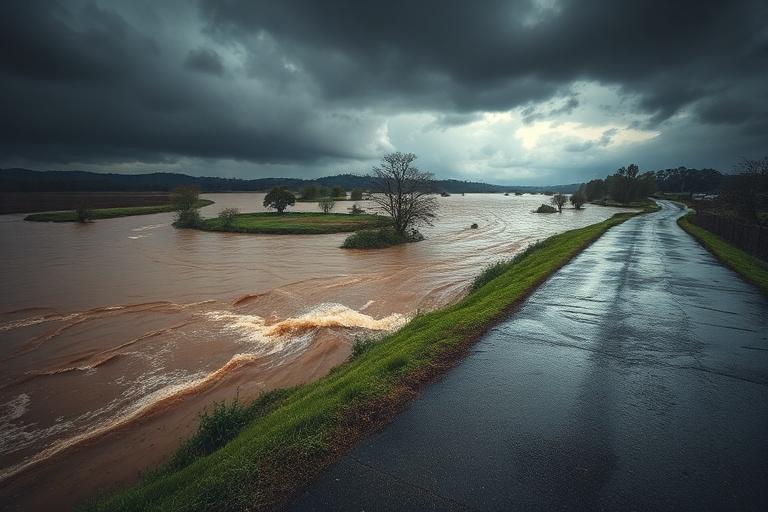
Flood Watches Explained: Global Patterns, Preparedness, and Future Risks
“`html
Global Flood Watches: Patterns, Preparedness, and Human Resilience
The term “flood watch” has become increasingly common in weather bulletins worldwide. Unlike a flood warning, which indicates imminent danger, a flood watch signals potential flooding within the next 12 to 48 hours. These alerts serve as early warnings, giving communities crucial time to prepare. From monsoon-soaked regions of South Asia to the floodplains of the Mississippi River, the mechanisms behind flood watches reveal broader patterns in climate behavior and human adaptation.
Flood watches are not confined to any single region. They emerge in response to specific meteorological conditions, such as prolonged rainfall, rapid snowmelt, or tropical storms. In 2023 alone, flood watches were issued in over 30 countries, affecting millions. These events underscore the interconnectedness of global weather systems and the shared challenge of managing water-related disasters.
The Science Behind Flood Watches
Flood watches are issued by meteorological agencies when conditions are favorable for flooding, even if it hasn’t occurred yet. These conditions are determined by analyzing rainfall intensity, soil saturation, river levels, and forecasted weather patterns. For example, the National Weather Service in the United States uses a combination of radar data, satellite imagery, and hydrological models to predict flood risks.
In tropical regions, flood watches often coincide with monsoon seasons. India, Bangladesh, and Pakistan experience some of the most severe flooding during the summer monsoon, which delivers heavy rainfall to already saturated ground. The 2022 floods in Pakistan, which submerged a third of the country, began with a flood watch that escalated into a full-blown disaster due to unprecedented rainfall.
Climate change is altering these patterns. Warmer temperatures increase the atmosphere’s capacity to hold moisture, leading to more intense rainfall events. A study published in Nature Climate Change found that for every 1°C increase in global temperature, the atmosphere can hold 7% more water vapor. This intensification of the water cycle is making flood watches more frequent and more critical.
Cultural and Economic Responses to Flood Watches
How societies respond to flood watches varies widely, shaped by geography, infrastructure, and cultural practices. In the Netherlands, where nearly a third of the land is below sea level, flood watches trigger immediate responses from water management authorities. The Dutch have invested in sophisticated systems like the Maeslantkering storm surge barrier, which closes automatically when flood watches predict dangerous tides.
In contrast, rural communities in Sub-Saharan Africa often rely on traditional knowledge to interpret flood watches. Elders in parts of Nigeria and Niger use the behavior of certain birds and the swelling of rivers to predict floods. While these methods can be effective, they are increasingly supplemented by modern forecasting tools. The integration of indigenous knowledge with scientific data is becoming a model for other regions.
Economic resilience also plays a role. In wealthier nations, flood watches prompt evacuations, sandbagging, and infrastructure inspections. However, in lower-income countries, the same alerts may not translate into action due to limited resources. The 2020 floods in Sudan, which displaced over 600,000 people, highlighted the disparity in flood preparedness. While flood watches were issued, the lack of early warning systems and emergency resources exacerbated the crisis.
- Netherlands: Advanced flood defenses and automated barriers.
- Bangladesh: Community-based early warning systems and cyclone shelters.
- United States: Real-time monitoring and public alert systems like FEMA’s Wireless Emergency Alerts.
- Indigenous communities in Australia: Traditional ecological knowledge combined with modern forecasting.
Case Studies: Flood Watches in Action
Examining specific flood watches provides insight into their real-world impact. In 2021, a flood watch was issued for Western Europe as a slow-moving low-pressure system brought record rainfall. The result was catastrophic flooding in Germany and Belgium, with over 200 deaths and billions in damages. The flood watch, issued days in advance, was accurate, but the scale of the disaster exposed vulnerabilities in infrastructure and emergency response.
In contrast, Japan’s flood watch system, managed by the Japan Meteorological Agency, has been credited with saving lives during Typhoon Hagibis in 2019. The agency issued flood watches and warnings days before the storm made landfall, allowing for widespread evacuations. The success of Japan’s system lies in its precision and the public’s trust in its accuracy. Regular drills and education campaigns ensure that citizens know how to respond when a flood watch is issued.
Another example comes from Brazil, where flood watches are a regular part of life during the Amazon’s wet season. In 2023, a flood watch for the Rio Negro predicted levels that would exceed the 2012 flood record. While the flooding was severe, the early warning allowed communities to move to higher ground and secure food supplies. This case illustrates how flood watches can mitigate disaster when paired with community preparedness.
Preparing for the Future of Flood Watches
The future of flood watches lies in technological innovation and global cooperation. Artificial intelligence and machine learning are being integrated into flood prediction models, allowing for more accurate and localized forecasts. For instance, the European Centre for Medium-Range Weather Forecasts (ECMWF) uses AI to refine its flood watch systems, improving lead times and reducing false alarms.
International organizations like the United Nations Office for Disaster Risk Reduction (UNDRR) advocate for stronger global frameworks to address flooding. The Sendai Framework for Disaster Risk Reduction emphasizes the need for early warning systems, particularly in vulnerable regions. However, funding and implementation remain challenges. Wealthier nations often prioritize flood watch technology, while developing countries struggle to access the same resources.
Community engagement is equally critical. Public awareness campaigns can educate people on how to interpret flood watches and take appropriate action. In the Philippines, the government partners with local radio stations to broadcast flood watch updates in regional languages, ensuring that even remote communities receive timely information.
As climate change intensifies, the frequency and severity of flood watches will likely increase. Adapting to this new reality requires a multifaceted approach: investing in technology, strengthening infrastructure, and empowering communities. The lessons learned from past flood watches can guide future preparedness efforts, ensuring that early warnings translate into lives saved.
For those interested in learning more about disaster preparedness, Dave’s Locker News offers in-depth coverage of global events, including how communities adapt to environmental challenges. Similarly, Dave’s Locker Science explores the intersection of climate science and technology, providing context for the tools used in flood forecasting.
Conclusion
Flood watches are more than just weather alerts—they are a vital link between science and survival. From the floodplains of the Mississippi to the monsoon-drenched regions of South Asia, these warnings reflect the growing urgency of climate-related risks. While technology and infrastructure play key roles in flood preparedness, the human element remains irreplaceable. Education, community engagement, and global cooperation are essential to turning flood watches into effective shields against disaster.
As the world grapples with a changing climate, the importance of flood watches will only grow. The challenge ahead is not just to issue these warnings, but to ensure that every community has the tools and knowledge to act on them. In doing so, we can transform flood watches from ominous notifications into opportunities for resilience and adaptation.