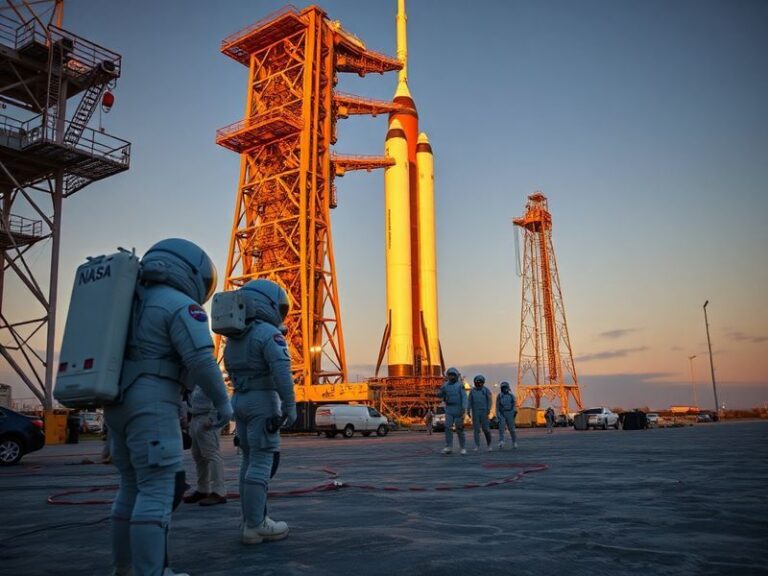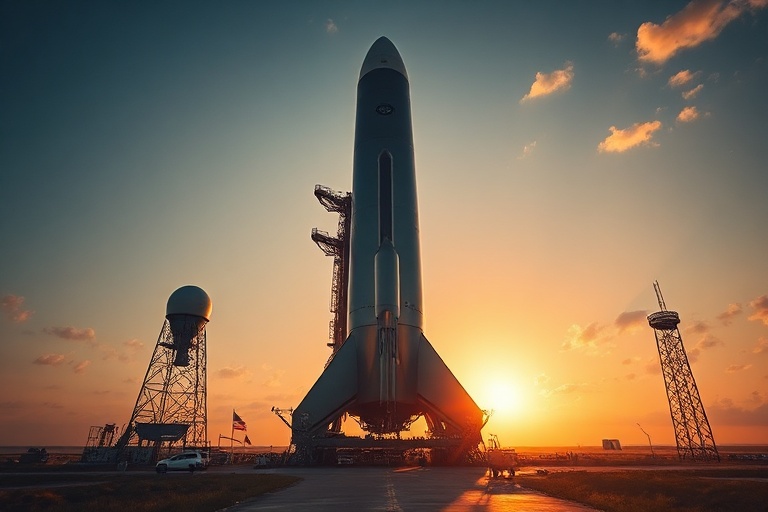
Starship: SpaceX’s Revolution in Space Travel and Exploration
“`html
Starship: The Next Giant Leap in Space Exploration
SpaceX’s Starship program represents one of the most ambitious engineering efforts in human history. Designed to carry up to 100 metric tons of cargo—or 100 people—into Earth orbit, the Moon, or even Mars, Starship is more than just a rocket. It’s a fully reusable transportation system intended to drastically reduce the cost of space travel while enabling unprecedented missions. With its stainless-steel construction, massive payload capacity, and rapid reusability, Starship could redefine humanity’s relationship with space.
Elon Musk has repeatedly emphasized that Starship is central to his vision of making life multi-planetary. Unlike traditional rockets that are discarded after launch, Starship is built to be flown multiple times, similar to an airplane. This reusability is key to achieving the low per-flight costs—potentially as low as $2 million per launch—necessary for sustainable interplanetary travel. Early test flights have already demonstrated the potential of this approach, even as challenges remain in perfecting the system.
The Design and Engineering Behind Starship
Starship consists of two main components: the Super Heavy booster and the Starship spacecraft. The Super Heavy, powered by 33 Raptor engines, provides the initial thrust to escape Earth’s gravity. Starship itself, equipped with six Raptor engines, takes over in space, capable of in-orbit refueling and long-duration missions. Both stages are designed for vertical landing and reuse, a feature that sets Starship apart from all previous orbital rockets.
The choice of stainless steel for the vehicle’s outer shell is both practical and innovative. While steel is heavier than the carbon composites used in many modern rockets, it offers superior durability at high temperatures, reduces costs, and simplifies manufacturing. The sleek, retro-futuristic design—reminiscent of 1950s sci-fi rockets—also reflects SpaceX’s willingness to prioritize function over form, a rarity in an industry often obsessed with aesthetics.
Another standout feature is Starship’s massive size: standing nearly 400 feet tall when fully stacked, it surpasses even the Saturn V, the rocket that carried astronauts to the Moon. This scale allows for greater payload flexibility and future upgrades, such as larger fuel tanks or specialized modules for scientific research or lunar habitats. The vehicle’s payload fairing is also the largest ever built, capable of accommodating oversized cargo like entire space station modules or deep-space telescopes.
Test Flights and Early Milestones
Starship’s development has been marked by rapid iteration and high-profile test flights. The first integrated test flight in April 2023 ended with an explosion just minutes after liftoff, but it provided critical data on vehicle performance and ground infrastructure. Subsequent flights, including a second attempt in November 2023, achieved higher altitudes and demonstrated improved stage separation and controlled splashdowns in the Gulf of Mexico.
By early 2024, SpaceX had refined its approach, with Starship reaching space during its third test flight. The vehicle successfully executed a controlled reentry, surviving the extreme heat of atmospheric descent before splashing down in the Indian Ocean. While not a perfect flight—some systems failed during reentry—the test marked a major step forward, proving that Starship could survive the harsh conditions of space and reentry.
These tests are not just about engineering triumphs; they are also about regulatory compliance. The Federal Aviation Administration (FAA) has closely monitored each launch, imposing strict safety and environmental mitigation measures. SpaceX has had to address concerns about noise pollution, wildlife impacts, and debris risks, particularly given Starship’s operations at the Boca Chica launch site in Texas, near sensitive ecosystems.
Starship’s Role in NASA’s Artemis Program
NASA has selected Starship as the lunar lander for its Artemis program, which aims to return humans to the Moon by 2026. Unlike the Apollo missions, which used disposable landers, Starship’s Human Landing System (HLS) will be fully reusable, capable of multiple trips between lunar orbit and the Moon’s surface. This capability is essential for establishing a sustainable lunar presence, including the Artemis Base Camp planned for the Moon’s south pole.
The HLS variant of Starship includes modifications for operation in the Moon’s low-gravity environment, such as enlarged fuel tanks and landing legs designed to handle the Moon’s dusty surface. It will also serve as a temporary habitat for astronauts during their lunar stays. NASA’s partnership with SpaceX underscores the agency’s confidence in Starship’s potential, despite the technical hurdles that remain.
However, the collaboration is not without controversy. Some critics argue that relying on a single provider for such a critical mission risks schedule delays or technical failures. Others point out that Starship’s development timeline has repeatedly slipped, raising questions about its readiness for the ambitious Artemis timeline. Still, proponents argue that Starship’s unmatched payload capacity and reusability make it the only viable option for large-scale lunar operations.
Commercial and Scientific Applications
Beyond government missions, Starship is poised to revolutionize commercial spaceflight. Companies like space industry leaders are already eyeing Starship for satellite deployments, space tourism, and even point-to-point Earth travel. Its ability to carry massive payloads could enable the launch of entire constellations of satellites in a single flight, slashing deployment costs and accelerating the deployment of global broadband networks.
For scientific research, Starship opens new possibilities. Its large volume and payload capacity could accommodate telescopes larger than the James Webb Space Telescope, or even entire space habitats for microgravity experiments. Missions to Mars, once considered decades away, are now within reach, with Starship serving as the primary transport for cargo and crew. SpaceX has even proposed using Starship for missions to Venus, Europa, and other destinations in the solar system.
Another intriguing application is orbital refueling. Starship is designed to rendezvous and transfer propellant in space, a capability that could enable deep-space missions without the need for massive, single-use rockets. This technology could also support the construction of orbital fuel depots, further reducing the cost of space exploration.
The Challenges Ahead
Despite its promise, Starship faces significant challenges. Regulatory hurdles, particularly around environmental reviews and safety certifications, could delay its operational readiness. The FAA’s ongoing oversight of SpaceX’s launch site in Texas has already imposed restrictions that could impact future test schedules. Additionally, the sheer scale of Starship’s operations requires substantial infrastructure, including launch pads, production facilities, and recovery systems.
Technical challenges also loom large. Reentry heating, engine reliability, and the complexities of in-space refueling are just a few of the hurdles SpaceX must overcome. The company’s history of rapid iteration suggests it will address these issues, but the timeline remains uncertain. Musk has previously predicted that Starship could be ready for crewed Mars missions by the late 2020s, a timeline that many industry analysts view as overly optimistic.
There are also financial considerations. Developing Starship has required billions in investment, and SpaceX’s revenue from satellite launches and crewed missions may not be sufficient to fund its full potential. Partnerships with NASA, commercial customers, and international partners will be critical to sustaining the program long-term.
Conclusion: A New Era for Spaceflight
Starship is more than a rocket—it’s a symbol of humanity’s ambition to explore beyond Earth. Its success could unlock a future where space travel is as routine as air travel, where humans live on Mars, and where the boundaries of science and exploration are pushed further than ever before. While the road ahead is fraught with challenges, SpaceX’s relentless pace of innovation suggests that Starship will play a pivotal role in shaping the next chapter of spaceflight.
As the world watches the next test flights and mission milestones, one thing is clear: Starship is not just a vehicle. It’s a gateway to the stars.