Sugar Ray Leonard: The Man Who Redefined Boxing’s Golden Era
Sugar Ray Leonard wasn’t just a fighter—he was an artist whose fists painted stories of triumph, resilience, and spectacle. Born Ray Charles Leonard on May 17, 1956, in Wilmington, North Carolina, he rose from modest roots to become one of the most recognizable figures in sports history. His name became synonymous with boxing’s golden era in the late 1970s and 1980s, a time when the sport transcended athletic competition to become a global cultural force.
Leonard’s journey began in Washington, D.C., where his family moved when he was young. Boxing was more than a pastime for the young Leonard; it was an escape. His father, a tailor by trade, saw the discipline in his son’s dedication. By 1976, Leonard had transformed from a gifted amateur into a dazzling Olympic champion, capturing the gold medal in the lightweight division at the Montreal Games. That victory was just the opening act of a career that would redefine what it meant to be a prizefighter.
The Rise of a Global Icon
In the late 20th century, boxing wasn’t just a sport—it was a global spectacle. The sport thrived in the United States, but its reach extended across continents, particularly in Latin America, the Philippines, and Europe. Leonard tapped into this international appeal, becoming a household name from Los Angeles to Tokyo. His 1979 victory over Wilfred Benítez in a thrilling split decision elevated him to superstardom. The fight was broadcast globally, drawing millions of viewers and cementing Leonard’s reputation as a fighter who could deliver drama in every round.
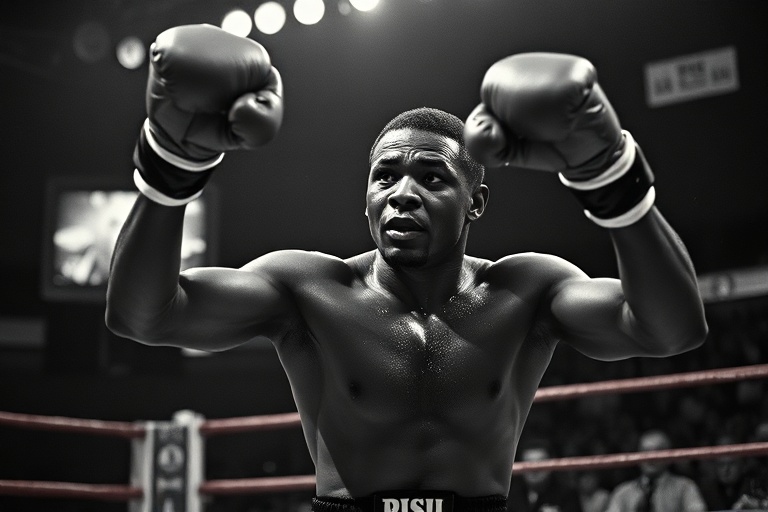
Leonard’s style was a blend of speed, precision, and showmanship. He moved like a dancer, threw punches with surgical accuracy, and spoke with the charisma of a Hollywood leading man. His rivalry with Roberto Durán in the early 1980s became one of the most talked-about feuds in sports history. The “No Más” fight in 1980, where Durán shockingly quit in the eighth round, added another layer to Leonard’s legend. He didn’t just beat opponents—he outmaneuvered them, psychologically and physically.
Beyond the Ring: Leonard’s Cultural Impact
Sugar Ray Leonard’s influence extended far beyond the ropes. In the 1980s, boxing was a canvas for larger-than-life personalities, and Leonard painted it with flair. His rivalry with Thomas Hearns in 1981 is often cited as one of the greatest fights ever—a battle that lasted 14 brutal rounds and ended with Leonard’s improbable victory. The fight was broadcast in over 100 countries, making it a global event that transcended sports. It wasn’t just about the belt; it was about the spectacle, the storytelling, and the drama that Leonard brought to every performance.
Leonard’s impact was felt in music, fashion, and even politics. His name became a brand, appearing on endorsements, television shows, and magazine covers. He was a symbol of Black excellence at a time when representation mattered deeply in mainstream media. His success helped pave the way for future generations of Black athletes who aspired not just to win, but to be seen as cultural icons.
In Latin America, Leonard’s fights were events of national pride. In Mexico, for example, his bouts were broadcast on primetime television, and fans would gather in plazas to watch on large screens. His battles with Hearns and Marvin Hagler were not just sporting events—they were cultural touchstones that brought communities together. Leonard understood the power of his platform. He used it to advocate for social causes, including education and youth development, ensuring his legacy extended beyond the ring.
A Legacy of Inspiration and Resilience
Leonard’s career wasn’t without setbacks. He retired multiple times, battled personal demons, and faced physical challenges, including retinal detachment that threatened his vision. Yet, he always found a way to return, proving that resilience was as much a part of his identity as his left hook. His 1987 victory over Marvin Hagler, where he dethroned the feared middleweight champion, is often regarded as one of the greatest upsets in boxing history. It wasn’t just a win—it was a statement that heart and determination could triumph over perceived limitations.
Today, Leonard’s legacy endures not only in the record books but in the lives he has touched. He inspired a generation of fighters, including Oscar De La Hoya, Floyd Mayweather, and Canelo Álvarez, who have cited him as a major influence. His name remains synonymous with excellence, not just in boxing, but in the broader world of sports and entertainment.
The Business of Being Sugar Ray
Leonard’s success in the ring translated seamlessly into the business world. In the 1980s and 1990s, he became one of the first athletes to leverage his brand into lucrative endorsements, partnerships, and media appearances. His collaborations with brands like Coca-Cola, Ford, and several apparel companies set a new standard for athlete marketing. Leonard understood that his value wasn’t just in his fists—it was in his ability to connect with audiences on a personal level.
His business acumen extended to promoting fights as well. Leonard played a pivotal role in the rise of pay-per-view boxing, working with promoters to package fights as must-see events. His involvement in the 1990s with the “Superfights” series helped bring boxing back into the mainstream after a period of decline. Leonard wasn’t just a participant in the sport’s evolution—he was an architect of its business model.
Here’s a look at some of Leonard’s most significant contributions beyond the ring:
- Philanthropy: Leonard founded the Sugar Ray Leonard Foundation, which focuses on providing resources for underserved communities, particularly in education and health.
- Mentorship: He has worked with organizations like the Boys & Girls Clubs of America, sharing his story to inspire young people to pursue their dreams.
- Broadcasting: After retiring, Leonard transitioned into broadcasting, becoming a respected analyst for networks like HBO and ESPN, bringing his insight and charisma to a new generation of fans.
- Advocacy: He has been an outspoken advocate for mental health awareness, particularly among athletes, sharing his own struggles with depression and anxiety.
Conclusion: The Man Who Made Boxing Art
Sugar Ray Leonard’s career was a masterclass in skill, showmanship, and sheer willpower. He didn’t just compete in boxing—he elevated it to an art form. His fights were more than contests; they were narratives of triumph, resilience, and human drama. In an era when boxing was as much about personality as it was about skill, Leonard stood out as a true icon.
Today, his legacy lives on in the fighters he inspired, the fans he entertained, and the cultural impact he left behind. Leonard proved that greatness isn’t just about winning—it’s about how you carry yourself, how you connect with people, and how you use your platform to make a difference. In the pantheon of sports legends, Sugar Ray Leonard isn’t just a name; he’s a standard.
For those looking to explore the broader world of boxing and its global impact, Dave’s Locker’s sports section offers a wealth of content on the fighters, fights, and cultural moments that have shaped the sport. Whether you’re a lifelong fan or a newcomer, there’s always more to discover about the sweet science and the legends who’ve made it unforgettable.