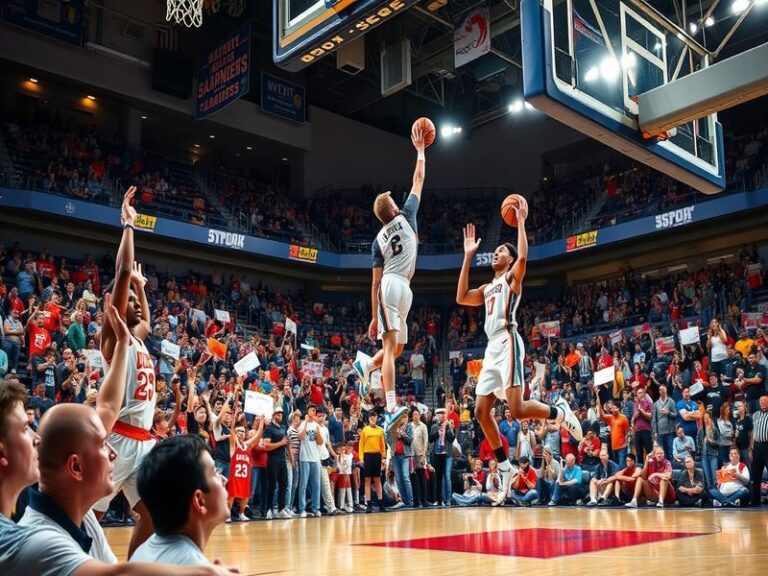
Kyle Hurt: How a Versatile Forward Is Redefining Modern Basketball
“`html
Kyle Hurt: The Emerging Star Shaping Basketball’s Future
Kyle Hurt has quietly emerged as one of college basketball’s most intriguing prospects, blending elite size, skill, and versatility in a way that defies conventional positional labels. At 6-foot-9 with a 7-foot wingspan, Hurt doesn’t just fit the mold of a modern stretch forward—he redefines it. His ability to stretch defenses with three-point shooting while anchoring the paint on defense makes him a matchup nightmare for opponents. After transferring from Miami to Pittsburgh in 2023, Hurt has wasted no time proving he belongs among the nation’s elite forwards.
What sets Hurt apart isn’t just his physical profile, but his adaptability. He can operate as a primary scorer in the post, a floor-spacing threat beyond the arc, or even as a facilitator when defenses collapse. His offensive repertoire includes a reliable mid-range jumper, a developing post game, and an improving feel for playmaking. Defensively, he’s a shot-blocking presence who can guard multiple positions, a rarity in today’s positionless basketball landscape. As the game continues to evolve, players like Hurt who can impact both ends without strict positional constraints are becoming invaluable.
A Rare Combination of Size, Skill, and IQ
Hurt’s collegiate career began at Miami, where he averaged 10.4 points and 5.0 rebounds per game in his sophomore season. His production was solid, but it was his potential that drew attention—not just from scouts, but from coaches who saw untapped dimensions in his game. A left-handed shooter with a smooth release, Hurt excels in catch-and-shoot situations, but he’s also comfortable creating his own shot off the dribble, particularly from the high post. His basketball IQ is evident in how he reads defenses, whether making quick decisions in transition or setting solid screens to free teammates.
Following his transfer to Pittsburgh, Hurt’s role expanded significantly. Under coach Jeff Capel, he became a focal point of the offense, handling the ball more often and initiating sets. His assist numbers rose to 3.1 per game in 2023-24, a testament to his growing comfort in playmaking roles. What’s most impressive is how he balances scoring with efficiency. He shot 42% from three-point range during one stretch last season, forcing defenses to respect his range even when he’s operating in the post. That kind of gravity changes the geometry of an offense.
Defensively, Hurt’s impact is even more pronounced. He ranks among the top shot-blockers in the ACC, averaging over 2.0 blocks per game. His length allows him to contest shots without fouling, and his lateral quickness enables him to stay in front of guards on switches. In a league where stretch forwards are often liabilities on defense, Hurt bucks the trend. His defensive versatility—switching 1 through 5—gives Pittsburgh a lineup that can adapt to any opponent without sacrificing protection around the rim.
The Transfer Portal and the Modern Athlete
Hurt’s decision to enter the transfer portal in 2023 wasn’t just a career move—it was a statement about the changing expectations of college athletes. Unlike previous generations, where players often stayed at one school for four years, today’s top prospects prioritize fit, opportunity, and development. Hurt’s move from Miami to Pittsburgh reflected a clear need for more offensive freedom and a system that could maximize his versatility. Pittsburgh, a program on the rise under Capel, offered exactly that: a chance to play a lead role in an up-tempo offense while developing into an NBA-caliber prospect.
This kind of calculated risk-taking is becoming standard in college basketball. Players now enter the portal not out of frustration, but as a strategic move to align themselves with programs that offer the best path to professional success. For Hurt, Pittsburgh provided a platform to showcase his full skill set. Early returns suggest the gamble paid off. His usage rate jumped from 19% at Miami to 26% at Pittsburgh, and his offensive rating improved by nearly 10 points per 100 possessions. It’s a model that could influence how top prospects approach their careers in the coming years.
Yet the transfer portal isn’t without its challenges. The process demands resilience, adaptability, and the ability to quickly integrate into a new system. Hurt’s experience highlights the importance of fit—not just in terms of playing style, but in culture. Pittsburgh’s emphasis on player development and accountability aligned with Hurt’s work ethic. That cultural synergy is often the difference between a successful transfer and one that falls short.
NBA Prospects and the Stretch-Four Evolution
Hurt’s trajectory has NBA scouts taking notice. In a league where versatility is king, players who can play multiple positions—especially on both ends of the floor—are at a premium. The modern NBA values shooters who can guard, playmakers who can protect the rim, and athletes who can do it all. Hurt fits that archetype perfectly. His combination of size, shooting, and defensive potential draws comparisons to players like Evan Mobley and Jaren Jackson Jr., albeit with a more developed offensive game at this stage.
According to several mock draft projections, Hurt is considered a potential first-round pick in 2025, assuming he declares. His draft stock hinges on continued improvement in three key areas: playmaking, physicality, and consistency. While he’s shown flashes of being a secondary playmaker, he’ll need to refine his decision-making under pressure. Defensively, he must add muscle to handle stronger NBA forwards in the post, though his shot-blocking instincts should translate well. And while his shooting numbers are impressive, maintaining that efficiency against elite NBA defenders will be the ultimate test.
What makes Hurt particularly intriguing is his age. He’s 22 years old, which is older than most college prospects, but his development curve suggests he’s still ascending. Players who enter the draft later often bring maturity and polish, qualities that can accelerate their NBA transition. If Hurt continues to refine his game, he could quickly become one of the most sought-after prospects in his class.
The Bigger Picture: Positionless Basketball and Player Development
Kyle Hurt’s rise reflects broader trends in basketball. The sport is moving toward positionless play, where traditional labels like “point guard” or “center” matter less than versatility and skill. Programs that prioritize player development—particularly in systems that allow athletes to explore multiple roles—are producing the next generation of NBA stars. Pittsburgh’s system under Capel is a case study in how modern basketball should be played: fast, positionless, and built around athletes who can impact the game in multiple ways.
For young players watching Hurt’s career unfold, the message is clear: adaptability is the new currency. Those who can stretch the floor, guard multiple positions, and make plays for others will have the brightest futures. That’s why programs like Pittsburgh, which emphasize skill development over rigid positional play, are becoming hotbeds for NBA talent. It’s not just about being tall or strong—it’s about being able to do everything.
Hurt’s journey also underscores the importance of coaching. Capel’s system has given him the freedom to explore his strengths while addressing his weaknesses. That kind of individualized development is rare in college basketball, where many systems prioritize system over player growth. Hurt’s ability to thrive in such an environment speaks volumes about both his adaptability and Capel’s coaching philosophy.
As the 2024-25 season approaches, all eyes will be on Hurt. Can he elevate Pittsburgh to new heights? Will he cement his status as a top NBA prospect? And perhaps most importantly, can he help redefine what it means to be a stretch forward in today’s game? If his trajectory is any indication, the answers will be yes. Kyle Hurt isn’t just a player to watch—he’s a player who could change how we think about basketball positions for years to come.
For fans of the sport, that’s reason enough to pay attention.
Related Coverage
- College Basketball Recruiting Insights — Stay updated on the latest transfer portal movements and prospect evaluations.
- NBA Draft Prospect Profiles — In-depth breakdowns of top collegiate players poised for the league.