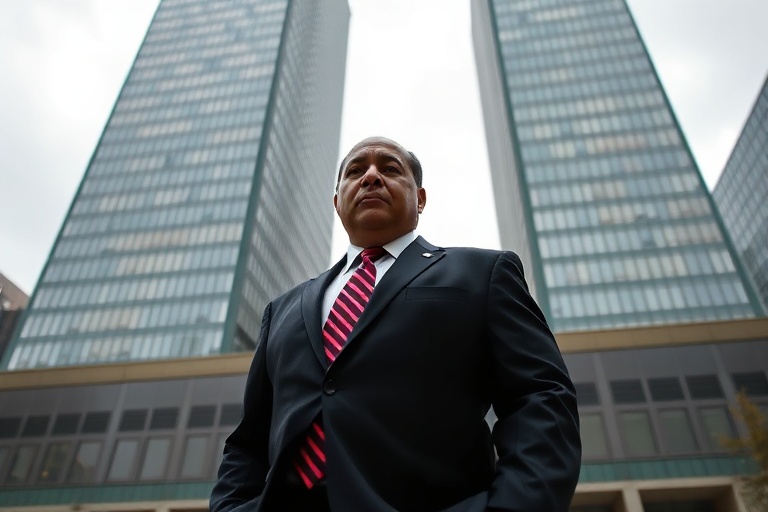
Mike Duggan has been a polarizing yet undeniably influential figure in Detroit politics since taking office as mayor in 2014. His leadership style—often described as pragmatic and results-driven—has reshaped the city’s trajectory, even as it has drawn criticism from opponents. Duggan’s administration has prioritized economic recovery, infrastructure improvements, and public safety, but his methods and occasional legal controversies have kept him at the center of local and national debates.
Early Life and Political Rise
Born in 1958 in Detroit, Mike Duggan grew up in the city’s west side, a neighborhood that would later shape his political identity. After graduating from the University of Michigan and the University of Michigan Law School, he began his career as a prosecutor in Wayne County, where he gained a reputation for tough-on-crime stances. His political career took off in the 1990s when he served as deputy county executive under Ed McNamara, a role that established his reputation as a behind-the-scenes operator.
Duggan’s first attempt at elected office came in 2001, when he ran for Detroit mayor but lost to Kwame Kilpatrick. The defeat was a setback, but it didn’t stall his political ambitions. He remained active in local politics, eventually becoming Wayne County prosecutor in 2004. His tenure in that role was marked by aggressive prosecutions of public corruption cases, which burnished his image as an uncompromising reformer.
Mayoralty: Achievements and Criticisms
When Duggan finally won the mayor’s office in 2013—becoming the first white mayor of Detroit in 40 years—he inherited a city grappling with bankruptcy, crumbling infrastructure, and a shrinking population. His administration has since overseen a period of significant transformation, though not without controversy.
- Economic Recovery: Duggan’s team has attracted billions in investment, particularly in downtown and Midtown, where new businesses, residential developments, and corporate headquarters have revitalized areas once decimated by urban decay. Projects like the restoration of the historic Book Tower and the expansion of the QLINE streetcar system are often cited as successes.
- Infrastructure Improvements: The city has seen substantial upgrades to its roads, lighting, and public transit systems. Duggan prioritized fixing basic services—like pothole repairs and streetlight replacements—that had long plagued Detroiters. The mayor’s “every neighborhood gets a streetlight” initiative aimed to address long-standing safety concerns.
- Public Safety Reforms: Detroit’s violent crime rates have fluctuated under Duggan, with some years showing improvement while others saw spikes. His administration has expanded police recruitment efforts and implemented community policing programs, though critics argue these measures haven’t gone far enough.
Despite these achievements, Duggan’s leadership has faced scrutiny. His 2017 re-election campaign was marred by questions about his residency status—a legal challenge that ultimately did not disqualify him from the race. More recently, his handling of the city’s property tax foreclosure crisis has drawn ire from activists who argue the policies disproportionately harm long-time homeowners.
The Duggan Brand: Pragmatism vs. Polarization
Duggan’s political brand is built on a paradox: he is both Detroit’s most effective recent mayor and its most polarizing. Supporters praise his no-nonsense approach, arguing that his focus on tangible results—like reducing blight and attracting investment—has been essential to the city’s revival. His detractors, however, accuse him of favoring downtown development at the expense of struggling neighborhoods, and of governing in a way that prioritizes corporate interests over grassroots needs.
This divide was on full display during the city’s response to the COVID-19 pandemic. Duggan’s administration implemented strict public health measures, including mask mandates and business restrictions, which some residents viewed as necessary for safety while others saw as overreach. His decision to delay lifting pandemic-era policies—even as other cities relaxed restrictions—highlighted his cautious, data-driven approach to governance.
Duggan’s relationship with Detroit’s Black communities—who make up the majority of the city’s population—has also been complicated. While many Black voters supported him, especially in his re-election bid, others have criticized his policies as insufficiently attentive to racial equity. The mayor’s push to attract non-Black residents back to the city, for example, has raised concerns about gentrification and displacement.
What’s Next for Mike Duggan?
As Mike Duggan approaches the end of his third term, speculation swirls about his political future. Term limits prevent him from running again in 2025, but that hasn’t stopped rumors about his next moves. Some speculate he could pursue higher office, such as a run for governor or a position in the Biden administration, while others suggest he may leverage his post-mayoral influence into a role in the private sector or nonprofit work.
Regardless of what comes next, Duggan’s legacy in Detroit is already secure. His tenure has undeniably reshaped the city, for better or worse. The question now is whether his brand of pragmatic, results-focused leadership will continue to define Detroit’s future—or if a new wave of leaders will emerge to challenge his vision.
For those interested in Detroit’s political landscape, Duggan’s story offers a case study in how a city can rebuild itself, even when its leader is a magnet for controversy. His tenure serves as a reminder that progress is often messy, and that the most effective leaders are not always the most popular ones.
To explore more about Detroit’s political evolution, visit our News and Politics sections for ongoing coverage and analysis.