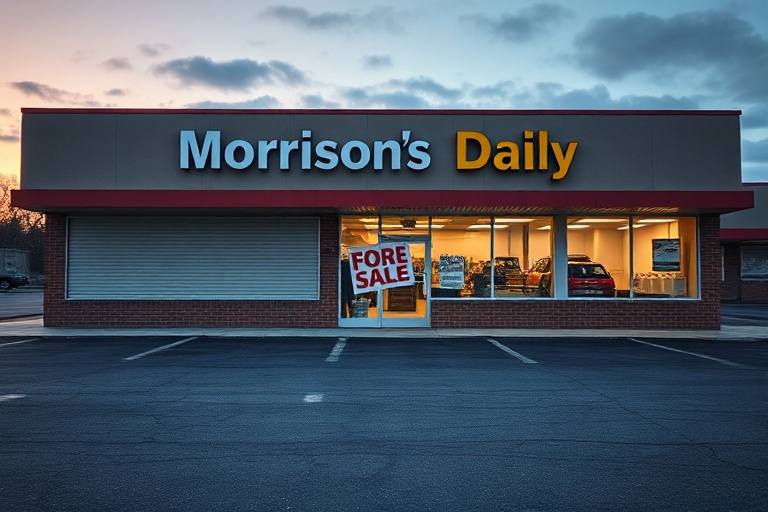
Morrisons has confirmed the closure of several of its Daily convenience stores, marking a strategic shift in its retail operations. The closures, which affect locations across the UK, reflect broader changes in how convenience retailing is evolving in response to consumer habits and market pressures.
Unlike traditional supermarkets, Morrisons’ Daily format was designed to offer a compact, high-frequency shopping experience in urban and suburban areas. However, the decision to close some of these stores suggests that the company is prioritizing profitability and operational efficiency over maintaining a broad physical footprint.
The Scale of the Closures
Morrisons has not released an exhaustive list of affected locations, but local reports and employee communications indicate that closures are concentrated in areas where footfall has declined or where the stores face strong competition from rivals such as Tesco Express, Sainsbury’s Local, and independent convenience retailers.
According to internal sources, the closures are part of a wider review of the Daily estate, which includes around 200 stores. The company is expected to focus on sites with the strongest trading performance and highest customer engagement. Stores that fail to meet profitability thresholds or show insufficient growth potential are likely to be earmarked for closure.
- High street locations with declining footfall are particularly vulnerable.
- Stores in areas with dense competition from larger supermarket chains may face pressure.
- Rural or less densely populated areas could see closures if sales volumes are unsustainable.
Why Morrisons Is Making This Move
The decision to close Daily stores aligns with Morrisons’ broader strategy to streamline its operations and reduce costs. The company has been under pressure to improve margins amid rising operational expenses and shifting consumer preferences toward online and larger-format shopping.
Morrisons has invested heavily in its online grocery service, which has seen significant growth since the pandemic. The closure of underperforming Daily stores may free up resources to enhance digital capabilities, including faster delivery options and improved click-and-collect services.
Analysts suggest that the move also reflects a broader trend in convenience retailing, where operators are increasingly focusing on high-density urban areas where demand is strongest. Smaller, less profitable stores are being sacrificed in favor of larger, more flexible formats that can serve multiple shopping missions.
Impact on Shoppers and Employees
For local shoppers, the closure of a Morrisons Daily store means a potential loss of convenience, particularly in areas where alternative options are limited. Many customers rely on these stores for quick top-up shops, meal solutions, and essential groceries. The closures could force shoppers to travel further or switch to competing convenience retailers.
Employees at the affected stores face uncertainty about their future. Morrisons has stated that it will explore redeployment opportunities where possible, but redundancies are likely for some staff. The closures could also impact local economies, particularly in areas where the store is a significant employer.
Morrisons has not confirmed whether it will offer severance packages or support for affected workers, but similar closures in the retail sector have often included redundancy packages and career transition support.
What’s Next for Morrisons Daily?
The closures are unlikely to signal the end of Morrisons Daily entirely. Instead, the company is likely to focus on refining its store estate to ensure that each location is financially viable. This could involve relocating some stores to more strategic locations or converting underperforming sites into other formats, such as click-and-collect hubs.
Morrisons may also explore partnerships with other retailers or delivery platforms to maintain a presence in areas where it is reducing its physical footprint. For example, collaborations with rapid grocery delivery services could help Morrisons serve customers in locations where it no longer operates a store.
For now, shoppers in affected areas are advised to check local updates and explore alternative convenience options. Morrisons has stated that it will provide at least four weeks’ notice for store closures, giving customers time to adjust their shopping habits.
Staying Updated
Morrisons typically announces closures through local press releases and employee communications. Shoppers can also monitor updates on the News section of Dave’s Locker for the latest developments.
Conclusion
The closure of Morrisons Daily stores is a significant shift in the company’s convenience retail strategy. While it may improve profitability in the short term, the move poses challenges for local shoppers and employees. As Morrisons continues to adapt to changing consumer behaviors, the focus on digital and larger-format stores suggests that the future of convenience retailing will be shaped by efficiency and scalability.
For now, shoppers and employees alike will need to adapt to these changes, whether by finding alternative stores or exploring new ways to access Morrisons’ products. The closures are a reminder that even well-established retail formats must evolve to survive in an increasingly competitive market.