new york city vs columbus
“`html
New York City vs. Columbus: A Tale of Two Urban Worlds
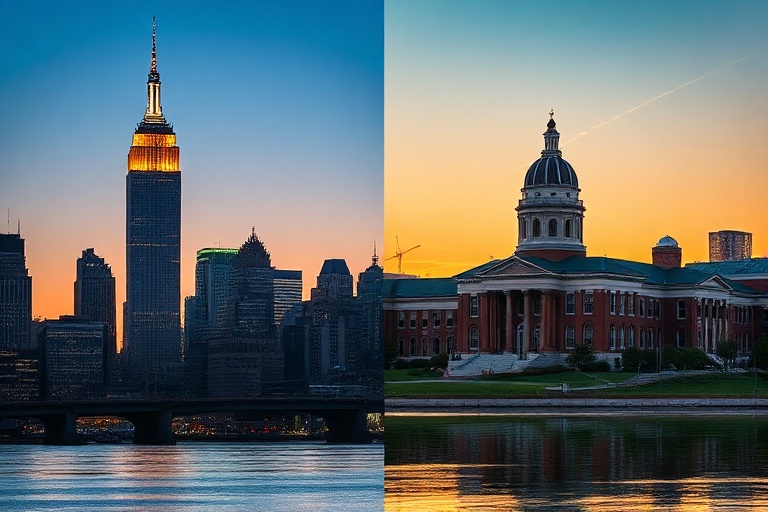
The contrast between New York City and Columbus, Ohio, could hardly be more striking. One rises from the bedrock of global finance and culture like a jagged monument to human ambition. The other unfolds across a sprawling landscape of Midwestern pragmatism, where ambition is tempered by community and tradition. These two cities, though both anchors of their respective regions, offer radically different visions of urban life on the global stage.
New York City—comprised of five boroughs and home to over 8 million people—commands attention as the financial, artistic, and cultural capital of the world. Its skyline is a signature of modernity, its streets a chorus of languages, and its reputation as a place where anything is possible remains unmatched. Columbus, meanwhile, with just over 900,000 residents, operates as Ohio’s state capital and a rising tech hub, but with a distinctly more relaxed pace and a strong emphasis on local identity.
The Urban Fabric: Density vs. Sprawl
At the heart of the New York vs. Columbus divide lies the question of urban form. New York’s density is legendary. In Manhattan alone, over 28,000 people live per square mile. The subway runs 24/7, bodegas outnumber branches of major banks, and residents navigate life in tight corridors of steel and glass. This density fosters creativity and efficiency but also drives up costs and intensifies social friction.
Columbus spreads across 217 square miles with a population density of just 4,000 residents per square mile. The city is built for cars. The Ohio State University campus anchors a vibrant student culture, while the Short North Arts District pulses with galleries and restaurants. Yet, even in its most lively districts, there’s space to breathe—parks, wide sidewalks, and a sense of openness that feels almost foreign in New York.
This contrast reflects a broader global tension: the vertical city versus the horizontal one. Cities like Tokyo and Mumbai epitomize the former; cities like Melbourne and Austin, the latter. New York and Columbus represent two ends of this spectrum, each offering different trade-offs between convenience, cost, and quality of life.
Cultural Influence: From the Met to the Ohio State Fair
New York City doesn’t just influence American culture—it defines it. The Metropolitan Museum of Art, Broadway, and Lincoln Center set the standard for global arts and entertainment. The city’s fashion week, film festivals, and culinary scene draw talent from every corner of the planet. It’s a place where a hot dog vendor on 59th Street can become an icon, and a subway busker can launch a career.
Columbus, while smaller in scale, plays a vital role in shaping regional identity. The Ohio State Fair, one of the largest state fairs in the U.S., draws over a million visitors annually. The city’s music scene has produced acts like The Black Keys and Twenty One Pilots, bridging indie rock and mainstream appeal. The Columbus Museum of Art and the Wexner Center for the Arts foster innovation, though on a more modest scale.
Where New York thrives on scale and spectacle, Columbus cultivates intimacy and authenticity. This difference mirrors a global pattern: global cities act as engines of cultural export, while mid-sized cities often serve as incubators for grassroots creativity that later gains broader recognition.
Economy and Opportunity: Finance vs. Innovation
New York’s economy is built on finance, media, and technology. Wall Street remains the nerve center of global capital, and companies like Goldman Sachs and JPMorgan Chase call it home. The city’s tech sector, though younger, is rapidly expanding, fueled by venture capital and a talent pipeline from top universities. Yet, the cost of living—with median home prices exceeding $700,000 in Manhattan—creates barriers to entry that are among the highest in the world.
Columbus, by contrast, has cultivated a diversified economy anchored in insurance, education, and advanced manufacturing. Companies like Nationwide and JPMorgan Chase (with a major operations center in the city) provide stable employment. The city has also become a leader in logistics and data analytics, thanks to a strong university system and a business-friendly climate. The cost of living remains far more accessible, with median home prices around $250,000.
This contrast highlights a global phenomenon: the rise of “eds and meds” economies in mid-sized cities. Columbus benefits from Ohio State University and a robust healthcare sector, much like cities such as Pittsburgh or Raleigh-Durham. Meanwhile, New York remains the apex predator in global finance, a role it has held for over a century.
A Global Perspective: What the Rivalry Teaches Us
The New York–Columbus dynamic reflects deeper trends in urbanization. Global cities like New York, London, and Tokyo are increasingly seen as engines of inequality, where wealth concentrates in small geographic areas while the working class is pushed to the periphery. Meanwhile, mid-sized cities like Columbus, with their lower barriers to entry and stronger community networks, are becoming models for sustainable growth.
Yet, both models have strengths. New York’s density fuels creativity and economic power. Columbus’s balance of affordability and opportunity offers a more inclusive path to prosperity. The global challenge ahead may be to blend these approaches: to create dense, vibrant cities that remain accessible and equitable.
For policymakers in rapidly growing cities from Bangalore to Berlin, the New York–Columbus comparison offers a critical lesson. The future of urban life may not lie in choosing between density and sprawl, but in finding harmony between them—where innovation thrives, but no one is left behind.
What’s Next for Both Cities?
New York continues to expand its tech sector, with initiatives like the Brooklyn Tech Triangle and Cornell Tech on Roosevelt Island positioning the city as a leader in artificial intelligence and biotech. Yet, housing affordability and transit congestion remain existential challenges.
Columbus is growing, too. Amazon’s second headquarters fell short of landing in the city, but the region has secured major investments in data centers and logistics infrastructure. The city is also investing in public transit, with the Columbus Streetcar and plans for expanded bus rapid transit.
Both cities are betting on the future. New York wagers on its unmatched global brand. Columbus bets on its adaptability and affordability. Together, they represent two possible futures for urban life in the 21st century.
One thing is certain: the world is watching. Whether through the lens of sports, culture, or economic policy, the story of New York and Columbus is far from over.
—
METADATA
{
“title”: “New York City vs Columbus: Culture, Economy, and Urban Life Compared”,
“metaDescription”: “New York City and Columbus offer starkly different urban models. Compare culture, economy, and lifestyle in these two iconic cities.”,
“categories”: [“Culture”, “Analysis”],
“tags”: [“New York City”, “Columbus Ohio”, “urban development”, “city comparison”, “global cities”],
“imageDescription”: “A split-screen image: on the left, the New York City skyline at dusk with skyscrapers and traffic; on the right, a quiet Columbus street with historic brick buildings, autumn leaves, and a small-town feel.”
}
—END METADATA—
“`