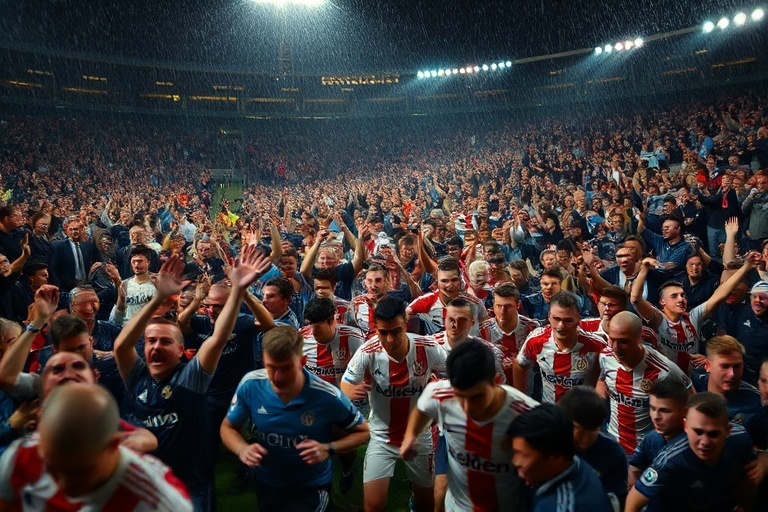
Pitch Invasion: When Sports Fans Cross the Line
“`html
Pitch Invasion: When Celebration Crosses the Line
The sight of fans rushing the field after a championship win is one of the most electrifying moments in sports. It’s a raw display of passion, unity, and triumph. Yet beneath the excitement lies a complex issue: the fine line between celebration and chaos. Pitch invasions, while often harmless, can spiral into dangerous situations, disrupt events, and even lead to legal consequences. Understanding the nuances of this phenomenon reveals much about fan culture, security protocols, and the evolving nature of live sports.
The Anatomy of a Pitch Invasion
Pitch invasions aren’t spontaneous outbursts of emotion. They unfold in stages, often dictated by the outcome of a game and the temperament of the crowd. The most common triggers include:
- A last-second, game-winning play that secures a championship or avoids relegation
- An underdog victory that defies pre-game expectations
- A series-clinching win in a high-stakes playoff or tournament
- A relegation battle where survival is celebrated with reckless abandon
Once the moment strikes, the initial wave of fans typically begins near the stands closest to the action. Security personnel, often overwhelmed by the sheer volume of people, may struggle to contain the surge. In some cases, barriers are breached or overrun. The result is a sea of jubilant (and occasionally intoxicated) supporters flooding the field, court, or pitch.
Not all invasions are chaotic, however. Some unfold peacefully, with fans hugging players, taking photos, or simply soaking in the atmosphere. Others turn dangerous when flares are lit, equipment is damaged, or altercations break out. The tone of an invasion often depends on pre-existing fan dynamics, local laws, and the response of law enforcement.
Why Do Fans Invade the Pitch?
The motivations behind pitch invasions go beyond mere celebration. For many, it’s about claiming a piece of history. The sight of hundreds of strangers running onto the field creates a shared memory that transcends individual fandom. It’s a collective act of defiance against the structured, commercialized nature of modern sports.
Psychologically, the act of invasion can be seen as a temporary suspension of social norms. Fans who might otherwise be law-abiding citizens feel empowered by the crowd’s energy. The anonymity of a large group reduces personal accountability, making risky behavior more likely. This phenomenon, known as deindividuation in social psychology, explains why otherwise rational people might join a pitch invasion despite knowing the potential consequences.
Cultural factors also play a role. In some countries, pitch invasions are almost ritualistic. For instance, in Argentina, fans of Boca Juniors famously charge the field after big wins, a tradition that’s both celebrated and condemned. In contrast, leagues like the NFL and NBA enforce strict penalties for such behavior, reflecting differing attitudes toward fan engagement.
The Risks and Repercussions
The dangers of pitch invasions extend far beyond the immediate spectacle. Injuries are common, ranging from minor sprains to life-threatening collisions. In 2018, a fan at a Spanish league match suffered a heart attack after sprinting onto the pitch and celebrating with players. Medical emergencies are often exacerbated by the lack of emergency access once the field is compromised.
Logistical disruptions are another concern. Games may be delayed for hours, forcing broadcasters to scramble for alternative content. In extreme cases, matches are abandoned, leading to financial losses for clubs and leagues. The 2022 World Cup qualifier between Brazil and Argentina was nearly abandoned after Argentine fans invaded the pitch, forcing officials to suspend play for over 30 minutes.
Legal consequences can also follow. Fans who participate in invasions may face fines, stadium bans, or even criminal charges. Clubs themselves can be penalized with reprimands, point deductions, or financial sanctions. For example, Liverpool FC was fined £50,000 by UEFA in 2016 after fans invaded the pitch during a Europa League match.
Balancing Passion and Safety
The challenge for modern sports is to preserve the magic of spontaneous celebration while mitigating the risks. Many leagues have experimented with solutions, from increased security presence to designated “fan zones” where supporters can gather without disrupting play. Some clubs have even embraced controlled post-match access, allowing fans to meet players in a structured environment.
Technology is also playing a role. Drones equipped with cameras can monitor crowds in real-time, while AI-powered surveillance systems can predict surges in fan movement. Social media monitoring helps authorities track online chatter that might precede an invasion. These tools, while controversial, offer a way to balance fan freedom with safety.
Yet no solution is perfect. The emotional core of sports—its unpredictability and raw human drama—is what makes it compelling. Removing all risk might also strip away the very moments that define a fan’s connection to their team. The goal, then, is not to eliminate pitch invasions entirely, but to manage them in a way that respects both tradition and safety.
A Glimpse Into the Future
As sports evolve, so too will the nature of fan engagement. Virtual reality and augmented reality could one day allow supporters to “experience” a championship win without ever leaving their homes. Yet physical presence remains a cornerstone of sports culture. The thrill of being in the stadium, feeling the roar of the crowd, and seeing history unfold in real-time is irreplaceable.
Pitch invasions, whether celebrated or condemned, are a testament to the power of sports. They remind us that beneath the commercials, the analytics, and the endless debates about tactics, there are real people whose emotions drive the game forward. The challenge for the future will be to preserve that passion while ensuring that no one gets hurt in the process.
For fans, the message is clear: enjoy the moment, but know the boundaries. For organizers, the task is to find a middle ground where celebration can thrive without chaos. And for everyone else, it’s a reminder that in sports, as in life, the most unforgettable moments often happen when we least expect them.
To explore more on this topic, visit our Sports and Analysis sections for deeper insights into fan culture and the evolving landscape of live events.