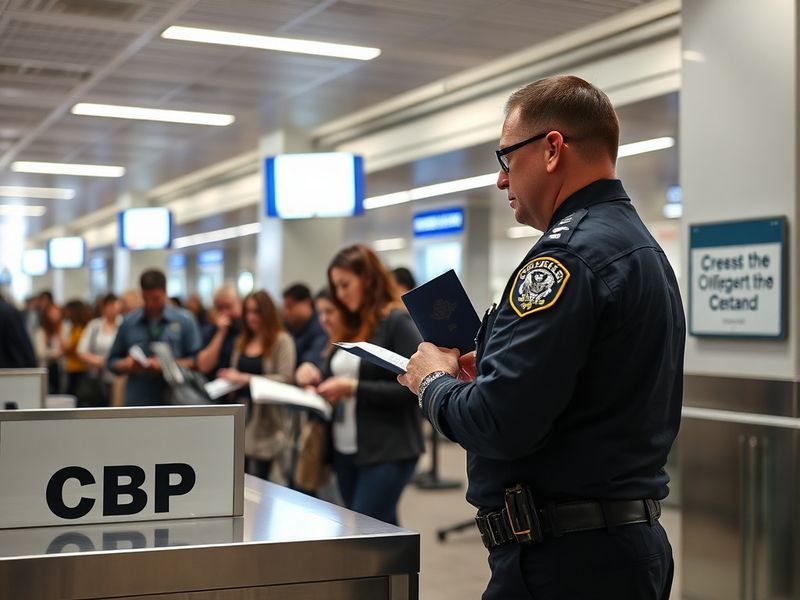
How U.S. Customs and Border Protection Shapes Global Trade and Security
“`html
U.S. Customs and Border Protection: Security, Trade, and Global Impact
U.S. Customs and Border Protection (CBP) stands as one of the most visible and critical agencies within the Department of Homeland Security. Established in 2003 in the aftermath of the 9/11 attacks, CBP’s mission transcends mere border enforcement. It integrates customs, immigration, and trade functions to safeguard the nation while facilitating legitimate travel and commerce. Operating at over 300 ports of entry, including airports, seaports, and land borders, the agency plays a pivotal role in shaping global trade flows and national security strategies.
The Evolution of CBP: From Enforcement to Global Gatekeeper
CBP’s origins trace back to the U.S. Customs Service, created in 1789 under President George Washington. Over centuries, its role expanded from collecting tariffs to combating smuggling and protecting intellectual property. The 21st century brought a fundamental shift: the integration of customs, immigration, and border security into a unified agency. This restructuring reflected a broader geopolitical reality—borders were no longer just lines on a map but dynamic zones of interaction between nations.
The agency’s evolution mirrors global trends in trade and migration. In the 1990s, the North American Free Trade Agreement (NAFTA) accelerated cross-border commerce, requiring CBP to adapt. Today, CBP oversees $3.1 trillion in annual trade, making it the second-largest revenue-generating federal agency after the Internal Revenue Service. Its work ensures that goods move efficiently while preventing the entry of illicit substances, counterfeit products, and potential threats.
Technology and Innovation at the Border
CBP’s modern operations rely heavily on technology. Advanced scanning systems, biometric identification, and AI-driven analytics help process millions of travelers and cargo shipments daily. The Automated Commercial Environment (ACE) streamlines trade compliance, reducing processing times for legitimate shipments. Meanwhile, the use of facial recognition at ports of entry has become a standard practice, raising both efficiency and privacy debates.
Globally, CBP collaborates with customs agencies in Europe, Asia, and Latin America to harmonize trade standards. Initiatives like the World Customs Organization’s (WCO) SAFE Framework encourage mutual recognition of security measures, reducing delays while maintaining vigilance. These partnerships highlight how border security is increasingly a collaborative effort rather than a unilateral one.
Balancing Security and Facilitation: The CBP’s Dual Mandate
CBP’s dual mandate—securing the border while facilitating lawful trade and travel—creates inherent tensions. On one hand, the agency must prevent terrorism, drug trafficking, and illegal immigration. On the other, it must avoid creating bottlenecks that disrupt supply chains or discourage tourism. The challenge lies in distinguishing between threats and legitimate flows, a task complicated by the sheer volume of cross-border activity.
Consider the U.S.-Mexico border, one of the busiest in the world. In 2023 alone, CBP processed over 400 million travelers and nearly 12 million cargo trucks. The agency deploys thousands of officers, K-9 units, and drones to monitor remote areas. Yet, despite these efforts, challenges persist—human smuggling, fentanyl trafficking, and asylum seekers testing the limits of the system.
Cultural and Economic Impact Beyond Borders
The agency’s influence extends far beyond U.S. borders. For Mexico, the U.S. is its largest trading partner, with CBP playing a crucial role in ensuring cross-border commerce flows smoothly. Delays at ports like Laredo or San Ysidro can ripple through global supply chains, affecting industries from automotive to agriculture. Similarly, in Asia, CBP’s scrutiny of imports impacts manufacturers in China, Vietnam, and elsewhere, shaping production decisions worldwide.
CBP also shapes cultural exchanges. The agency facilitates the entry of artists, athletes, and students, contributing to the exchange of ideas. However, its enforcement actions—such as seizures of counterfeit goods or deportations—can strain diplomatic relations. For instance, disputes over visa policies or trade tariffs often intersect with CBP’s operations, underscoring its role as both a regulator and a cultural intermediary.
Challenges and Controversies: The Human Side of Border Security
Despite its technological advancements, CBP faces persistent criticisms. Human rights organizations frequently highlight cases of family separations, excessive use of force, and prolonged detention conditions. The agency’s role in immigration enforcement has drawn particular scrutiny, especially during surges in asylum seekers. Meanwhile, trade policies—such as tariffs on Chinese goods—have forced CBP to adapt to rapidly changing regulations, sometimes leading to confusion and delays.
CBP’s workforce, composed of customs officers, Border Patrol agents, and trade specialists, operates in high-pressure environments. Officers often work long hours under physically and emotionally taxing conditions. The agency has faced staffing shortages, training gaps, and morale issues, all of which impact its ability to fulfill its mission effectively.
The Future of Border Security in a Globalized World
Looking ahead, CBP must navigate an increasingly complex landscape. Climate change, political instability, and economic disparities are driving migration patterns that traditional border security models struggle to address. The rise of e-commerce has also transformed trade, with small packages and direct-to-consumer shipments challenging existing inspection protocols.
Innovations like blockchain for supply chain transparency and blockchain-based cargo tracking could redefine CBP’s operations. Meanwhile, diplomatic efforts to address root causes of migration—such as poverty or violence—may reduce pressure on the agency. However, these solutions require coordination with international partners, a task that remains politically fraught.
For now, CBP remains a cornerstone of U.S. security and trade policy. Its work ensures that the world’s largest economy remains both open and protected. Yet, as global dynamics shift, the agency’s ability to adapt will determine whether it can sustain its dual mandate in an era of unprecedented change.
Key Takeaways
- Mission and Mandate: CBP integrates customs, immigration, and border security to protect the U.S. while facilitating trade and travel.
- Global Reach: The agency’s operations influence supply chains, cultural exchanges, and diplomatic relations worldwide.
- Technology and Innovation: Advanced systems like ACE and facial recognition are central to CBP’s modern operations.
- Challenges: Balancing security with efficiency, addressing human rights concerns, and adapting to global shifts remain critical issues.
Whether through the inspection of a shipping container from Shanghai or the processing of a traveler at JFK Airport, CBP’s work touches nearly every corner of the globe. Its success—or failure—will continue to shape the future of international trade, migration, and security.