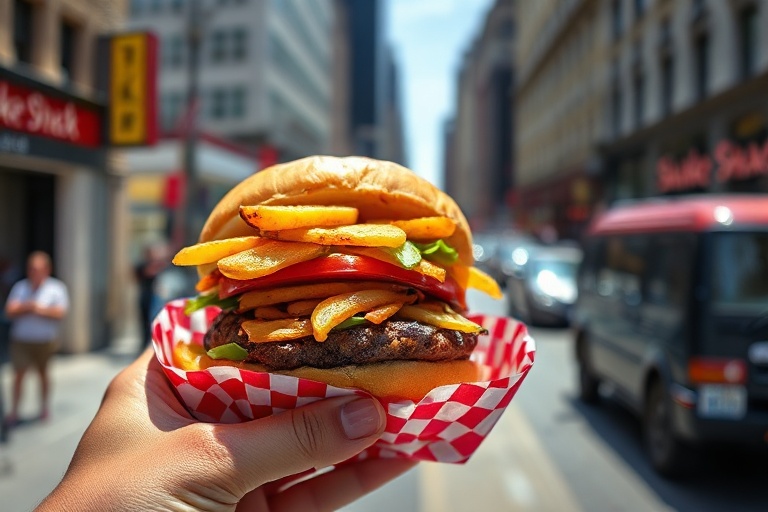
Shake Shack has grown from a humble hot dog stand in Madison Square Park to a publicly traded company with locations spanning five continents. Its stock, listed on the New York Stock Exchange under the ticker SHAK, reflects both the brand’s expansion ambitions and the challenges of maintaining quality at scale. Investors have watched its trajectory closely, drawn by its cult-like following and the broader trend toward fast-casual dining.
The company’s journey—from a single kiosk in 2004 to over 400 locations worldwide today—mirrors the rise of experiential food culture. Unlike traditional fast-food giants, Shake Shack positioned itself as a purveyor of premium burgers, crinkle-cut fries, and concretes, all served in an environment that blends urban energy with suburban comfort. This strategy has resonated globally, particularly in markets where consumers increasingly seek authenticity and transparency in their dining choices.
The Business Model: Quality Over Speed
Shake Shack differentiates itself through a business model that prioritizes food quality, sustainable sourcing, and customer experience over sheer speed of service. While traditional fast-food chains focus on rapid throughput, Shake Shack’s locations often feature open kitchens, customizable orders, and a slower, more deliberate pace. This approach has cultivated a loyal customer base willing to pay a premium for what they perceive as a higher-quality product.
The company’s menu, anchored by its signature ShackBurger, has expanded over the years to include plant-based options, seasonal specialties, and international adaptations. In Japan, for example, Shake Shack introduced miso- and teriyaki-glazed burgers to cater to local tastes, demonstrating its willingness to adapt while maintaining core brand elements. This flexibility has been key to its international growth, allowing it to navigate diverse culinary landscapes.
Financially, Shake Shack operates on a franchise-heavy model, though company-owned stores still dominate its revenue stream. As of 2024, franchised locations account for roughly 20% of its global footprint, a strategic move to reduce capital expenditure while accelerating expansion. This model has enabled Shake Shack to enter markets like China and the Middle East with minimal risk, though it also introduces complexities in maintaining consistency across locations.
Financial Performance: Volatility and Growth
Shake Shack’s stock performance has been a rollercoaster, reflecting both its rapid expansion and the broader volatility of the restaurant sector. After its initial public offering in 2015 at $21 per share, the stock surged to over $90 in early 2020, driven by pandemic-era demand for takeout and delivery. However, it later corrected as inflation, supply chain disruptions, and labor shortages squeezed margins.
The company’s financial reports often highlight its struggle to balance growth with profitability. While revenue has climbed steadily—reaching $822 million in 2023—same-store sales growth has fluctuated, particularly in mature markets like the U.S. where competition from other fast-casual brands is fierce. Internationally, however, Shake Shack has shown resilience, with double-digit same-store sales growth in markets like China and the U.K.
Investors eyeing SHAK should consider several factors:
- Expansion pace: Shake Shack plans to open 20-25 new company-owned locations annually, with a focus on international markets. This aggressive growth could drive long-term value but also increases capital requirements.
- Menu innovation: The company’s ability to introduce new products without diluting its core offerings will be critical. Recent additions like the SmokeShack Burger and plant-based patties have been well-received, but over-diversification risks alienating loyal customers.
- Operational efficiency: Rising food and labor costs have pressured margins. Shake Shack’s shift toward automation, such as self-order kiosks and AI-driven inventory management, could help offset these pressures.
Analysts remain divided on Shake Shack’s valuation. Some view it as a growth stock with untapped potential in emerging markets, while others caution that its premium pricing may limit its mass-market appeal. The company’s price-to-earnings ratio, often higher than peers like Chipotle or McDonald’s, reflects this uncertainty.
Cultural Impact: More Than Just a Burger
Shake Shack’s appeal extends beyond its menu. The brand has become a cultural touchstone, particularly in urban centers where it often anchors new developments or revitalization projects. In New York City, for instance, the original Madison Square Park location remains a pilgrimage site for tourists and locals alike, symbolizing the city’s dynamic food scene.
Globally, Shake Shack has tapped into the demand for “third spaces”—environments that are neither home nor work but serve as social hubs. Its locations often feature communal tables, free Wi-Fi, and a design aesthetic that blends industrial and retro elements. This approach aligns with the growing consumer preference for experiences over mere transactions.
The company’s marketing strategy further reinforces its cultural relevance. Shake Shack leverages social media heavily, partnering with influencers and artists to create limited-time offerings and immersive campaigns. Its “Shack Track” loyalty program, which rewards repeat customers with exclusive menu items, has also fostered a sense of community among its fanbase.
Yet, Shake Shack’s cultural footprint is not without controversy. Critics argue that its rapid expansion risks diluting its artisanal roots, turning it into just another corporate fast-casual chain. Others point to its labor practices, including allegations of underpaying workers in some locations, as a contradiction to its “people-first” branding. These tensions highlight the challenges of scaling a mission-driven company without losing its soul.
The Road Ahead: Challenges and Opportunities
As Shake Shack looks to the future, it faces a mix of opportunities and obstacles. The global fast-casual market is projected to grow at a compound annual rate of 5.2% through 2030, driven by urbanization, rising disposable incomes, and changing dietary preferences. Shake Shack is well-positioned to capitalize on these trends, particularly in Asia and Europe, where its brand recognition is still growing.
However, the company must navigate several hurdles:
- Supply chain resilience: Like many restaurant chains, Shake Shack has grappled with ingredient shortages and price volatility. Diversifying its supplier base and investing in local sourcing could mitigate these risks.
- Labor dynamics: The ongoing shortage of skilled workers in the hospitality industry has forced Shake Shack to rethink its compensation and benefits packages. Competitive wages and career development programs may be necessary to attract and retain talent.
- Digital transformation: While Shake Shack has made strides in e-commerce and delivery, it must continue innovating in areas like mobile ordering, AI-driven personalization, and sustainable packaging to stay ahead of consumer expectations.
For investors, Shake Shack represents a high-risk, high-reward proposition. Its stock may not offer the stability of blue-chip fast-food stocks like McDonald’s, but it provides exposure to the fast-casual sector’s growth potential. Those betting on SHAK should closely monitor its international expansion, operational efficiency, and ability to maintain its brand identity amid rapid scaling.
Ultimately, Shake Shack’s story is one of balancing tradition and innovation. Its success hinges on whether it can preserve the qualities that made it a darling of foodies and investors alike—authenticity, quality, and community—while adapting to an ever-changing global landscape. For now, the Shack remains a compelling case study in how a humble burger stand can become a publicly traded empire.