Early Life and Political Beginnings
Shaukat Ali’s journey to becoming a prominent public figure began in a modest household where civic responsibility was instilled early. Born in Birmingham, England, to Pakistani immigrant parents, Ali grew up navigating dual cultural identities while observing the gaps in local governance that often overlooked minority voices. His early activism started in student politics, where he organized campaigns for better educational resources in underfunded urban schools. These formative years shaped his commitment to inclusive leadership, a principle that would later define his political career.
The 1990s saw Ali’s gradual rise in local politics, marked by grassroots organizing in Birmingham’s diverse communities. He worked closely with labor unions and immigrant advocacy groups, advocating for fair housing policies and equitable access to healthcare. His ability to bridge cultural divides earned him a reputation as a pragmatic problem-solver, a trait that would prove invaluable in his later roles. By the early 2000s, Ali had become a vocal critic of systemic inequities in public service delivery, particularly in areas like public transportation and environmental justice.
A Career Defined by Inclusivity and Reform
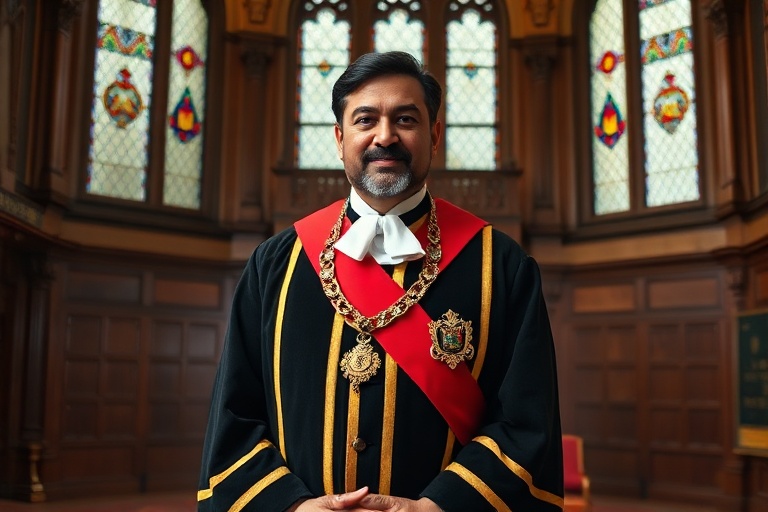
Ali’s political career took a decisive turn when he was elected to the Birmingham City Council in 2005. As a councilor, he championed policies that addressed the needs of marginalized communities, from expanding multilingual services in city departments to securing funding for youth mentorship programs. His efforts did not go unnoticed; in 2018, he was appointed as the Lord Mayor of Birmingham, becoming one of the few Muslim leaders to hold such a position in the UK. This appointment was not merely symbolic but a reflection of Birmingham’s evolving identity as a multicultural hub.
During his tenure, Ali prioritized economic revitalization in post-industrial neighborhoods, often collaborating with local businesses and international partners. His administration launched initiatives to attract foreign investment, particularly from South Asian markets, which aligned with Birmingham’s historical ties to the Commonwealth. However, his tenure was not without controversy. Critics argued that some of his policies favored large-scale development over community-driven projects, sparking debates about gentrification in historically working-class areas.
One of Ali’s most notable achievements was the establishment of the Birmingham Diversity Forum, a platform designed to amplify underrepresented voices in policy-making. The forum hosted roundtable discussions on issues ranging from Islamophobia to climate change, fostering dialogue across ethnic and religious lines. This initiative reflected Ali’s belief that effective governance required more than just representation—it demanded active participation from all segments of society.
Global Perspectives and Transnational Influence
Ali’s leadership extended beyond Birmingham’s borders, positioning him as a key figure in global discussions about multicultural governance. He frequently represented the UK at international forums, including the Council of Europe and the United Nations Habitat Assembly, where he advocated for policies that supported migrant integration and social cohesion. His work in these spaces highlighted the interconnectedness of urban challenges, from housing crises in European cities to the displacement of refugees in the Global South.
His international engagements also underscored the role of diaspora communities in shaping policy. Ali often spoke about the need for governments to recognize the contributions of immigrant populations, not just as economic actors but as cultural and political stakeholders. This perspective was particularly resonant in cities like Toronto, Berlin, and Dubai, where diverse populations have redefined urban identities. His speeches frequently drew parallels between Birmingham’s multicultural fabric and other global cities, emphasizing shared struggles and solutions.
Ali’s influence was also felt in the academic and cultural spheres. He collaborated with universities to study the impact of migration on urban economies, and his support for local arts programs helped nurture a new generation of artists from minority backgrounds. These efforts reflected his holistic approach to governance—one that valued cultural expression as a tool for social cohesion.
Legacy and Future Challenges
As Shaukat Ali’s tenure as Lord Mayor approached its conclusion, reflections on his legacy centered on his ability to redefine civic leadership in a rapidly changing world. For many, he embodied the potential of a truly representative democracy, where leadership is not just about holding office but about amplifying voices that have long been sidelined. His critics, however, pointed to the slow pace of systemic change, arguing that incremental reforms were insufficient in addressing entrenched inequalities.
Looking ahead, Ali’s work serves as a case study for cities grappling with similar challenges. His emphasis on collaboration—between governments, businesses, and communities—offers a blueprint for tackling complex issues like climate resilience and economic disparity. Yet, the question remains: How can cities sustain such momentum beyond individual leadership? This is a challenge that Birmingham and other global cities will need to address in the coming years.
For those interested in the intersection of politics and culture, Ali’s career offers valuable lessons. It demonstrates how leadership can be reimagined to reflect the diversity of modern societies, while also highlighting the ongoing struggle to turn representation into tangible progress. His story is a reminder that change is possible, but it requires persistent effort and a willingness to confront difficult conversations.
- Political leadership in multicultural societies demands more than symbolic gestures—it requires structural commitment.
- Diaspora communities play a crucial role in shaping urban policies, often acting as bridges between different cultural and economic groups.
- The future of inclusive governance lies in balancing top-down policies with grassroots initiatives that empower local voices.
Conclusion
Shaukat Ali’s journey from a Birmingham councilor to a globally recognized leader is a testament to the power of inclusive governance. His career challenges traditional notions of political leadership, proving that effectiveness is measured not just by policy wins but by the ability to foster unity in diversity. As cities worldwide continue to evolve, Ali’s story offers both inspiration and a cautionary tale—inspiration for what is possible, and a caution about the work that remains unfinished.