Strait of Hormuz Crisis Threatens Global Oil and Trade Routes
“`html
Strait of Hormuz: Rising Tensions and Global Shipping Risks
The Strait of Hormuz remains one of the world’s most critical chokepoints for global oil and trade flows. Recent months have seen a sharp escalation in tensions, threatening maritime security and disrupting supply chains that underpin economies worldwide. This narrow waterway, connecting the Persian Gulf to the Gulf of Oman, sees approximately 20% of the world’s oil pass through its waters daily. Any disruption here sends ripples across energy markets, shipping rates, and geopolitical alliances.
Geopolitical Flashpoints and Recent Incidents
Tensions in the Strait of Hormuz have been building for years, but recent events have pushed the region closer to crisis. In late 2023 and early 2024, a series of maritime incidents involving commercial vessels and naval forces from multiple nations drew international attention. Among the most notable was the seizure of an oil tanker by Iranian forces in April 2024, followed by reciprocal detentions by regional allies. These actions were framed as responses to sanctions and perceived provocations, but they underscored the fragility of the security framework in the area.
The incident list includes:
- April 2024: Iranian Revolutionary Guard Corps (IRGC) seized the Advantage Sweet, a Marshall Islands-flagged tanker, citing violations of Iranian law.
- May 2024: A drone strike on an Israeli-owned vessel near Oman, claimed by Yemen’s Houthi rebels, raised fears of broader regional spillover.
- June 2024: A joint naval patrol by U.S., U.K., and regional allies was announced to deter escalation, though skepticism remains about long-term effectiveness.
These events highlight a broader pattern: the Strait of Hormuz is increasingly becoming a theater where proxy conflicts and state rivalries play out indirectly. The involvement of non-state actors like the Houthis adds another layer of unpredictability, making de-escalation efforts more complex.
Impact on Global Oil Markets and Energy Prices
The Strait’s role as a global energy artery cannot be overstated. With around 21 million barrels of oil transiting daily, even a temporary closure could trigger severe supply shortages and price spikes. During past crises—such as the 2019 attacks on Saudi oil facilities—crude prices surged nearly 20% in days. While markets have shown resilience in absorbing some disruptions, the current environment reflects growing anxiety over potential prolonged closures.
Analysts at the Energy Analysis desk have noted that oil futures have become increasingly sensitive to geopolitical headlines from the region. A recent report by the International Energy Agency (IEA) warned that a sustained disruption could push Brent crude prices above $100 per barrel—a threshold not seen since the 2022 Ukraine war spike. The report also emphasized that alternative routes, such as the East African coast or longer detours around the Cape of Good Hope, are not only costly but logistically strained.
Moreover, insurance premiums for vessels transiting the Strait have risen by over 300% in the past year, according to maritime underwriters. This reflects not just the risk of physical damage but also the potential for prolonged detentions and legal disputes. Shipping giants such as Maersk and MSC have rerouted some vessels, opting for longer but safer paths, which adds days to transit times and increases operational costs.
Military Presence and International Responses
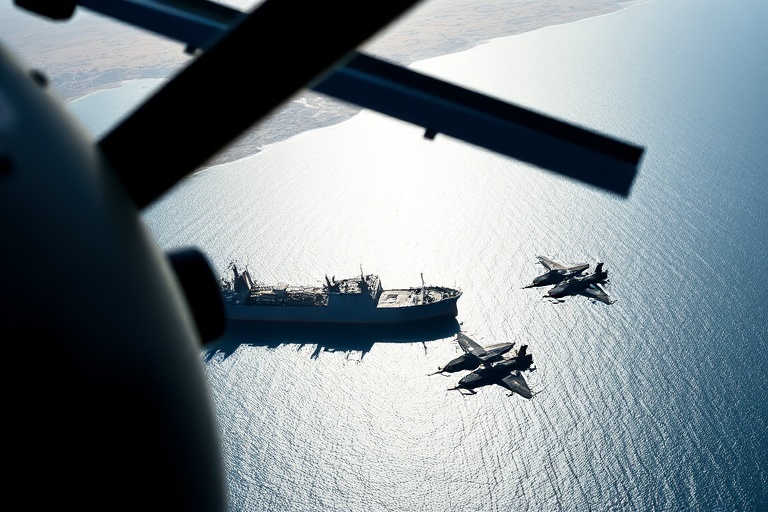
The U.S. Fifth Fleet, based in Bahrain, has long been the primary guarantor of maritime security in the Strait. However, its ability to deter aggression has been tested repeatedly. In response to recent attacks, Washington announced the deployment of additional missile defense systems and surveillance drones. The U.K. and France have also increased their naval presence, while regional allies like Saudi Arabia and the UAE have expanded their own maritime security initiatives.
Yet military posturing has done little to resolve underlying tensions. Diplomatic efforts remain stalled, with Iran rejecting calls for direct negotiations and the U.S. maintaining a hardline stance on sanctions enforcement. The absence of a unified international framework to address maritime security in the Strait is glaring. The United Nations has called for dialogue, but divisions among permanent Security Council members—particularly between the U.S. and China, which relies heavily on Gulf oil—have stalled progress.
Meanwhile, China has sought to strengthen its own security arrangements in the region. It has brokered port agreements with Oman and Pakistan, positioning itself as a stabilizing force. This shift is part of a broader strategy to secure supply chains and reduce dependence on Western-led maritime security frameworks. Observers note that Beijing’s involvement could either stabilize the region through economic incentives or further complicate diplomatic efforts by introducing new power dynamics.
Long-Term Outlook: Can a Crisis Be Avoided?
The future of the Strait of Hormuz hinges on multiple variables. First among them is the outcome of Iran’s nuclear negotiations and broader regional détente efforts. A return to the 2015 nuclear deal—or even a partial easing of sanctions—could reduce tensions by allowing Iran to reintegrate into global trade. However, domestic political pressures in both Iran and the U.S. make compromise unlikely in the near term.
Another factor is the role of regional players. Saudi Arabia and the UAE have shown increasing willingness to engage in dialogue with Iran, despite long-standing rivalries. Talks mediated by Iraq and Oman have yielded limited but promising confidence-building measures, such as prisoner exchanges and limited trade resumptions. If these efforts gain momentum, they could create a buffer against further escalation.
Technological solutions also offer a glimmer of hope. The use of satellite surveillance, AI-driven threat detection, and autonomous patrol vessels could enhance monitoring and response capabilities. Initiatives like the Maritime Domain Awareness programs aim to provide real-time data to shipping companies and naval forces, reducing reaction times in crisis scenarios. However, these tools require sustained investment and international cooperation to be effective.
Ultimately, the fate of the Strait of Hormuz may rest on whether the world’s major powers can prioritize stability over strategic competition. The alternative—a prolonged period of tension, sporadic violence, and economic uncertainty—would reshape global energy markets for decades. For now, the waterway remains a powder keg, with every passing incident bringing the region closer to a tipping point.
As shipping companies recalculate routes, insurers adjust premiums, and diplomats scramble for solutions, one thing is clear: the Strait of Hormuz is not just a regional flashpoint. It is a global pressure point, and its stability is essential to the functioning of the modern economy.