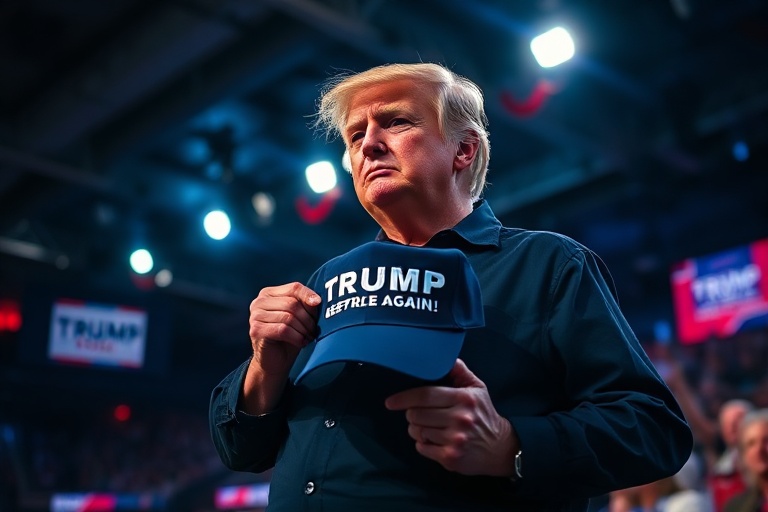
Trump Approval Ratings: Trends, Factors, and Broader Impact
“`html
Trump Approval Ratings: Trends, Factors, and Broader Impact
Approval ratings for Donald Trump have remained a persistent topic in political discourse since his first term in office. These metrics serve as a barometer for public sentiment, reflecting shifting priorities, policy impacts, and broader cultural divides. While fluctuations in approval are expected for any president, Trump’s ratings have consistently drawn intense scrutiny due to their polarization and the enduring influence of his political movement.
The consistency of these ratings—often hovering in a narrow range—suggests a deeply entrenched base of support alongside a similarly steadfast opposition. This dynamic highlights how presidential approval is no longer just a measure of job performance but a reflection of partisan identity and ideological alignment. Understanding these trends requires examining historical context, key influencing factors, and the broader implications for American politics.
Historical Context of Trump’s Approval Ratings
Donald Trump’s presidency began with historically low approval ratings compared to his predecessors. His initial approval rating of 45% upon taking office in January 2017 was one of the lowest in modern history, a reflection of the divisive 2016 election and his unconventional leadership style. Over his four years in office, his approval fluctuated within a relatively narrow band, typically ranging from 40% to 45%, rarely dipping below 37% or rising above 49%.
His approval spiked briefly during key moments, such as the initial COVID-19 response in early 2020, when it reached 49%. However, these gains were often short-lived, underscoring the volatility of public opinion in response to crises. Even after his presidency ended, Trump’s approval ratings remained significant, often serving as a litmus test for loyalty within the Republican Party and a rallying point for his critics.
Comparison with Other Presidents
Trump’s approval ratings stand in contrast to those of recent presidents. Barack Obama, for example, maintained an average approval rating of 50% throughout his two terms, with a peak of 68% during his first year in office. George W. Bush, similarly, saw ratings fluctuate between 30% and 90%, though his lowest point came during his second term amid the Iraq War. Trump’s ratings, by comparison, reflect a more polarized and less flexible political environment.
This polarization is not unique to Trump, but his presidency amplified it. The consistency of his approval ratings—despite major scandals, impeachments, and policy shifts—suggests that his support is less about specific actions and more about identity and loyalty. This trend has significant implications for how approval ratings are interpreted in the modern political landscape.
Key Factors Influencing Trump’s Approval Ratings
Several factors have consistently influenced Trump’s approval ratings, ranging from policy decisions to external events and media narratives. Understanding these factors provides insight into the durability of his support and the challenges faced by his critics.
- Policy Priorities: Trump’s approval ratings have often been tied to his core policy initiatives, such as tax reform, deregulation, and immigration policies. His base tends to rally behind these efforts, while opponents view them as divisive or harmful.
- Cultural and Social Issues: Trump’s rhetoric on issues like race, gender, and national identity has galvanized his supporters while alienating others. These cultural battles often overshadow policy debates in shaping public opinion.
- Media Coverage: The role of media in framing Trump’s presidency cannot be overstated. Outlets aligned with his base amplify his messaging, while mainstream media often focuses on controversies, creating a feedback loop that reinforces existing beliefs.
- Economic Conditions: While economic performance during Trump’s presidency was generally strong before the pandemic, his approval ratings did not benefit as much as expected. This suggests that economic factors alone do not drive his popularity, unlike in past administrations.
- External Events: Crises such as the COVID-19 pandemic and the January 6 Capitol riot had immediate but often temporary effects on his approval ratings. These events highlighted the resilience of his support base despite setbacks.
The Role of Polarization
Polarization is the defining feature of Trump’s approval ratings. Unlike previous presidents, Trump’s support and opposition are not merely political but deeply personal and ideological. His approval ratings are less about job performance and more about loyalty to his movement. This polarization creates a feedback loop: his base remains steadfast, while opponents are equally resolute in their disapproval.
This dynamic makes it difficult for his approval ratings to shift significantly unless a major crisis or scandal forces a re-evaluation. Even then, the response is often along partisan lines, with little crossover between the two camps. This trend has reshaped how approval ratings are perceived, turning them into a measure of tribal allegiance rather than governance.
Broader Implications of Trump’s Approval Ratings
The endurance of Trump’s approval ratings has significant implications for American politics, media, and society. These ratings are not just a reflection of public opinion but a driver of political behavior and institutional change.
Impact on the Republican Party
Trump’s approval ratings have reshaped the Republican Party, making loyalty to him a litmus test for candidates and elected officials. Those who align closely with his views tend to enjoy strong support from his base, while critics often face backlash or primary challenges. This has created a party that is increasingly defined by Trump’s priorities rather than traditional conservative principles.
The 2020 election and subsequent events, including the January 6 Capitol riot, further entrenched this dynamic. Trump’s approval ratings among Republicans remained high even after his defeat, demonstrating the extent to which his influence has redefined party loyalty. This shift has made it difficult for traditional Republicans to challenge his dominance within the party.
Media and Public Discourse
The media’s role in shaping Trump’s approval ratings has also evolved. Outlets aligned with Trump, such as Fox News and right-wing podcasts, often amplify his messaging and downplay controversies, reinforcing his base’s support. Meanwhile, mainstream and left-leaning media focus on scandals, controversies, and policy failures, further polarizing public opinion.
This bifurcation of media has created echo chambers where facts are often secondary to narrative. As a result, Trump’s approval ratings are less about objective performance and more about the information people choose to believe. This trend has broader implications for democratic discourse, as shared facts become increasingly elusive.
Future of American Politics
Looking ahead, Trump’s approval ratings suggest a political landscape that remains deeply divided. His continued influence, even after leaving office, indicates that his movement is not a passing phenomenon but a lasting force in American politics. This raises questions about the future of the Republican Party, the role of populism in U.S. politics, and the potential for further polarization.
For Democrats and traditional Republicans, the challenge will be to craft a message that resonates in this new environment. Simply opposing Trump may no longer be sufficient; instead, they must address the underlying grievances that have fueled his support. Meanwhile, Trump’s movement will likely continue to shape the GOP, making it difficult for the party to return to its pre-Trump identity.
Conclusion
Trump’s approval ratings are more than just numbers; they are a reflection of a deeply divided nation and a political system in flux. While his ratings have remained relatively stable, their consistency masks the volatility of the underlying forces at play. From media narratives to cultural battles, these ratings are shaped by factors that go beyond traditional governance, highlighting the challenges of measuring public opinion in an era of polarization.
For observers and participants in American politics, understanding these trends is essential. They offer a window into the soul of a nation grappling with identity, loyalty, and the future of democracy. As Trump’s influence persists, his approval ratings will continue to serve as a barometer for the health—and sickness—of the American political system.
For further reading on political trends and analysis, visit our News and Analysis sections.