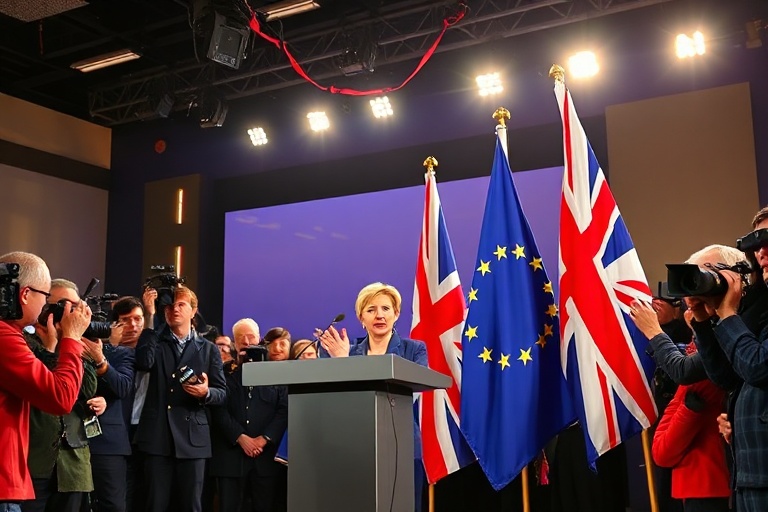
The question of the United Kingdom rejoining the European Union has resurfaced in political and media circles, driven by shifting economic pressures, geopolitical tensions, and public sentiment. Over three years after Brexit was finalized, the debate has evolved from a hypothetical curiosity to a topic of serious discussion among policymakers, economists, and citizens alike.
While full membership remains a distant prospect, the renewed conversation reflects growing concerns about the UK’s post-Brexit trajectory. Trade disruptions, labor shortages, and regulatory divergence have prompted some to reconsider the costs of leaving the EU’s single market and customs union. This analysis examines the current state of the debate, the key arguments on both sides, and what it could mean for the UK’s future.
The Political Landscape: Who’s Talking About Rejoining?
The push for closer ties with the EU—or even full reaccession—has gained momentum within certain political circles. The Labour Party, now leading in the polls ahead of the next general election, has signaled a willingness to reset relations with Brussels, though it stops short of endorsing EU membership. Labour leader Keir Starmer has emphasized economic pragmatism, advocating for a closer partnership on trade, climate policy, and security.
Smaller parties, including the Liberal Democrats and the Greens, have been more vocal in calling for a potential return to the EU. The Liberal Democrats, in particular, have made rejoining a central plank of their platform, arguing that the economic benefits outweigh the political challenges. Meanwhile, the Scottish National Party (SNP) has framed EU reaccession as a path to independence, suggesting that Scotland could rejoin the EU as a separate member state if it secures independence from the UK.
On the other side of the aisle, the Conservative Party remains deeply divided. While some MPs acknowledge the difficulties of the post-Brexit economy, others view any rapprochement with the EU as a betrayal of the 2016 referendum result. The party’s leadership has largely ruled out rejoining the single market or customs union, instead focusing on bilateral trade deals and regulatory innovation.
Economic Pressures: The Case for Rejoining
The economic arguments for closer EU ties—or even reaccession—have grown louder in recent months. The UK’s departure from the EU’s single market has led to increased costs for businesses, particularly in sectors like manufacturing, agriculture, and financial services. Supply chain disruptions, customs delays, and regulatory divergence have eroded some of the promised benefits of Brexit.
A 2023 report by the London School of Economics estimated that Brexit has cost the UK economy around 4% of its GDP, with trade with the EU declining by approximately 15% since 2019. These figures have fueled debates about whether the UK’s current trade agreements with the EU are sufficient or whether deeper integration is necessary to restore growth.
Proponents of rejoining point to the success of the EU’s single market in fostering trade and investment. They argue that the UK’s current trade deal with the EU—a thin agreement compared to the comprehensive arrangements of EU membership—leaves the country at a disadvantage. By rejoining, the UK could regain unfettered access to the single market, reducing costs for businesses and increasing consumer choice.
Key Economic Benefits Cited by Rejoiners
- Unrestricted market access: Elimination of tariffs, quotas, and customs checks with the EU.
- Regulatory alignment: Easier trade in goods and services through shared standards.
- Labor market flexibility: Easier movement of workers to address skills shortages in key sectors.
- Foreign direct investment: Increased attractiveness to multinational corporations based in the EU.
- Innovation and R&D funding: Greater participation in EU programs like Horizon Europe.
However, the economic case is not one-sided. Critics argue that rejoining the EU would require the UK to accept the bloc’s rules on free movement, budget contributions, and regulatory oversight—conditions that were central to the Brexit debate. Additionally, the UK would need to navigate the complex process of reaccession, which could take years and require significant political capital.
The Path Forward: What Would Rejoining Entail?
Rejoining the EU is not a straightforward process. The UK would need to follow the accession procedure set out in Article 49 of the Treaty on European Union, which requires unanimous approval from all existing member states. This process could take several years, with no guarantee of success.
Alternatively, the UK could pursue a more limited form of integration, such as rejoining the EU’s single market or customs union without full membership. This approach, championed by some economists and politicians, would allow the UK to regain some of the benefits of EU membership while avoiding the political and administrative hurdles of full reaccession.
A third option is a bespoke agreement that goes beyond the current UK-EU Trade and Cooperation Agreement (TCA). Such an agreement could include provisions for closer regulatory alignment, labor mobility, and dispute resolution mechanisms. However, this would require both sides to compromise on contentious issues, such as the role of the European Court of Justice in UK law.
Potential Steps for the UK to Rejoin the EU
- Public consultation and political consensus: A national debate to gauge public support and build cross-party consensus.
- Legal and administrative preparation: Reviewing UK laws to align with EU regulations and preparing for the accession process.
- Negotiation with EU member states: Securing support from key EU countries, particularly France and Germany.
- Ratification by EU institutions: Approval by the European Parliament and the Council of the EU.
- Final accession treaty: Signing the treaty and integrating into the EU’s legal and institutional framework.
The timeline for such a process is uncertain. Even under the most optimistic scenarios, rejoining the EU would likely take a decade or more. In the meantime, the UK must navigate its post-Brexit relationship with the EU, balancing economic needs with political realities.
Broader Implications: What Does This Mean for the UK and Europe?
The debate over UK-EU relations extends beyond economics and politics. It touches on questions of national identity, sovereignty, and the UK’s role in the world. For the EU, the question of UK reaccession is fraught with implications. On one hand, the EU could benefit from the UK’s economic and military contributions. On the other, the EU may be reluctant to welcome back a member that left under contentious circumstances, fearing a precedent for other countries considering departure.
For the UK, the decision to rejoin—or even pursue closer ties—would have profound consequences. It would require a significant shift in public opinion, which remains deeply divided on the issue. Polls indicate that support for rejoining the EU has grown since 2016, but it still falls short of a majority. A 2024 YouGov survey found that 48% of Britons would support rejoining the EU under certain conditions, while 37% would oppose it.
Geopolitically, the UK’s relationship with the EU is a critical factor in its ability to influence global affairs. A closer partnership with the EU could strengthen the UK’s position in negotiations with the United States, China, and other global powers. Conversely, a prolonged state of economic and political limbo could weaken the UK’s international standing.
Ultimately, the question of the UK rejoining the EU is not just about economics or politics—it is about the country’s future identity and place in the world. Whether through full reaccession, closer integration, or a bespoke agreement, the UK must find a way to balance its post-Brexit ambitions with the realities of a changing global landscape.
For those interested in the broader context of UK-EU relations, explore our Politics and Economy categories for more analysis and reporting.
Conclusion: A Long Road Ahead
The discussion about the UK rejoining the EU is no longer a fringe topic but a legitimate part of the national conversation. While full membership remains a distant goal, the renewed interest reflects growing dissatisfaction with the status quo. Economic pressures, political shifts, and public sentiment are all driving the debate forward.
However, the path to rejoining—or even achieving closer integration—is fraught with challenges. The UK must navigate a complex political landscape, both domestically and within the EU. It must also address the deep divisions within its own society about what role the country should play in Europe and the world.
As the debate continues, one thing is clear: the UK’s relationship with the EU will remain a defining issue for years to come. Whether through reaccession, closer ties, or a new form of partnership, the choices made today will shape the country’s future for generations.