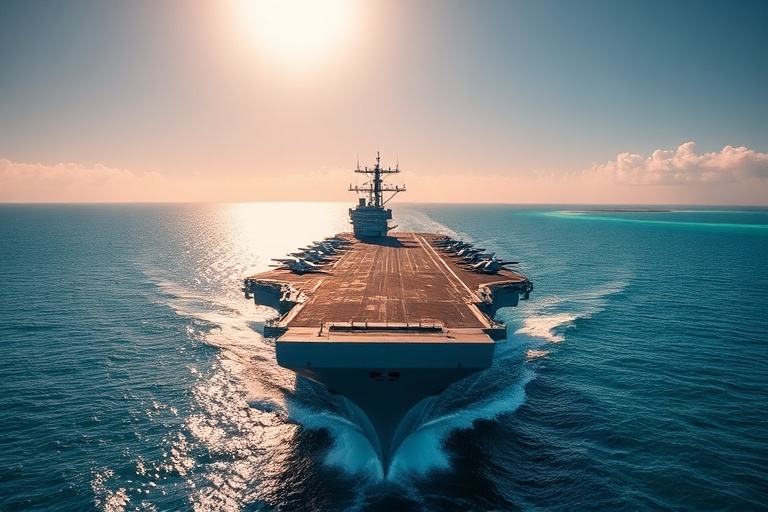
The USS Nimitz, one of the United States Navy’s ten Nimitz-class supercarriers, recently completed a significant deployment to the Caribbean Sea. This move has drawn attention from military analysts, regional governments, and global observers alike. While the official mission focused on maritime security and regional cooperation, the deployment carries broader implications for U.S. foreign policy in Latin America and the Caribbean.
The carrier strike group’s presence in the region comes at a time of heightened geopolitical tension. With China expanding its influence in the Western Hemisphere and Russia maintaining a strategic foothold in countries like Venezuela, the U.S. is carefully balancing its commitments. The Caribbean has long been considered America’s “third border,” and maintaining stability here remains a top priority for Washington.
Historical Context: Why the Caribbean Matters
The Caribbean has always occupied a unique position in global geopolitics. Its strategic location between North and South America makes it a critical chokepoint for maritime trade. Historically, the region has been a theater for great power competition, from European colonial powers to Cold War rivalries. The U.S. has maintained a consistent military presence here since the early 20th century, particularly after the Spanish-American War.
During the Cold War, the Caribbean became a flashpoint for ideological conflict. The Cuban Missile Crisis of 1962 brought the world to the brink of nuclear war. More recently, the region has faced challenges from drug trafficking, organized crime, and political instability. The deployment of the USS Nimitz is part of a broader strategy to address these evolving threats while reassuring allies and partners.
Notably, this deployment follows a pattern of increased U.S. naval activity in the region. In 2022, the USS Gerald R. Ford and its carrier strike group conducted operations in the Caribbean as part of NATO exercises. These moves signal a renewed focus on the Western Hemisphere, particularly as China seeks to deepen its economic and military ties with countries in the region.
Operational Details: What the USS Nimitz Did in the Caribbean
The USS Nimitz Carrier Strike Group (CSG) arrived in the Caribbean in early 2023, conducting a series of joint exercises with regional partners. The deployment included the guided-missile cruiser USS Bunker Hill and the guided-missile destroyer USS Gridley, along with a carrier air wing comprising F/A-18 Super Hornets, E-2 Hawkeyes, and other aircraft.
The carrier’s primary missions included:
- Maritime Security Operations: Countering illicit trafficking, including drug interdiction and anti-piracy efforts.
- Joint Training Exercises: Collaborating with regional navies to enhance interoperability and readiness.
- Humanitarian Assistance: Providing support for disaster response and medical outreach programs.
- Deterrence Posturing: Demonstrating U.S. commitment to regional stability in the face of external pressures.
One of the most significant aspects of the deployment was the participation in UNITAS, the U.S. Navy’s longest-running multinational exercise. This year’s UNITAS event included naval forces from Brazil, Colombia, Mexico, and other Caribbean nations. The exercises focused on anti-submarine warfare, air defense, and maritime domain awareness—skills critical for countering modern threats.
In addition to military operations, the USS Nimitz’s crew engaged in community outreach programs. Sailors participated in medical clinics, engineering projects, and cultural exchanges in ports such as Cartagena, Colombia, and Kingston, Jamaica. These efforts aimed to strengthen relationships with local populations and highlight the U.S. Navy’s humanitarian role.
Geopolitical Implications: A Message to Regional Powers
The deployment of the USS Nimitz is not occurring in a vacuum. It takes place against a backdrop of rising tensions between the U.S. and other global powers vying for influence in Latin America and the Caribbean. China, in particular, has made significant inroads in the region through economic investments, infrastructure projects, and military cooperation agreements.
China’s growing presence in the Caribbean is evident in its deepening ties with countries like Cuba, Venezuela, and Nicaragua. These relationships often involve loans, trade agreements, and, in some cases, military support. For example, China has provided Venezuela with military equipment, including drones and radar systems, raising concerns in Washington about the potential for expanded Chinese military influence in the region.
Russia, too, has maintained a strategic foothold in the Caribbean. Its military cooperation with Venezuela, including joint naval exercises and the deployment of military advisors, has drawn particular attention. The presence of Russian warships in the region, such as the Admiral Kuznetsov aircraft carrier, has underscored Moscow’s intent to project power beyond its traditional spheres of influence.
The USS Nimitz’s deployment can be seen as a response to these developments. By maintaining a visible and capable naval presence in the Caribbean, the U.S. is signaling its commitment to regional stability and its willingness to counterbalance the influence of other powers. This strategy aligns with the broader U.S. Indo-Pacific and European defense strategies, which emphasize the importance of maintaining a rules-based international order.
Regional Reactions: Allies, Partners, and Critics
The response to the USS Nimitz’s deployment has been mixed across the Caribbean. Some countries have welcomed the show of support, while others have expressed skepticism or outright criticism.
Countries like Colombia and Brazil have been enthusiastic participants in joint exercises with the U.S. Navy. Their governments view the deployment as a positive step toward enhancing regional security and countering transnational threats like drug trafficking and organized crime. For these nations, cooperation with the U.S. is a key component of their defense strategies.
On the other hand, some governments have been more cautious. In Venezuela, President Nicolás Maduro condemned the deployment as a “provocative act” and accused the U.S. of interfering in the region’s affairs. Similarly, the Cuban government issued statements criticizing the presence of U.S. warships, framing it as a threat to regional peace and sovereignty.
Public opinion in the Caribbean has also been divided. In some countries, the U.S. Navy is viewed as a stabilizing force, particularly in the context of rising crime and political instability. In others, historical grievances and anti-American sentiment have led to protests or calls for neutrality. The deployment of the USS Nimitz has thus become a symbol of broader debates about foreign influence and regional autonomy.
Despite these differing perspectives, one thing is clear: the Caribbean remains a critical theater for great power competition. The USS Nimitz’s deployment is a reminder that the region’s strategic importance has not diminished, even as global attention shifts to other hotspots around the world.
Looking Ahead: The Future of U.S. Engagement in the Caribbean
The USS Nimitz’s deployment to the Caribbean is unlikely to be an isolated event. Analysts expect the U.S. to continue or even expand its military presence in the region as part of a broader strategy to counter Chinese and Russian influence. This could include more frequent deployments of carrier strike groups, increased military aid to partner nations, and expanded joint exercises.
However, the success of these efforts will depend on several factors. First, the U.S. must balance its military commitments with diplomatic engagement. Strengthening alliances and addressing the root causes of instability—such as poverty, corruption, and weak governance—will be essential for long-term success. Second, the U.S. must avoid the perception of being a hegemonic power imposing its will on the region. Building partnerships based on mutual respect and shared interests will be key.
For the Caribbean, the stakes are high. The region faces a range of challenges, from climate change and natural disasters to economic inequality and political instability. Addressing these issues will require coordinated action from governments, international organizations, and civil society. The presence of the USS Nimitz is a reminder that the Caribbean’s future will be shaped not only by its own actions but also by the decisions of global powers.
As the U.S. continues to navigate the complexities of the 21st century, the Caribbean will remain a critical testing ground for its global leadership. The deployment of the USS Nimitz is a small but significant step in this ongoing effort. Whether it succeeds in achieving its objectives will depend on the choices made in Washington, the reactions of regional governments, and the evolving dynamics of great power competition.
One thing is certain: the waters of the Caribbean will continue to be turbulent, and the U.S. Navy will be watching closely.