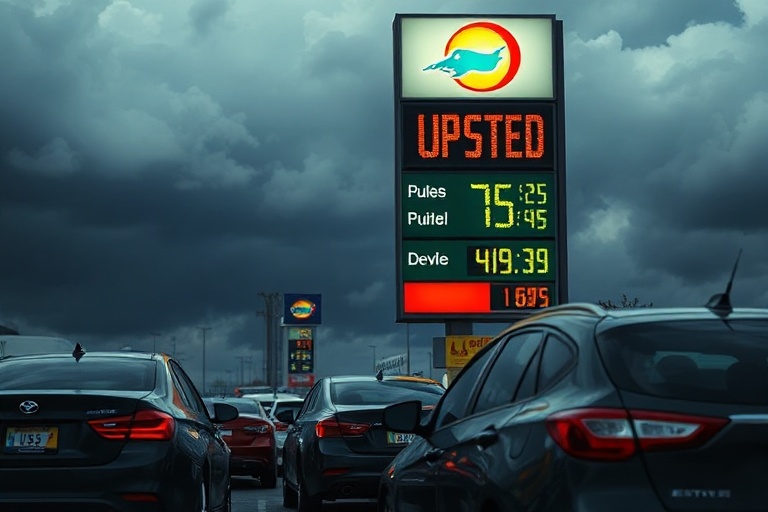
The question of when gas prices will go down has moved from background noise to front-page urgency. In cities from Los Angeles to Lagos, drivers watch pump prices like a ticking clock. The pain isn’t just financial—it’s cultural. In the United States, where car culture still defines much of daily life, high gas prices ripple through commutes, road trips, and even dating rituals. Meanwhile, in Europe, where train networks are more robust, citizens still feel the pinch at the pump, but the frustration is amplified by broader cost-of-living crises.
This isn’t just about fuel. It’s about how energy shapes identity, economy, and survival across continents. From the rice fields of Vietnam to the sprawling suburbs of Sydney, the cost of gasoline reflects deeper shifts in global supply chains, geopolitical tensions, and environmental policy. To understand when—or if—prices will fall, we must look beyond the pump and into the forces driving the world’s energy markets.
What’s Really Behind the Price Surge?
The recent spike in gas prices isn’t a fluke. It’s the result of layered pressures converging at once. At the top of the list is the war in Ukraine, which has disrupted global oil flows since 2022. Russia, one of the world’s top oil exporters, has seen its output constrained by sanctions and market boycotts. Europe, once heavily dependent on Russian oil, scrambled to replace it with imports from the Middle East and the U.S., driving up shipping costs and prices.
But the conflict is only part of the story. The COVID-19 pandemic reshaped energy demand in ways that are still playing out. When global travel halted in 2020, oil prices crashed. Now, as economies rebound—especially in China and India—demand has surged past pre-pandemic levels. Refineries, already operating at reduced capacity during the downturn, are struggling to catch up. Add in a series of extreme weather events—from hurricanes in the Gulf Coast to droughts in Europe—and the supply chain becomes even more fragile.
On the policy side, OPEC+ has maintained disciplined production cuts to stabilize prices, but this strategy has unintended consequences. By limiting supply, the cartel keeps prices artificially high, benefiting oil-dependent nations but squeezing consumers worldwide. In the U.S., domestic production has risen, yet gasoline prices remain stubbornly elevated due to refining bottlenecks and export dynamics.
Regional Realities: Who’s Feeling the Pain Most?
Gas prices aren’t rising uniformly across the globe—and neither is the pain. Some regions are more resilient than others, depending on infrastructure, subsidies, and local energy policies.
- United States: Prices vary widely by state due to taxes and refinery capacity. California often leads with the highest prices, while Texas and Louisiana benefit from proximity to refineries. Still, the national average remains well above pre-pandemic levels.
- Europe: High taxes make fuel expensive even when global oil prices dip. Countries like France and Germany have responded with temporary tax cuts, but the relief is uneven and often short-lived.
- Latin America: In nations like Brazil and Argentina, fuel prices are heavily subsidized, shielding consumers from global shocks—but straining government budgets and contributing to inflation.
- Asia: Japan and South Korea rely almost entirely on imported oil, making them highly vulnerable to price swings. Meanwhile, India has seen protests over fuel costs, prompting government intervention.
- Africa: In Nigeria, fuel subsidies have long been a political flashpoint. Despite being an oil producer, the country imports most of its refined gasoline, making prices subject to global volatility and local corruption.
The disparities reveal a deeper truth: gas prices aren’t just an economic issue. They’re a reflection of power. Oil-rich nations can shield their citizens. Import-dependent ones cannot. And in between, consumers bear the brunt of a system where energy is both a necessity and a weapon.
Could Prices Drop Soon? The Outlook for 2024 and Beyond
Predicting gas prices is like forecasting the weather—possible, but never certain. Yet several trends suggest a potential softening in 2024, though not a collapse.
First, global oil demand is expected to slow. The International Energy Agency (IEA) projects that demand growth will ease as electric vehicles gain market share and energy efficiency improves. In China, sales of EVs have surged, reducing gasoline consumption. In Europe, stricter emissions standards are pushing drivers toward alternatives. Even in the U.S., where truck culture runs deep, EV adoption is accelerating faster than expected.
Second, OPEC+ may eventually ease production cuts. While the cartel has signaled a commitment to market stability, internal pressures—especially from members like Saudi Arabia—could push for increased output to boost revenue and influence.
Third, geopolitical risks could ease. If the Ukraine war de-escalates or if Iran re-enters the global oil market, supply disruptions could lessen. Even a thaw in U.S.-Venezuela relations could bring additional barrels to the market.
But don’t expect a dramatic drop. Analysts at Goldman Sachs and the U.S. Energy Information Administration (EIA) forecast that gasoline prices will hover around $3.50 to $4.00 per gallon in the U.S. through 2025. In Europe, prices may stabilize but remain high due to taxes and energy transition costs. And in emerging markets, subsidies and inflation will continue to mask the true cost of fuel.
One thing is clear: the era of cheap gas is over. The question isn’t whether prices will go down—but how low they can reasonably go, and who will feel the relief first.
What Can Drivers Do? Practical Strategies in an Expensive Era
With prices unlikely to plunge anytime soon, drivers are adapting. Some are changing their habits. Others are turning to technology. A few are even reconsidering their relationship with the automobile altogether.
Here are some strategies gaining traction:
- Carpooling and ride-sharing: In dense cities, apps like Uber Pool and traditional carpool lanes are making a comeback. In Manila, informal ride-sharing networks have long been a lifeline. Now, they’re becoming mainstream.
- Public transit and micromobility: Cities like Berlin and Bogotá are expanding bike lanes and electric scooter access. Meanwhile, rail networks in Japan and Europe remain competitive alternatives to driving.
- Fuel-efficient or electric vehicles: The used EV market is booming, especially in the U.S. where incentives still apply. Even hybrids are gaining popularity as a bridge technology.
- Driving habits: Smoother acceleration, reduced idling, and route optimization can improve fuel efficiency by 10-15%. Apps like Waze and Fuelly help drivers track both traffic and consumption.
- Policy advocacy: In some regions, drivers are pushing for fuel tax reductions, better public transit funding, and stricter emissions standards. Grassroots movements in places like Kenya and South Africa have successfully pressured governments to lower fuel taxes during crises.
For many, these changes aren’t just about saving money—they’re about survival. In countries where transportation costs eat up a third of household income, even small reductions matter. But adaptation isn’t universal. In rural areas and sprawling suburbs, alternatives are limited. The car remains essential, and the financial burden falls hardest on those who can least afford it.
As the world transitions to cleaner energy, the relationship between people and gasoline will evolve. But for now, the pump remains a daily reminder of global inequality, economic fragility, and the slow pace of change.
A Cultural Shift in the Making
The high cost of gas is doing more than straining wallets—it’s reshaping culture. In the U.S., road trips, once a rite of passage for young adults, are becoming a luxury. Families are opting for staycations or virtual gatherings instead of cross-country drives. In Europe, the decline of the second-car household is accelerating. And in Asia, the rise of e-commerce and food delivery is making traffic congestion—and fuel costs—a shared frustration.
Even language is changing. Terms like “range anxiety” and “fuel poverty” have entered everyday vocabulary. Social media is filled with memes about gas station lines and viral videos of drivers calculating the cost of their commute. The frustration is real, but so is the creativity. From DIY fuel-saving hacks to community-based car-sharing programs, people are finding ways to push back.
Yet, the deeper cultural shift may be one of resignation. After decades of cheap energy enabling sprawl, consumerism, and individualism, the world is being forced to rethink. The car isn’t just a machine—it’s a symbol of freedom, identity, and power. But when fuel costs rise, that symbolism cracks. The open road starts to feel like a mirage.
For now, the question remains: when will gas prices go down? The answer is as complex as the forces driving them. They may dip in 2025. They may stabilize. But they won’t return to the bargain-basement levels of the early 2010s. The energy era that defined the last century is giving way to one defined by scarcity, sustainability, and struggle.
And that’s a shift no driver can outrun.
For more on how energy costs are reshaping daily life, explore our News section, where we track global trends with local impact.
Interested in how electric vehicles are changing the automotive landscape? Check out our Automotive coverage for in-depth analysis and reviews.