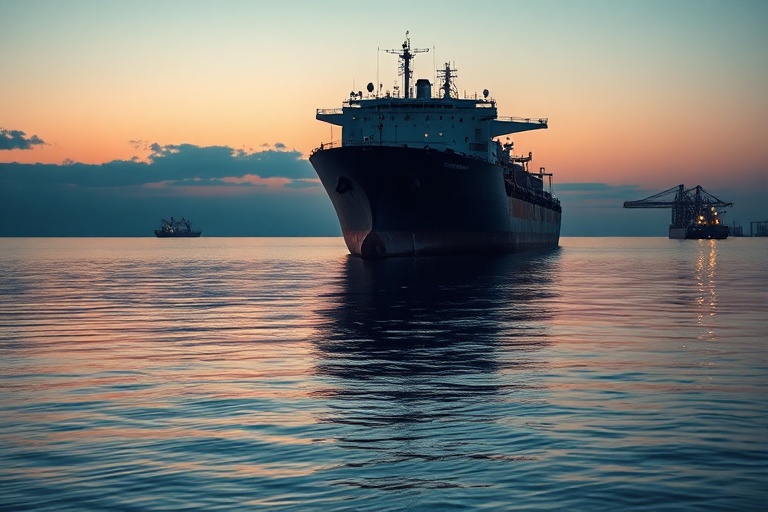
The oil tanker stands as one of the most critical vessels in modern energy infrastructure. These massive ships move millions of barrels of crude oil and refined products across oceans daily, ensuring the steady flow of fuel that powers economies worldwide. Without them, the global energy supply chain would grind to a halt, causing immediate disruptions in transportation, manufacturing, and daily life.
Their operation is a marvel of engineering and logistics. Oil tankers come in various sizes, from smaller vessels plying regional routes to colossal supertankers capable of carrying over two million barrels of oil. These ships navigate complex trade routes, often passing through geopolitically sensitive chokepoints like the Strait of Hormuz or the Strait of Malacca. The stakes are high—not just economically, but environmentally and politically as well.
The Anatomy of an Oil Tanker: Design and Function
Oil tankers are purpose-built for one function: transporting liquid cargo efficiently and safely. Their design prioritizes stability, cargo capacity, and protection against leaks or spills. Modern tankers are divided into multiple compartments, which helps prevent catastrophic spillage in the event of a hull breach. Double-hull construction has become a standard, particularly after high-profile disasters like the Exxon Valdez spill in 1989, which led to stricter international regulations.
There are three primary types of oil tankers:
- VLCC (Very Large Crude Carrier): Typically carries between 200,000 and 320,000 deadweight tons (DWT). These ships are the workhorses of long-haul crude oil transport.
- ULCC (Ultra Large Crude Carrier): The largest class, capable of carrying over 400,000 DWT. Few ports in the world can accommodate these giants.
- Product Tankers: Smaller vessels designed to carry refined petroleum products such as gasoline, diesel, and jet fuel. They are essential for distributing fuel from refineries to regional markets.
The propulsion systems on these ships are built for endurance rather than speed, prioritizing fuel efficiency over velocity. Many modern tankers use slow-speed diesel engines that can operate for weeks without refueling. Navigation technology has also advanced, with modern tankers equipped with GPS, radar, and automated systems to monitor cargo and hull integrity in real time.
The Global Oil Tanker Fleet: Owners, Routes, and Economics
The oil tanker industry is dominated by a handful of major players, including state-owned enterprises, multinational corporations, and independent shipowners. Countries like Saudi Arabia, Russia, and the United States are among the largest exporters of crude oil, relying heavily on tanker fleets to reach global markets. Meanwhile, nations such as China and India, with rapidly growing energy demands, are increasingly dependent on imported oil delivered by tankers.
The economics of oil tankers are influenced by several factors:
- Freight Rates: The cost of chartering a tanker fluctuates based on supply and demand. During periods of high oil prices, demand for tankers rises, pushing rates upward.
- Geopolitical Tensions: Conflicts in oil-producing regions can disrupt shipping routes, leading to higher insurance costs and rerouting expenses.
- Regulatory Compliance: Stricter environmental and safety regulations, such as the IMO 2020 sulfur cap, require costly retrofits, impacting smaller operators disproportionately.
- Technological Upgrades: Investments in cleaner propulsion, such as LNG-powered engines, are becoming necessary to meet future emissions standards.
One of the most critical routes for oil tankers is the Persian Gulf, where nearly a third of the world’s seaborne oil passes through the Strait of Hormuz. Any disruption in this region—whether due to conflict, piracy, or sanctions—can send shockwaves through global oil markets. For instance, tanker traffic through the Strait of Hormuz dropped by nearly 40% in 2019 following attacks on oil tankers and heightened tensions between Iran and Western nations.
Environmental Risks and the Push for Sustainability
Despite their economic importance, oil tankers pose significant environmental risks. Spills, though less frequent than in past decades, can have devastating consequences. The Erika spill off the coast of France in 1999 and the Prestige spill off Spain in 2002 highlighted the long-term damage these incidents can cause to marine ecosystems. Even small leaks or operational discharges, such as bilge water or tank washings, contribute to marine pollution.
The industry has responded with a mix of regulatory measures and technological innovations. The International Maritime Organization (IMO) has implemented stricter rules on ballast water management and emissions. New tankers are now required to have double hulls, and older single-hull vessels are being phased out. Additionally, the push for decarbonization is driving interest in alternative fuels and propulsion systems for tankers.
Some companies are exploring the use of wind-assisted propulsion, such as rotor sails, to reduce fuel consumption. Others are investing in liquefied natural gas (LNG) as a transitional fuel, which produces fewer sulfur and nitrogen oxides than traditional marine fuels. However, the transition to fully sustainable tanker operations remains a challenge due to the scale of investment required and the long lifespan of these vessels.
“The oil tanker industry is at a crossroads. While it remains indispensable to global energy security, the pressure to reduce its environmental footprint is mounting. The choices made today will determine whether tankers continue to be a symbol of industrial progress or become relics of an unsustainable era.”
The Future of Oil Tankers: Challenges and Opportunities
The future of oil tankers will be shaped by three major trends: energy transition, technological innovation, and geopolitical shifts. As the world moves toward renewable energy sources, the long-term demand for oil may decline. However, this transition is likely to be gradual, with oil remaining a critical energy source for decades to come, particularly in sectors like aviation and petrochemicals.
Technological advancements offer opportunities to improve efficiency and safety. Autonomous tankers, though still in early development, could reduce human error and operational costs. Artificial intelligence is being used to optimize routing, predict maintenance needs, and enhance cargo management. These innovations could make tanker operations more cost-effective and environmentally friendly.
Geopolitically, the rise of new energy powers and shifting trade alliances will reshape tanker routes. For example, the expansion of the Arctic shipping routes due to melting ice could open new possibilities for transporting oil between Europe and Asia. However, these routes also pose significant environmental risks and require advanced ice-breaking capabilities.
The oil tanker industry must balance these challenges with its core mission: ensuring the reliable transport of energy. Companies that invest in sustainability, adapt to regulatory changes, and embrace technological advancements will be best positioned to thrive in the evolving energy landscape.
For now, oil tankers remain indispensable. They are the silent giants of global trade, moving unseen across vast oceans, connecting producers and consumers in a complex web of energy dependency. Their story is one of engineering triumphs, economic necessity, and environmental responsibility—a narrative that will continue to unfold as the world transitions to a new energy future.
To learn more about the intersection of energy and technology, visit our Technology section. For deeper analysis on global trade dynamics, explore our Business category.