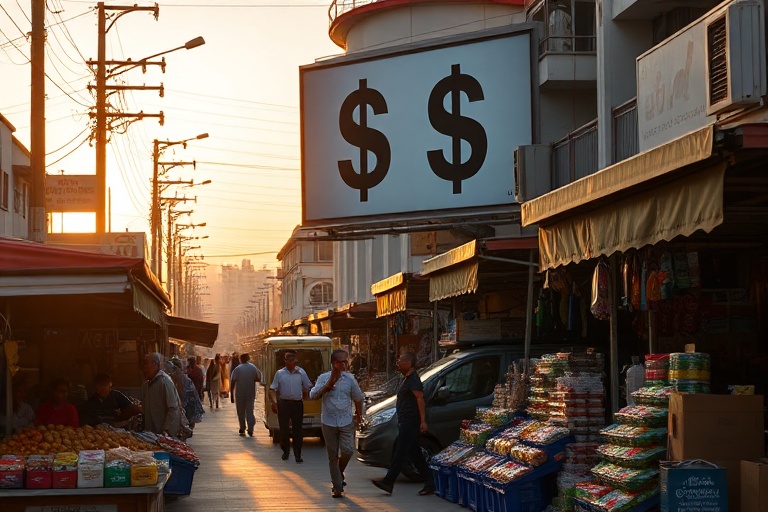
desdolarización
“`html
Dollar Dominance Fades: The Global Push Toward Desdolarización
The global financial system has long operated under the shadow of the U.S. dollar. For decades, oil contracts, international trade, and foreign reserves have relied on the greenback as the dominant currency. Yet, a subtle but persistent shift is underway—one that could reshape economies, trade alliances, and geopolitical power structures. This phenomenon, known as desdolarización (de-dollarization), refers to the deliberate reduction of dollar dependency in favor of alternative currencies or financial systems.
While the dollar remains the world’s primary reserve currency, its grip is loosening. Countries from Latin America to Asia are exploring new mechanisms to bypass dollar dominance, driven by economic sanctions, trade imbalances, and a desire for monetary sovereignty. The movement is not uniform, nor is it guaranteed success, but it signals a turning point in global finance.
The Economic Motivations Behind Desdolarización
Several factors are accelerating the push away from the dollar. The most immediate catalyst has been the weaponization of the dollar through sanctions, particularly following Russia’s invasion of Ukraine in 2022. When Western nations froze Russian central bank assets and cut major banks off from the SWIFT payment system, countries with strained relations with the U.S. took note. Russia and China accelerated their efforts to reduce dollar exposure, while nations like Iran and Venezuela sought alternative trade channels.
Trade imbalances also play a role. Countries that run persistent trade deficits with the U.S. often accumulate dollar reserves they cannot easily deploy. For example, many Latin American and African nations export commodities priced in dollars but import manufactured goods, leading to a structural dependence on the currency. Desdolarización offers a way to break this cycle by denominating trade in local currencies or alternative units.
Inflation and currency volatility further fuel the movement. The Federal Reserve’s aggressive interest rate hikes in 2022 and 2023 strengthened the dollar but destabilized economies reliant on dollar-denominated debt. Countries like Turkey and Argentina, which borrowed heavily in dollars, faced severe debt crises when their local currencies collapsed. This has prompted policymakers to seek alternatives that shield them from external shocks.
Regional Strategies: How Different Blocs Are Rethinking Currency Use
Desdolarización is not a monolithic movement. Different regions are adopting tailored strategies based on their economic relationships and geopolitical alignments.
Latin America’s Experiment with Local Currencies
South America has emerged as a testing ground for local currency trade. In 2023, Brazil and Argentina announced plans to trade using their respective currencies, the real and the peso, rather than the dollar. The initiative aims to reduce transaction costs and insulate both economies from dollar fluctuations. While the volumes remain modest, the symbolic shift is significant.
Other countries in the region are following suit. Bolivia, Ecuador, and Venezuela have explored barter systems and bilateral trade agreements to bypass the dollar. Even Mexico, which maintains strong ties with the U.S., has signaled interest in reducing dollar dependency in certain sectors.
Asia’s Rise: The Yuan and the BRICS Challenge
China has been at the forefront of desdolarización efforts. The People’s Bank of China has signed currency swap agreements with over 40 countries, allowing trade to be settled in yuan rather than dollars. In March 2023, Saudi Arabia, a long-time U.S. ally, agreed to accept yuan for oil sales—a historic shift that could undermine the petrodollar system.
The BRICS bloc (Brazil, Russia, India, China, and South Africa) is also advancing alternatives. At their 2023 summit, members discussed the creation of a common currency for trade, though details remain vague. Meanwhile, India has increased its use of the rupee in bilateral trade, particularly with Russia and the UAE.
Middle East and Africa: Hedging Against Dollar Risks
The Middle East, traditionally aligned with the dollar due to oil trade, is diversifying. Iran has long used the euro and other currencies for oil exports amid U.S. sanctions. Meanwhile, the UAE and India have explored rupee-dirham trade corridors to facilitate remittances and commerce.
Africa, often overlooked in global currency debates, is also participating. The African Union has discussed a pan-African currency, though progress is slow. In the meantime, countries like Nigeria and Kenya are exploring digital currencies and local currency settlements to reduce reliance on the dollar.
The Role of Technology: Digital Currencies and Blockchain
Technology is accelerating desdolarización by enabling faster, cheaper, and more transparent cross-border transactions. Central bank digital currencies (CBDCs) are a key tool in this transition.
China’s digital yuan, piloted since 2020, is designed to challenge the dollar’s dominance in international payments. The digital currency allows for real-time settlements without intermediaries like SWIFT, reducing exposure to U.S. financial controls. Meanwhile, the European Union is developing the digital euro, which could provide an alternative for countries seeking to reduce dollar dependency.
Blockchain technology is also facilitating new payment systems. The BRICS nations have discussed creating a blockchain-based trade platform to bypass dollar-dominated systems like SWIFT. Private cryptocurrencies, though volatile, offer another avenue for those seeking to escape traditional financial infrastructure.
However, technology alone cannot drive systemic change. Regulatory hurdles, technological limitations, and resistance from established financial institutions pose significant challenges. Still, the rapid pace of innovation suggests that digital currencies will play a growing role in the desdolarización movement.
The Road Ahead: Will the Dollar Lose Its Crown?
Predicting the demise of the dollar’s dominance is premature. The currency still accounts for about 60% of global foreign exchange reserves, down from over 70% two decades ago. The euro, yuan, and other currencies have made incremental gains, but none come close to matching the dollar’s liquidity and institutional trust.
The dollar’s resilience stems from deep-rooted financial infrastructure. U.S. Treasury bonds remain the safest asset in the world, and the Federal Reserve’s monetary policy is seen as stable compared to many alternatives. Moreover, the dollar’s dominance is self-reinforcing: the more countries use it, the more others feel compelled to do the same.
Yet, the trend toward desdolarización is undeniable. As geopolitical tensions rise and countries seek greater economic independence, the dollar’s share of global reserves will likely continue to erode. The question is not whether the dollar will lose its crown entirely, but how quickly and in what form the global financial system will adapt.
For now, desdolarización remains a patchwork of regional experiments rather than a unified revolution. But as more countries join the movement, the cumulative effect could reshape the global economy in ways we are only beginning to understand.
One thing is clear: the era of unchallenged dollar dominance is drawing to a close. What comes next will define the economic landscape for generations to come.
—
METADATA
{
“title”: “How Countries Are Quietly Ditching the Dollar (And What It Means)”,
“metaDescription”: “From China to Latin America, nations are reducing dollar dependence. Discover the economic and geopolitical forces driving desdolarización.”,
“categories”: [“Finance”, “Politics”],
“tags”: [“desdolarización”, “de-dollarization”, “BRICS currency”, “petrodollar”, “global finance”],
“imageDescription”: “A split-world illustration showing a dollar bill on one side with cracks forming, and on the other side, emerging currencies like the yuan, euro, and digital coins glowing with a futuristic network of trade routes connecting continents. The mood is one of cautious optimism with a backdrop of global economic symbols.”
}
—END METADATA—
“`