el nino
“`html
Understanding El Niño: Global Impacts Beyond Just Weather
El Niño represents one of the most influential climate phenomena on Earth, reshaping weather patterns across continents and influencing economies, agriculture, and even cultural traditions worldwide. While often reduced to a weather event, its effects ripple through societies in ways that extend far beyond temperature shifts and rainfall changes.
The Science Behind El Niño
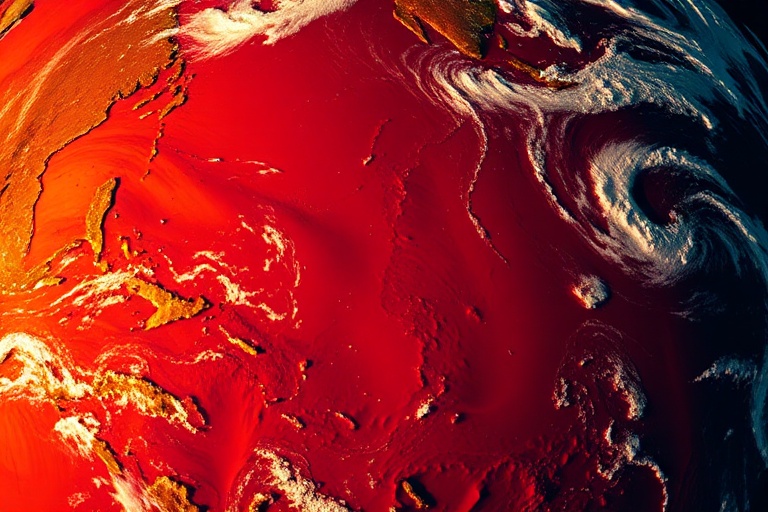
At its core, El Niño is part of the El Niño-Southern Oscillation (ENSO) cycle, a natural climate pattern originating in the tropical Pacific Ocean. Normally, trade winds blow westward across the Pacific, pushing warm surface water toward Asia and allowing cooler water to rise near South America. During El Niño events, these trade winds weaken or even reverse direction, causing warm water to slosh back eastward toward the Americas.
This redistribution of heat disrupts atmospheric circulation patterns known as Walker Circulation. The consequences are immediate and far-reaching: altered jet streams, shifting storm tracks, and disrupted monsoon systems. Scientists measure El Niño’s intensity using sea surface temperature anomalies in a specific region of the Pacific, with strong events often correlating with dramatic global impacts.
Global Weather Patterns Redefined
El Niño’s influence extends across every continent, though its effects vary dramatically by region. In Southeast Asia and Australia, the phenomenon typically brings severe droughts and heightened wildfire risks. The 2015-2016 El Niño, one of the strongest on record, contributed to devastating fires in Indonesia that blanketed the region in toxic haze for months.
Conversely, the west coasts of North and South America often experience increased rainfall during El Niño years. Peru and Ecuador frequently face flooding and landslides, while Southern California may see above-average precipitation that can alleviate drought conditions but also trigger dangerous mudslides. In the United States, El Niño tends to suppress Atlantic hurricane activity while enhancing storm systems along the Pacific coast.
- North America: Warmer winters in the northern U.S. and Canada, increased rainfall in the South and West
- South America: Flooding in Peru and Ecuador, drought in Brazil and northern Argentina
- Asia: Droughts in Indonesia and Australia, weakened monsoons in India
- Africa: Erratic rainfall patterns affecting agriculture across East and Southern Africa
- Europe: Milder winters but increased storminess in northern Europe
Economic and Agricultural Consequences
The economic repercussions of El Niño are staggering. Agriculture, which employs over 26% of the global workforce, bears the brunt of climate disruptions. Coffee production in Colombia and Brazil often declines during El Niño years, driving up prices for one of the world’s most traded commodities. In East Africa, failed rains can trigger food shortages affecting millions, as seen during the 2015-2016 event that left 23 million people in need of humanitarian assistance.
Fisheries collapse in some regions while thriving in others. Off the coast of Peru, the warm waters of El Niño reduce nutrient upwelling, devastating anchovy populations that support a $2.5 billion fishing industry. Meanwhile, in the central Pacific, tuna catches may increase as fish migrate toward warmer waters. These shifts create winners and losers in global seafood markets, with ripple effects on food security.
Commodity traders closely monitor El Niño forecasts, as the phenomenon can swing markets overnight. The 2015 event contributed to a 20% surge in cocoa prices due to drought in West Africa, while palm oil prices dropped as Indonesian production slowed. Even energy markets feel the impact, with heating demand decreasing in some regions and increasing in others.
Cultural and Social Adaptations
Human societies have adapted to El Niño in diverse ways, with indigenous knowledge often proving remarkably resilient. In the Andes, farmers traditionally plant potatoes at higher elevations during El Niño years to compensate for lower rainfall in valley floors. Coastal communities in Peru have developed early warning systems to prepare for flooding, drawing on centuries of lived experience with these cycles.
Cultural practices also reflect attempts to understand and mitigate El Niño’s effects. In the Philippines, communities conduct tawas rituals—reading wax patterns—to predict weather, a tradition that blends indigenous belief with practical adaptation. Meanwhile, in the Pacific Northwest, some tribes incorporate traditional ecological knowledge into modern fire management strategies to reduce wildfire risks during dry El Niño years.
Artistic expressions often emerge from these climatic challenges. Peruvian musicians composed huaynos during the catastrophic 1997-1998 El Niño, capturing both the devastation and communal resilience. In Australia, the prolonged droughts of the “Millennium Drought” (2001-2009) inspired literature and visual arts that grappled with environmental fragility and cultural identity.
Looking Ahead: Climate Change and El Niño
As global temperatures rise, scientists are investigating whether climate change will amplify El Niño’s frequency or intensity. Recent research suggests that extreme El Niño events may double in the 21st century, with profound implications for weather extremes. The 2023-2024 El Niño, which developed amid record ocean temperatures, delivered a preview of this intensified reality—from devastating floods in Somalia to heatwaves in North America.
Adaptation strategies are evolving to address this new reality. Peru has invested in resilient infrastructure, while Pacific Island nations are developing climate migration policies. International organizations like the World Health Organization now integrate El Niño forecasts into disease outbreak preparedness, recognizing the phenomenon’s role in spreading waterborne illnesses and vector-borne diseases.
For those interested in tracking these developments, our science section provides ongoing coverage of climate phenomena and their global impacts. As El Niño continues to shape our world, understanding its complexities becomes increasingly vital—not just for scientists, but for anyone affected by the planet’s changing rhythms.
Key Takeaways
- El Niño is a natural climate phenomenon with far-reaching global impacts
- Its effects vary dramatically by region, influencing weather, agriculture, and economies
- Indigenous knowledge and modern science both play crucial roles in adaptation
- Climate change may intensify future El Niño events
- Proactive planning and international cooperation are essential for resilience
—
METADATA
{
“title”: “El Niño Explained: Global Effects Beyond Weather Patterns”,
“metaDescription”: “How El Niño disrupts global weather, economies and cultures with lasting impacts beyond temperature shifts.”,
“categories”: [“Science”, “News”],
“tags”: [“climate change”, “El Niño”, “global weather patterns”, “ENSO”, “agricultural impacts”],
“imageDescription”: “A split-image showing contrasting El Niño effects: left side shows drought-stricken Australian landscape with cracked earth and sparse vegetation under a blazing sun; right side displays flooded Peruvian village with people in boats navigating submerged streets, dark storm clouds overhead”
}
—END METADATA—
“`