El Niño Explained: Causes, Global Impacts, and Future Predictions
“`html
Understanding El Niño: Patterns, Impacts, and Predictions
The periodic warming of Pacific Ocean waters known as El Niño reshapes global weather patterns with consequences that ripple across economies and ecosystems. While the phenomenon recurs every two to seven years, its intensity and duration vary unpredictably, making accurate forecasting a persistent challenge for meteorologists. Recent events have demonstrated how El Niño can trigger cascading effects—from agricultural disruptions in South America to energy demand shifts in North America.
This natural climate variation occurs when trade winds weaken, allowing warm water to slosh eastward across the equatorial Pacific. The resulting sea surface temperature anomalies can persist for months, altering atmospheric circulation patterns worldwide. Understanding these dynamics requires examining the science behind El Niño while recognizing its far-reaching implications.
The Science Behind El Niño
At its core, El Niño represents the warm phase of the El Niño-Southern Oscillation (ENSO) cycle, which alternates between El Niño (warm), La Niña (cool), and neutral conditions. The critical threshold occurs when sea surface temperatures in the central and eastern Pacific rise 0.5°C above average for three consecutive months. This seemingly small change disrupts the Walker Circulation, the east-west atmospheric circulation pattern over the tropical Pacific.
During neutral conditions, trade winds push warm surface water westward toward Indonesia, allowing cooler water to upwell along South America’s coast. When El Niño develops, these trade winds slacken or reverse direction. The warm water pool migrates eastward, suppressing the usual upwelling of nutrient-rich cold water that sustains marine ecosystems. The atmospheric response manifests as altered jet streams and storm tracks, particularly affecting the Pacific basin.
Researchers have identified four distinct El Niño “flavors” based on where maximum warming occurs:
- Eastern Pacific (Canonical) El Niño: Warmest waters concentrated near South America, historically the most studied type
- Central Pacific (Modoki) El Niño: Warm anomalies centered near the International Date Line, becoming more frequent since the 1990s
- Mixed-type El Niño: Characteristics of both eastern and central Pacific warming
- Coastal El Niño: Localized warming confined to South America’s immediate coastline
This classification system helps explain why some El Niño events produce dramatically different impacts despite similar ocean temperature anomalies.
Global Weather Disruptions
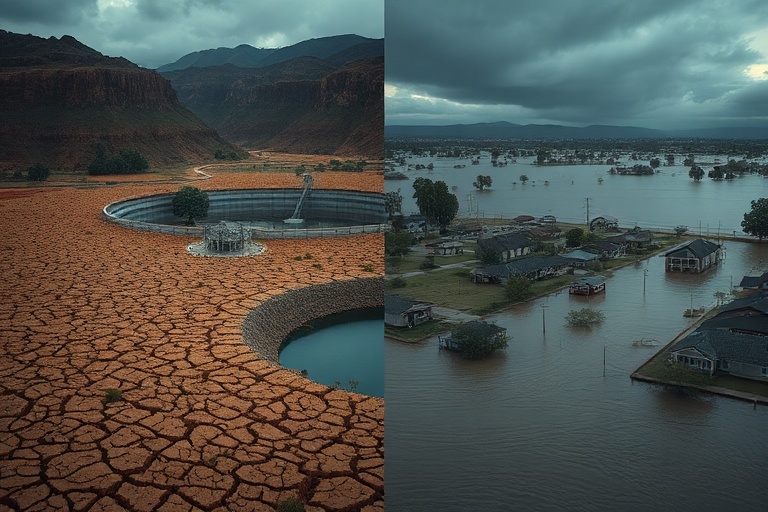
El Niño’s influence extends far beyond the Pacific, creating a domino effect of weather anomalies across the globe. The altered jet stream patterns typically bring wetter conditions to the southern United States during winter, while the Pacific Northwest experiences milder, drier winters. These shifts can significantly impact water resource management, particularly in regions already grappling with drought conditions.
In South America, the consequences are particularly severe. Peru and Ecuador often face torrential rains and flooding during strong El Niño events, while Argentina and southern Brazil suffer drought conditions that devastate soybean and corn crops. The 2015-2016 El Niño, one of the strongest on record, caused an estimated $3.6 billion in agricultural losses across the region.
Asia and Australia typically endure the opposite pattern. Indonesia and northern Australia frequently experience extreme drought and wildfires during El Niño years, as seen during the devastating 2019-2020 Australian bushfires. Meanwhile, the Indian monsoon often weakens, threatening the region’s agricultural output. The 1997-1998 El Niño event, one of the most powerful in modern records, contributed to severe flooding in Somalia and Ethiopia while simultaneously causing devastating droughts in Indonesia and Papua New Guinea.
Even distant regions feel El Niño’s effects. Southern Africa may experience reduced rainfall, while parts of East Africa can see increased precipitation. In North America, the phenomenon typically suppresses Atlantic hurricane activity while potentially enhancing Pacific tropical storm development. These geographically diverse impacts underscore El Niño’s role as a planetary-scale climate disruptor.
Economic and Ecological Consequences
The economic repercussions of El Niño events ripple through multiple sectors, often with delayed effects that complicate mitigation efforts. The agricultural industry faces the most immediate threats, with commodity prices frequently spiking in response to anticipated production shortfalls. The World Bank estimates that strong El Niño events can reduce global GDP growth by 0.3-0.8%, with particularly severe impacts on developing economies.
Energy markets also respond to El Niño-driven temperature anomalies. Milder winters in the northern United States and Europe reduce natural gas demand, while hotter summers in Southeast Asia increase electricity consumption for cooling. The shipping industry confronts additional challenges as changing wind patterns affect maritime routes, particularly in the Pacific.
Ecological systems bear significant burdens during El Niño years. The suppression of upwelling along the South American coast disrupts marine food webs, leading to mass die-offs of fish, seabirds, and marine mammals. The 1997-1998 event caused an estimated 85% decline in the Peruvian anchoveta fishery, a cornerstone of the region’s economy. Coral reefs in the central and eastern Pacific face increased bleaching risks due to elevated sea surface temperatures.
Human health impacts manifest through multiple pathways. Increased temperatures and humidity can exacerbate respiratory conditions, while flooding events often lead to waterborne disease outbreaks. The World Health Organization estimates that the 2015-2016 El Niño contributed to an additional 60 million people facing food insecurity, primarily in Africa and Central America.
Forecasting Challenges and Future Trends
Predicting El Niño’s onset, intensity, and duration remains an ongoing scientific challenge despite advances in climate modeling. Current forecasting systems rely on a combination of statistical models, dynamical climate models, and ocean-atmosphere coupled models. The National Oceanic and Atmospheric Administration’s (NOAA) Climate Prediction Center provides monthly updates on ENSO conditions, with lead times extending up to nine months.
However, several factors complicate accurate forecasting:
- The inherent unpredictability of atmospheric dynamics
- Incomplete understanding of interactions between ENSO and other climate modes
- Limitations in ocean observation networks
- Uncertainties in how climate change may alter ENSO behavior
Recent research suggests that climate change may intensify El Niño events, with some models projecting more frequent “extreme” El Niños by the end of the 21st century. The warming trend could also shift El Niño’s impacts poleward, potentially altering storm tracks in ways that current models struggle to capture.
Improving forecasting capabilities requires enhanced observational networks, particularly in the equatorial Pacific where data gaps persist. The Tropical Pacific Observing System (TPOS) 2020 project aims to deploy new moorings, gliders, and autonomous instruments to provide more comprehensive ocean measurements. Machine learning approaches are also being explored to identify subtle precursors in ocean-atmosphere interactions.
For policymakers and emergency managers, these forecasting challenges necessitate adaptive risk management strategies. The increasing frequency of “compound” events—where El Niño interacts with other climate phenomena such as the Indian Ocean Dipole—demands integrated approaches to disaster preparedness. Investments in resilient infrastructure and early warning systems can mitigate some impacts, but the magnitude of future El Niño events remains uncertain.
Conclusion
El Niño represents one of Earth’s most powerful natural climate phenomena, capable of reshaping weather patterns across continents with consequences that unfold over months and years. While the scientific community has made significant strides in understanding its mechanisms, the complexity of ocean-atmosphere interactions ensures that each event retains some element of unpredictability. The economic and ecological toll of strong El Niños demands continued investment in research, forecasting capabilities, and adaptive strategies.
As climate change potentially alters ENSO behavior, the need for improved monitoring and predictive tools becomes more urgent. Communities worldwide must prepare for the possibility of more frequent and intense El Niño events while recognizing that this natural cycle operates alongside—and interacts with—longer-term climate trends. The challenge ahead lies in balancing immediate response efforts with long-term adaptation strategies that account for both natural variability and human-induced climate change.
For those seeking to understand the broader implications of climate patterns like El Niño, resources are available through organizations such as Dave’s Locker Science section. As we continue to unravel the mysteries of ocean-atmosphere interactions, the lessons learned from studying El Niño may provide valuable insights into the workings of our planet’s climate system.