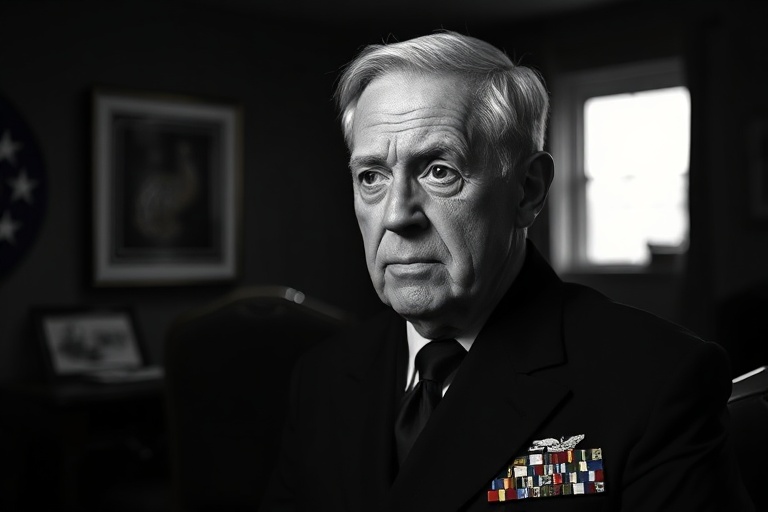
Robert Harward: How One Navy SEAL Shaped Modern Special Ops
“`html
Robert Harward: The Navy SEAL Who Shaped Modern Special Operations
Robert Harward’s career is a study in how elite military leadership can influence global security strategies. A retired Navy SEAL with four decades of service, Harward rose through the ranks to become one of the most respected figures in special operations. His work extended beyond combat operations, shaping how the U.S. and allied nations approach counterterrorism and crisis response.
Born in 1956, Harward joined the Navy in 1975 and quickly distinguished himself as a SEAL candidate. His leadership was tested early in the post-9/11 era, where he commanded SEAL Team 3 and later became deputy commanding general of the Joint Special Operations Command (JSOC). These roles placed him at the forefront of the U.S. war on terror, where his decisions influenced high-stakes missions across the Middle East and beyond.
From SEAL to Strategist: Harward’s Rise Through the Ranks
Harward’s ascent in the Navy SEALs was marked by both operational brilliance and an ability to mentor the next generation of special operators. He served in key combat roles during the 1980s and 1990s, including deployments to Lebanon and Somalia, where he gained firsthand experience in asymmetric warfare. His tactical acumen earned him command positions, culminating in his role as the commanding officer of SEAL Team 3 from 2003 to 2005.
During his tenure at SEAL Team 3, Harward oversaw operations in Iraq and Afghanistan, refining tactics that would later define JSOC’s approach to counterterrorism. His leadership during this period was characterized by a focus on adaptability—recognizing that the battlefield was evolving rapidly and that rigid strategies could not keep pace. This mindset would later influence his broader contributions to military doctrine.
A Decisive Voice in Counterterrorism Operations
Harward’s influence extended to JSOC’s most sensitive missions. As deputy commanding general, he worked closely with figures like Admiral William McRaven and General Stanley McChrystal, contributing to the planning and execution of operations that dismantled terrorist networks. His role in the 2006 targeting of Abu Musab al-Zarqawi, the leader of Al-Qaeda in Iraq, underscored his ability to operate at the highest levels of military strategy.
One of Harward’s defining traits was his emphasis on intelligence-driven operations. He recognized early that success in counterterrorism required more than just firepower—it demanded precise, real-time intelligence and the ability to act decisively. This philosophy became a cornerstone of JSOC’s methodology, shaping how future generations of special operators approach their missions.
Harward’s Post-Military Influence and Legacy
After retiring from the Navy in 2013, Harward transitioned into the private sector, where he leveraged his expertise in security consulting. His work with firms like Lockheed Martin and his advisory roles in government underscore his ongoing impact on national security. Harward also became a vocal advocate for veterans’ issues, particularly in the areas of mental health and transitioning to civilian life.
His post-military career reflects a broader trend among retired special operators: the application of military discipline and strategic thinking to civilian challenges. Harward’s consulting work, for example, has helped corporations and governments alike navigate complex security environments, from cyber threats to geopolitical instability.
The Broader Implications of Harward’s Career
Harward’s legacy is not confined to the battlefield. His career offers a lens into how elite military leadership can shape broader security policies. By emphasizing adaptability, intelligence integration, and mission-focused leadership, he helped redefine the role of special operations in modern warfare. These principles have since been adopted by allied nations, influencing how global counterterrorism efforts are conducted.
The rise of special operations forces as a primary tool of national power can be traced, in part, to leaders like Harward. His career demonstrates how a single individual’s vision can ripple through an entire institution, altering its trajectory for decades to come. For policymakers, strategists, and aspiring military leaders, Harward’s career serves as both a case study and a blueprint.
Key Takeaways from Robert Harward’s Career
Robert Harward’s journey offers several lessons that extend beyond the military:
- Adaptability is critical. Harward’s career spanned decades, during which the nature of warfare evolved dramatically. His ability to adapt—whether to new technologies, shifting geopolitical realities, or emerging threats—was a defining factor in his success.
- Leadership requires more than tactical skill. While Harward was renowned for his operational expertise, his greatest contributions came from his ability to mentor others, refine strategies, and advocate for systemic improvements in how operations were conducted.
- Intelligence and decisiveness are inseparable. Harward’s emphasis on real-time intelligence highlights a fundamental truth of modern warfare: success depends as much on the quality of information as it does on the execution of the mission.
- Legacy extends beyond the battlefield. Harward’s post-military work demonstrates how military leaders can transition their skills into civilian sectors, influencing everything from corporate security to public policy.
- Mentorship shapes the future. Harward’s commitment to training the next generation of SEALs ensured that his principles would endure long after his retirement.
Conclusion: Why Harward’s Career Still Matters Today
Robert Harward’s career is a testament to the enduring value of leadership in high-stakes environments. Whether on the battlefield or in the boardroom, his approach to problem-solving—rooted in adaptability, intelligence, and decisiveness—remains relevant. For those studying military history, leadership, or national security, Harward’s journey offers a masterclass in how to navigate complexity and drive meaningful change.
As the U.S. and its allies continue to grapple with evolving threats, from cyber warfare to hybrid conflicts, Harward’s principles provide a framework for success. His career reminds us that true leadership is not about the tools at your disposal but about how you use them to shape the future.
For further reading on military leadership and special operations, explore our Trending and Analysis sections, where we delve deeper into the strategies and stories shaping today’s security landscape.