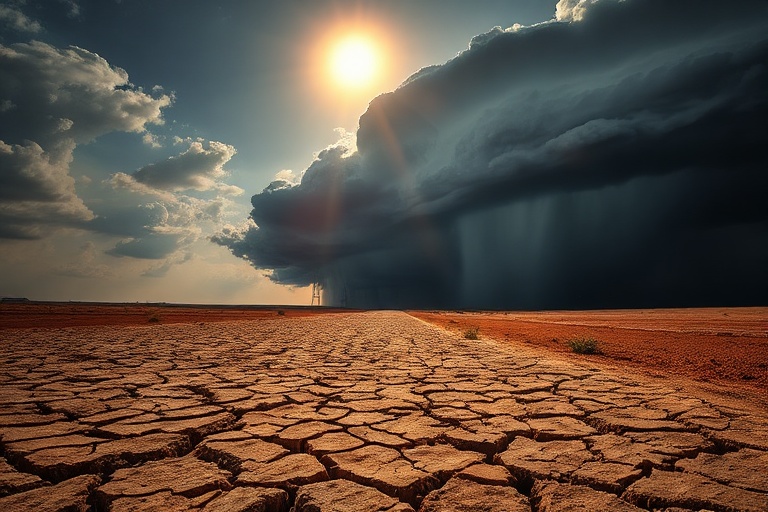
El Niño Explained: Global Climate Impacts and Future Risks
“`html
Understanding El Niño: A Global Climate Phenomenon
The El Niño-Southern Oscillation (ENSO) cycle is one of Earth’s most influential climate patterns. Every few years, this phenomenon disrupts weather systems across the planet, reshaping economies and cultures from the Pacific Islands to the Americas. While scientists monitor its cycles with increasing precision, its full impact remains unpredictable and often devastating.
El Niño events typically last nine to twelve months, though their effects can linger for years. They occur when warm water in the equatorial Pacific Ocean shifts eastward, weakening or even reversing trade winds. This shift alters atmospheric circulation, triggering cascading consequences worldwide. The term itself originates from Spanish, meaning “the little boy,” a reference to the Christ child, as it often peaks around December.
The Science Behind El Niño
El Niño is part of a larger climate cycle that includes its counterpart, La Niña. Together, they form the ENSO cycle, which scientists classify based on sea surface temperature anomalies in the central and eastern Pacific. During El Niño, these temperatures rise at least 0.5°C above average for several consecutive months. The stronger the warming, the more extreme the global effects.
Researchers use a network of buoys, satellites, and computer models to track these changes. The National Oceanic and Atmospheric Administration (NOAA) issues regular updates, helping governments prepare for droughts, floods, and storms. Yet despite decades of study, El Niño remains a reminder of nature’s complexity.
One of the most studied El Niño events occurred in 1997-1998. It caused an estimated $35 billion in global damages, from California mudslides to Indonesian wildfires. This event prompted advancements in climate modeling, though predicting its onset remains challenging.
Global Impacts: From Droughts to Deluges
El Niño’s reach extends far beyond the Pacific. Its effects ripple across continents, reshaping agriculture, energy markets, and public health. Below are some of the most significant impacts observed during past events:
- North America: Warmer winters in the northern U.S. and Canada reduce heating costs but increase tornado activity in the South. California often faces heavy rainfall, leading to flooding and landslides.
- South America: Peru and Ecuador endure torrential rains, while Brazil and Argentina suffer droughts that cripple soybean and coffee crops.
- Asia and Australia: Indonesia and Australia experience severe droughts, increasing wildfire risks. Monsoon patterns in India weaken, threatening rice and wheat yields.
- Africa: Southern Africa faces reduced rainfall, while East Africa may see heavier precipitation, raising risks of malaria and cholera.
- Global Markets: Commodity prices fluctuate as harvests fail or surge. Coffee, cocoa, and wheat markets are particularly vulnerable.
These disruptions highlight El Niño’s role as a global equalizer. While some regions benefit from milder weather, others face catastrophic losses. The 2015-2016 El Niño, one of the strongest on record, left 60 million people in need of humanitarian aid, according to the United Nations.
Cultural and Economic Responses
Communities adapt to El Niño in diverse ways. In Peru, farmers have historically relied on ancient irrigation techniques to survive droughts. Meanwhile, California’s wine industry invests in drought-resistant grape varieties to mitigate losses. These adaptations reflect a blend of tradition and innovation.
Art and storytelling also reflect El Niño’s influence. In Pacific Island cultures, oral histories describe past events, emphasizing the need for resilience. In modern times, documentaries and news reports amplify warnings, urging preparedness.
Economically, governments and businesses recalibrate strategies. Insurance companies adjust premiums in high-risk zones, while energy companies prepare for shifting demand. The financial sector monitors El Niño’s potential to sway markets, particularly in agriculture and commodities.
Preparing for an Uncertain Future
Climate change may intensify El Niño’s effects. Warmer oceans could fuel stronger events, while rising temperatures exacerbate droughts and floods. Scientists are still unraveling this relationship, but the stakes are clear.
Mitigation efforts focus on early warning systems and resilient infrastructure. Countries like the Philippines and Vietnam have invested in flood defenses, while farmers adopt climate-smart practices. International cooperation, such as the Paris Agreement, aims to address the root causes of climate variability.
Yet challenges remain. In developing nations, limited resources hinder adaptation. Rural communities often bear the brunt of El Niño’s wrath, lacking access to advanced forecasting tools. Addressing these disparities requires global solidarity.
As we move forward, El Niño serves as a stark reminder of nature’s power. It challenges us to rethink our relationship with the environment, blending scientific rigor with cultural wisdom. By understanding its patterns, we can better prepare for the storms—and droughts—ahead.