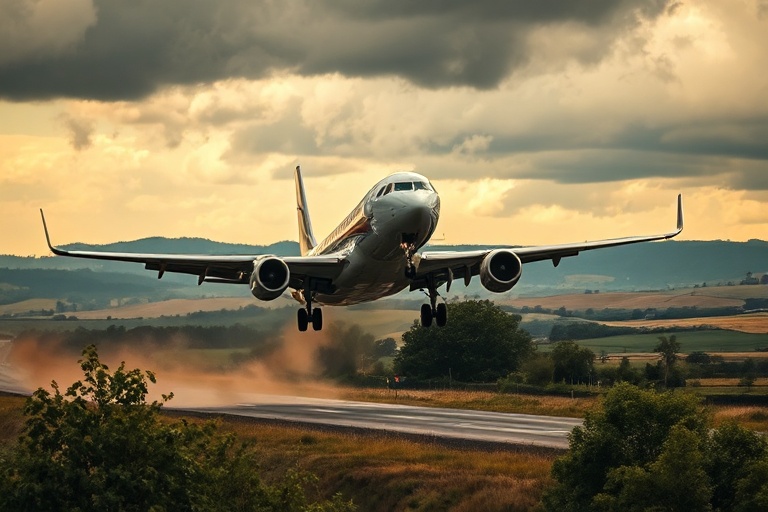
Emergency Landing: What Pilots Do When Seconds Count
“`html
Emergency Landing: How Pilots React When Seconds Count
An emergency landing isn’t just a routine procedure—it’s a high-stakes moment where split-second decisions determine lives. Whether triggered by mechanical failure, weather hazards, or medical emergencies, these situations test pilots’ training, crew coordination, and passengers’ trust. The aviation industry treats every emergency landing as a lesson, refining protocols to prevent future risks.
Last year, global aviation data recorded over 300 emergency landings, according to the International Air Transport Association (IATA). While most resulted in no injuries, each incident prompted thorough investigations and procedural updates. The difference between a controlled emergency landing and a catastrophe often comes down to preparation and real-time adaptability.
The Anatomy of an Emergency Landing
Not all emergency landings are the same. They fall into distinct categories, each with unique protocols and challenges. Understanding these distinctions helps passengers and aviation professionals alike grasp the complexity of these events.
- Forced Landing: Occurs when a pilot must land due to imminent danger, such as engine failure or fire. The aircraft may not be fully controllable, requiring precise targeting of a safe landing zone.
- Precautionary Landing: A proactive decision to land due to a potential issue, like a minor system malfunction or deteriorating weather ahead. The aircraft remains fully functional but seeks a safe haven.
- Ditching: An emergency water landing, rare but critical. Pilots must consider wind, waves, and aircraft weight distribution to prevent breakup on impact.
- Medical Emergency Diversion: Triggered by a passenger or crew member requiring urgent medical attention. Air traffic control prioritizes these diversions to the nearest suitable airport.
The Federal Aviation Administration (FAA) mandates that all commercial pilots undergo rigorous emergency training, including simulator sessions for forced landings and medical diversions. Yet, real-world scenarios often present variables no simulator can replicate—human error, unpredictable weather, or unforeseen mechanical interactions.
What Happens During an Emergency Landing: A Step-by-Step Breakdown
Passengers rarely witness the meticulous choreography behind an emergency landing. The process begins long before the aircraft touches down, starting with the first sign of trouble.
- Problem Identification: The crew detects an anomaly—an alarm, a smell, a passenger in distress. The captain assesses severity while the first officer verifies systems and communicates with air traffic control.
- Decision and Communication: The captain decides whether to declare an emergency, which grants priority handling in airspace. Clear communication with ATC is critical to secure the nearest suitable runway or alternate landing site.
- Cabin Preparation: Flight attendants secure the cabin, instruct passengers to brace, and ensure exits remain clear. They also prepare medical equipment if needed.
- Approach and Landing: Pilots adjust speed, altitude, and configuration based on conditions. In a forced landing, they aim for the safest terrain—ideally a runway, but sometimes open fields or water.
- Post-Landing Protocol: Once stopped, emergency services are alerted. Crew performs headcounts, evacuates if necessary, and coordinates with ground teams to manage the situation.
One of the most famous emergency landings in history occurred in 2009, when Captain Chesley “Sully” Sullenberger glided US Airways Flight 1549 onto the Hudson River after both engines failed. His calm decision-making and adherence to training saved all 155 lives. Investigations later confirmed that his actions aligned with FAA protocols—but his judgment under pressure made the difference.
Broader Implications: How Emergency Landings Shape Aviation Safety
Every emergency landing leaves a legacy. Beyond the immediate outcome, these events drive regulatory changes, technological upgrades, and cultural shifts in aviation safety culture.
After a 2018 incident where an engine failure caused a Southwest Airlines flight to make an emergency landing in Philadelphia, the FAA mandated enhanced inspections for certain engine models. The accident also accelerated the adoption of real-time engine monitoring systems across the industry. Such ripple effects demonstrate how isolated events can reshape global safety standards.
The emotional toll on passengers and crew is also significant. Survivors of emergency landings often report long-term anxiety, while pilots may experience heightened stress or PTSD. Airlines now incorporate psychological support into post-incident protocols, recognizing that mental recovery is as vital as physical safety.
Emergency landings also influence public perception of air travel. Despite their rarity—occurring in less than 0.1% of commercial flights—they dominate headlines when they happen. This paradox creates a challenge for airlines, which must balance transparency with reassurance. Open communication after incidents, including detailed post-flight briefings for passengers, has become a best practice to rebuild trust.
Lessons for Passengers and Pilots Alike
Understanding emergency procedures can reduce fear and improve outcomes. Passengers who know what to expect during an emergency landing are more likely to follow crew instructions calmly. Similarly, pilots benefit from continuous training that includes rare but critical scenarios.
For travelers, preparation starts before boarding. Familiarizing yourself with the safety card in the seatback pocket is more than a formality—it’s a chance to internalize exit locations and brace positions. In an actual emergency, muscle memory can save seconds.
For pilots, the focus is on scenario-based training. Simulators now replicate extreme conditions, from dual-engine failure to cabin depressurization at high altitude. Yet, the human factor remains irreplaceable. The best pilots combine technical skill with emotional composure, ensuring that when seconds count, they can act without hesitation.
As aviation technology evolves—with the rise of electric aircraft and AI-assisted flight systems—the nature of emergency landings may change. But the core principles will endure: preparation, adaptability, and clear communication. In the skies, where there’s no room for error, these fundamentals remain timeless.
For further reading on aviation safety and emergency protocols, visit Dave’s Locker Aviation Safety and Dave’s Locker Flight Training sections for expert analysis and training insights.