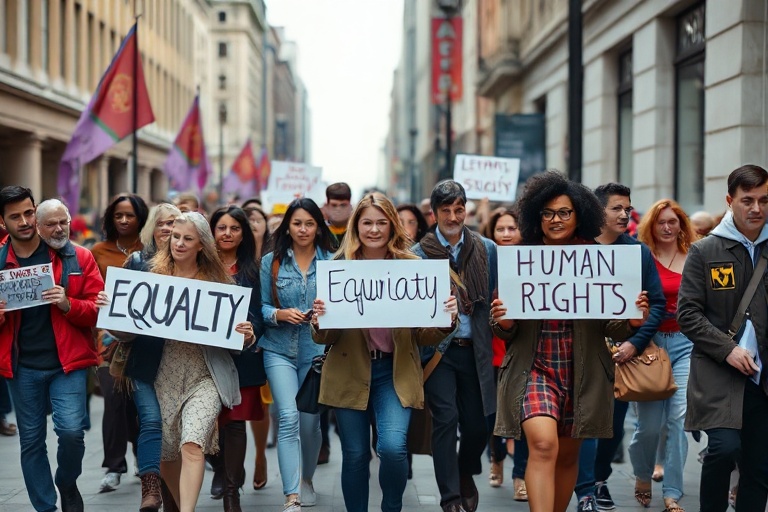
Understanding the Equality and Human Rights Commission
The Equality and Human Rights Commission (EHRC) stands as the United Kingdom’s statutory body dedicated to promoting and enforcing equality and human rights laws. Established under the Equality Act 2006, the EHRC replaced three predecessor organizations to create a unified body capable of addressing discrimination across multiple protected characteristics. Its mission is to challenge inequality, protect human rights, and foster a fairer society for everyone.
The Commission operates independently of government, though it receives funding from Parliament. This independence allows it to scrutinize policies and practices impartially, ensuring accountability without political interference. The EHRC’s work spans England, Scotland, and Wales, with a dedicated team of legal experts, researchers, and advocates driving its initiatives.
Core Functions and Responsibilities
The EHRC’s responsibilities are broad yet focused on tangible outcomes. It has the power to conduct inquiries, issue compliance notices, and intervene in legal cases to uphold equality and human rights standards. The Commission also plays a pivotal role in shaping legislation by providing evidence-based recommendations to Parliament and devolved governments.
Key areas of focus include:
- Protecting individuals from discrimination based on age, disability, gender reassignment, race, religion or belief, sex, sexual orientation, marriage and civil partnership, and pregnancy and maternity.
- Promoting equality of opportunity and good relations between different groups.
- Ensuring compliance with human rights obligations under domestic and international law.
- Providing guidance and resources to businesses, public bodies, and individuals to foster inclusive environments.
The EHRC’s influence extends beyond legal enforcement. It conducts research to identify systemic inequalities, publishes reports on emerging issues, and collaborates with civil society organizations to amplify its impact. By combining legal rigor with public advocacy, the Commission bridges the gap between policy and lived experience.
Notable Cases and Impact
The EHRC has been instrumental in landmark cases that have redefined equality law in the UK. One such example is its intervention in R (on the application of UNISON) v Lord Chancellor (2017), where the Supreme Court ruled that employment tribunal fees were unlawful because they denied access to justice. The EHRC’s legal arguments helped secure this victory, which restored fairness for workers facing discrimination claims.
Another significant case involved challenging discriminatory practices in schools. The EHRC launched an inquiry into exclusions of Black Caribbean children, revealing disproportionate rates of punishment and expulsion. The resulting report led to reforms in school policies and greater awareness of unconscious bias in educational settings. These cases demonstrate the EHRC’s ability to address systemic issues rather than isolated incidents.
The Commission’s work also extends to human rights violations. For instance, it has scrutinized the treatment of detainees in immigration removal centers, advocating for humane conditions and access to legal support. By holding institutions accountable, the EHRC reinforces the principle that human rights are universal and indivisible.
Challenges and Criticisms
Despite its achievements, the EHRC faces criticism and challenges. Some argue that its budget constraints limit its ability to tackle all forms of discrimination effectively. The Commission’s reliance on government funding also raises questions about its independence, particularly when its recommendations conflict with political agendas.
Another criticism centers on the EHRC’s perceived focus on certain issues over others. For example, some advocacy groups argue that the Commission has not prioritized intersectional discrimination—where multiple forms of inequality overlap—sufficiently. Addressing these gaps requires a more dynamic and inclusive approach to its work.
The EHRC has also faced backlash from groups that oppose its stance on progressive policies, such as transgender rights or affirmative action. These conflicts highlight the Commission’s role as a lightning rod for societal debates, where neutrality often clashes with advocacy. Balancing its mandate to promote equality with the need to remain non-partisan is an ongoing challenge.
Broader Implications for Society
The work of the EHRC extends beyond legal and policy spheres; it shapes cultural attitudes and societal norms. By challenging discriminatory practices, the Commission helps normalize inclusion in workplaces, schools, and public spaces. Its campaigns, such as those raising awareness about sexual harassment or disability rights, foster public discourse and drive behavioral change.
Moreover, the EHRC’s international engagement reinforces the UK’s commitment to human rights on the global stage. The Commission collaborates with organizations like the United Nations and the Council of Europe to share best practices and advocate for universal standards. This international perspective ensures that the UK remains a leader in equality and human rights, setting an example for other nations.
For businesses and organizations, the EHRC provides a roadmap for compliance and ethical practices. Its Business category offers insights into how companies can implement inclusive policies, from recruitment to customer service. Similarly, the Education category explores how schools and universities can foster environments free from discrimination.
Looking Ahead: The Future of Equality
As society evolves, so too must the tools and institutions that protect equality and human rights. Emerging issues such as digital discrimination, algorithmic bias, and climate justice present new frontiers for the EHRC. The Commission must adapt to these challenges by leveraging technology, expanding its research capabilities, and engaging with younger generations who are redefining advocacy.
The EHRC’s future will also depend on its ability to rebuild trust with marginalized communities. Transparency in its decision-making processes and proactive outreach will be essential to ensure that its work reflects the needs of those it aims to serve. By embracing innovation and fostering collaboration, the Commission can continue to be a beacon of fairness in an increasingly complex world.
Conclusion
The Equality and Human Rights Commission plays a vital role in upholding the principles of justice and equality in the UK. Through its legal interventions, public campaigns, and policy recommendations, it challenges discrimination and champions human rights for all. While it faces challenges and criticisms, its impact is undeniable, shaping a more inclusive society one case, one policy, and one conversation at a time.
The Commission’s work reminds us that equality is not a static achievement but an ongoing commitment. It requires vigilance, advocacy, and a willingness to confront injustice wherever it exists. As the UK grapples with new social and political realities, the EHRC remains a critical ally in the fight for a fairer future.
For more insights into how equality and human rights intersect with business and education, explore our Business and Education categories.