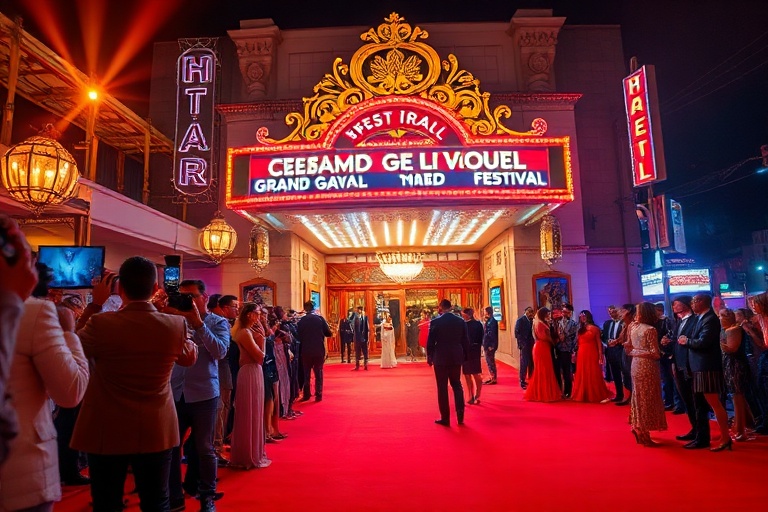
Gala Festivals: Where Charity Meets Celebrity in High-Style Fundraising
“`html
Gala Festival: The Evolution of Celebrity Charity Events
The gala festival has long stood as a cornerstone of high-society philanthropy, blending opulence with altruism. These events, often characterized by their star-studded guest lists and lavish auctions, have become synonymous with fundraising for causes ranging from medical research to arts education. But beyond the glittering surface lies a complex ecosystem of influence, economics, and social change.
The concept of the gala festival traces its roots to 19th-century European aristocracy. Initially, these gatherings were exclusive affairs reserved for the elite, serving as both social showcases and charitable fundraisers. Over time, the tradition migrated across the Atlantic, evolving into the star-studded spectacles we recognize today. Modern galas have transcended their origins, becoming global phenomena that command attention far beyond their immediate attendees.
The Anatomy of a Gala Festival
A successful gala festival is more than just a party—it’s a meticulously orchestrated event designed to maximize both fundraising and prestige. The structure typically follows a familiar blueprint, though each event adapts it to fit its unique mission and audience.
The evening often begins with a cocktail hour, where guests mingle against a backdrop of carefully curated decor. This phase is crucial for setting the tone, as attendees—many of whom are high-net-worth individuals—begin to engage with the cause. The dinner itself is usually followed by a program of speeches, performances, and auctions, all designed to build momentum toward the evening’s peak: the fundraising appeal.
Key elements of a gala festival include:
- Celebrity involvement: A-list guests lend star power, drawing media attention and increasing ticket sales.
- Silent and live auctions: High-value items and experiences are auctioned, often fetching hundreds of thousands of dollars.
- Emotional storytelling: Speeches from beneficiaries or beneficiaries’ families create a personal connection to the cause.
- Sponsorships and partnerships: Corporate sponsors underwrite costs in exchange for visibility, while nonprofit partners ensure the funds raised align with their missions.
The most effective galas strike a balance between exclusivity and inclusivity. While the guest list may be curated, the impact of the funds raised is far-reaching, often supporting initiatives that benefit entire communities. This duality—parties for the privileged, progress for the many—is what makes the gala festival such a fascinating institution.
The Broader Implications of Gala Festivals
The influence of gala festivals extends well beyond their immediate financial impact. These events shape public perception, influence policy, and even redefine the boundaries of philanthropy. For instance, a high-profile gala can thrust a niche cause into the mainstream, mobilizing not just donors but also volunteers and advocates. The ALS Ice Bucket Challenge, which gained viral traction in 2014, was amplified by the visibility of celebrity participants at galas and other high-profile events.
Moreover, gala festivals serve as a barometer for societal trends. The causes that dominate these events often reflect broader cultural priorities. In recent years, there has been a noticeable shift toward funding mental health initiatives, climate action, and social justice—reflecting growing public awareness and demand for systemic change. This evolution underscores how galas are not merely social rituals but also platforms for cultural dialogue.
However, the gala festival is not without its critics. Detractors argue that these events perpetuate elitism, with the ultra-wealthy patting themselves on the back for donating a fraction of their fortunes while systemic inequalities persist. Others point to the administrative costs associated with galas, questioning whether the overhead justifies the funds raised. These critiques highlight the tension between charity as a performative act and charity as a tool for genuine transformation.
Despite these concerns, the gala festival remains a powerful force in the nonprofit sector. Its ability to merge entertainment with altruism ensures that it will continue to play a vital role in shaping the future of philanthropy.
The Future of Gala Festivals
As society evolves, so too must the gala festival. The COVID-19 pandemic forced the industry to adapt, with virtual and hybrid galas becoming the norm. While these innovations democratized access to some extent, they also revealed the limitations of digital engagement. The return to in-person events has been met with enthusiasm, but the pandemic’s legacy persists in the form of hybrid models that combine the best of both worlds.
Looking ahead, gala festivals are likely to place greater emphasis on transparency and impact. Donors are increasingly demanding accountability, and organizations are responding by providing detailed breakdowns of how funds are allocated. Additionally, the integration of technology—such as blockchain for tracking donations or AI for personalized donor engagement—is poised to revolutionize the way galas operate.
Another trend to watch is the rise of “experience-based” galas. Rather than traditional sit-down dinners, these events prioritize immersive activities, such as art installations, interactive performances, or even short films. This shift reflects a broader cultural move toward experiential consumption, where attendees seek meaningful engagement over passive participation.
The gala festival’s ability to reinvent itself will determine its longevity. Those that embrace innovation while staying true to their core mission—generating funds for worthy causes—will thrive. For others, the risk of becoming relics of a bygone era looms large.
Why Gala Festivals Matter
At their core, gala festivals are about more than just raising money. They are about building communities, fostering connections, and creating moments that inspire action. Whether through a speech that moves an audience to tears or an auction item that sparks a bidding war, these events have the power to catalyze change in ways that few other platforms can.
For celebrities and influencers, galas offer a rare opportunity to align their public personas with meaningful causes. For donors, they provide a chance to be part of something larger than themselves. And for the causes they support, the funds raised can be transformative, turning ideas into impact.
In an era where cynicism often overshadows optimism, gala festivals remind us that collective action can drive progress. They are a testament to the idea that even in a world of stark inequalities, there is still room for generosity, glamour, and genuine change.
As we look to the future, the gala festival’s role in society will continue to evolve. But one thing is certain: as long as there are causes worth fighting for, there will be galas worth attending.
For those interested in exploring more about the intersection of entertainment and philanthropy, visit Dave’s Locker Entertainment or Dave’s Locker Culture sections for deeper insights.