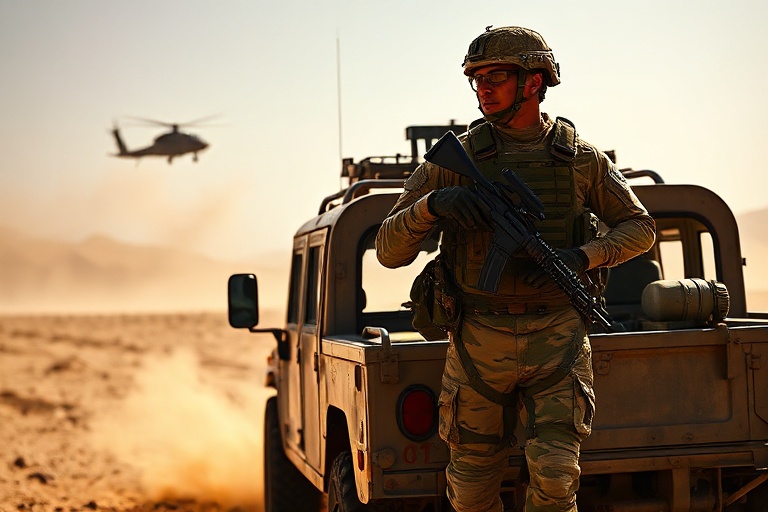
The world’s armed forces represent more than just military might. They are institutions of national identity, economic force, and cultural exchange. From the ceremonial precision of the British Royal Guard to the high-tech operations of the U.S. Space Force, military structures reflect the values, history, and strategic priorities of their nations. Understanding these forces requires examining their organization, global presence, and the subtle ways they shape society beyond combat.
The Organizational Backbone of Modern Armed Forces
Military organizations vary widely across continents, shaped by historical conflict, political philosophy, and available resources. Western models, particularly those of the United States and United Kingdom, emphasize professionalization and technological integration. The U.S. Department of Defense, for example, operates with a budget exceeding $800 billion annually, funding not only combat units but also research into artificial intelligence, cybersecurity, and space exploration.
In contrast, nations with recent histories of colonialism or internal strife often maintain more centralized, hierarchical structures. China’s People’s Liberation Army (PLA) blends communist-era ideology with modern efficiency, undergoing rapid modernization to project power across the Indo-Pacific. Meanwhile, smaller nations like Switzerland maintain militia-based systems, where civilians retain military roles during crises, embedding defense into daily life.
These organizations typically divide into branches, each with distinct roles:
- Army: Ground forces responsible for land operations, territorial defense, and large-scale combat.
- Navy: Projects power across oceans, secures trade routes, and supports amphibious assaults.
- Air Force: Controls aerial dominance, conducts surveillance, and delivers rapid strikes.
- Space Force: Newest branch, focused on satellite protection, orbital warfare, and missile defense.
- Special Operations: Elite units trained for covert missions, counterterrorism, and precision strikes.
The diversity in structure highlights how armed forces adapt to both historical legacy and contemporary threats. For instance, the German Bundeswehr, rebuilt after World War II, now emphasizes humanitarian aid and peacekeeping, reflecting its post-war pacifist constitution. Such adaptations demonstrate that military institutions are not static—they evolve with national priorities and global pressures.
The Economic and Technological Footprint
Military spending accounts for a significant portion of global GDP—nearly 2.2% on average, with some nations exceeding 4%. The United States leads in expenditure, followed by China, Russia, and India. This investment fuels not only combat readiness but entire industrial ecosystems: aerospace, cybersecurity, logistics, and healthcare. Companies like Lockheed Martin and BAE Systems design fighter jets and naval vessels, while smaller firms supply everything from bulletproof vests to field rations.
Technology has transformed warfare and peacetime operations alike. Drones, once experimental tools, now conduct precision strikes and surveillance in conflicts from Ukraine to Yemen. Artificial intelligence powers logistics planning and threat detection, while quantum computing promises breakthroughs in encryption and missile guidance. Even social media plays a role—militaries use platforms like Twitter to broadcast operations, counter misinformation, and recruit talent.
The intersection of military and civilian sectors is evident in dual-use technologies. GPS, originally a military innovation, now underpins global navigation. The internet itself emerged from ARPANET, a Cold War-era defense project. Today, cyber warfare units like the U.S. Cyber Command or Russia’s GRU conduct operations that can disrupt power grids or influence elections, blurring the line between war and peace.
Cultural Influence: From Uniforms to Media
Armed forces permeate culture in subtle and overt ways. Military parades, such as China’s National Day celebrations or Russia’s Victory Day displays, project strength and national pride. Uniforms have inspired fashion trends—khaki, olive drab, and camouflage appear in streetwear and high fashion alike. Even the iconic bomber jacket traces its origins to World War II aviators.
Cinema and literature have long mythologized military life. Films like Saving Private Ryan and Top Gun dramatize heroism and sacrifice, shaping public perception of war. Video games such as Call of Duty and Arma allow players to simulate combat, reinforcing military narratives in interactive form. Military recruiting often leverages these cultural touchpoints, targeting gamers and film enthusiasts with tailored messaging.
Yet military culture is not monolithic. In some societies, service is a rite of passage; in others, it is a last resort. Israel’s mandatory conscription system embeds military service into national identity, with most citizens serving at least two years. In contrast, Germany’s post-war aversion to militarism led to the abolition of conscription in 2011, reflecting a society still grappling with its historical legacy.
Music and literature also reflect military themes. Folk songs like Ballad of the Green Berets celebrate service, while works like All Quiet on the Western Front critique its horrors. Even comedy has engaged with military life, from MAS*H to Stripes, using humor to process trauma and absurdity.
Global Alliances and Geopolitical Tensions
Military alliances have redefined global security architecture. NATO, founded in 1949, remains the world’s most powerful collective defense pact, with 32 member states committed to mutual protection. Its Article 5—invoked only once, after the 9/11 attacks—symbolizes the strength of shared resolve. Meanwhile, the Shanghai Cooperation Organization (SCO) serves as a counterbalance, uniting China, Russia, and Central Asian states in a Eurasian security framework.
These alliances are not static. NATO’s expansion into Eastern Europe has drawn sharp criticism from Moscow, fueling tensions that culminate in conflicts like the Ukraine War. The U.S.-China rivalry extends into the Pacific, where AUKUS—a trilateral pact between Australia, the UK, and the U.S.—aims to counterbalance Beijing’s maritime ambitions. Such formations reflect a world where military cooperation and competition coexist, often in the same region.
Smaller nations often navigate these tensions by hedging their bets. Finland, for example, joined NATO in 2023 after decades of neutrality, citing Russia’s invasion of Ukraine as a turning point. Sweden followed suit, abandoning its long-held policy of non-alignment. These shifts underscore how armed forces are not merely tools of defense but instruments of diplomacy and deterrence.
Meanwhile, non-state actors—warlords, terrorist groups, and private military companies—complicate the global landscape. The Wagner Group’s operations in Africa and Ukraine highlight the rise of mercenary forces that operate outside traditional frameworks. These entities challenge the monopoly of nation-states on violence, forcing governments to adapt their strategies.
Conclusion: The Armed Forces in a Changing World
The armed forces of today are far more than instruments of war. They are economic engines, cultural symbols, and geopolitical players. Their evolution reflects broader shifts in technology, governance, and global power dynamics. As nations confront cyber threats, climate-induced migration, and the rise of artificial intelligence, military institutions will continue to adapt—balancing tradition with innovation, security with diplomacy, and strength with restraint.
One thing remains clear: the role of armed forces in shaping the future cannot be overstated. From the parade grounds of Beijing to the server farms of U.S. Cyber Command, these institutions are deeply embedded in the fabric of modern society. Understanding them requires more than studying battle tactics or budgets—it demands a grasp of history, culture, and the ever-shifting landscape of global power.