How Rugby League on TV Is Redefining the Sport’s Global Reach
“`html
Rugby League on TV: How Broadcasts Are Shaping the Sport’s Global Growth
The way rugby league is consumed has transformed dramatically over the past two decades. What was once a regional spectacle confined to pubs and local stadiums in Northern England and Australia has become a global broadcast phenomenon, reaching audiences in Europe, the Pacific, and beyond. The rise of pay-TV, streaming platforms, and dedicated sports networks has not only expanded the sport’s footprint but has also reshaped how fans engage with matches, players, and the culture surrounding the game.
Television coverage has become the lifeblood of rugby league. Where clubs once relied on gate receipts and local sponsorship, broadcast deals now determine financial stability, player recruitment, and even the rules themselves. The shift began in earnest during the late 1990s and early 2000s, when satellite television providers in the UK and Australia began investing heavily in sports rights. This era marked the beginning of rugby league’s journey from a niche sport to a mainstream entertainment product.
The UK: From Summer Saturday Afternoons to Prime-Time Viewing
The United Kingdom remains rugby league’s second-largest market after Australia, and its transformation on television is a case study in how broadcast strategy can elevate a sport. In the 1990s, rugby league matches were scattered across regional ITV channels and occasional highlights shows. The turning point came in 1996 when satellite broadcaster Sky Sports secured exclusive rights to the Super League competition. This deal brought live games into living rooms across the country, introduced weekly highlights shows, and created a national platform for clubs like Wigan, Leeds, and St Helens.
Sky’s investment paid off. By the early 2000s, Super League was drawing audiences in the hundreds of thousands per match. The arrival of digital channels and later streaming services expanded access further. Today, fans can watch games live via Sky Sports in the UK or stream them on the Super League app. International matches, including England’s performances in the Rugby League World Cup, now receive prime-time slots on BBC or ITV, exposing the sport to casual viewers who might otherwise overlook it.
The cultural impact is visible in the sport’s growing popularity outside traditional heartlands. Clubs in London, Toulouse, and Catalonia have emerged, partly due to the visibility created by national broadcasts. The UK’s embrace of rugby league on television has turned it from a working-class pastime into a sport with broader appeal, attracting younger and more diverse audiences.
Australia: The Heartland of Rugby League Broadcasting
Australia remains the spiritual home of rugby league, and its broadcast ecosystem reflects the sport’s deep cultural roots. The National Rugby League (NRL) is one of the most-watched sporting competitions in the country, regularly drawing over a million viewers per match during the regular season. This success is built on decades of strategic television partnerships, beginning with the Nine Network in the 1990s and continuing today with a lucrative deal with Channel Nine and streaming giant Stan Sport.
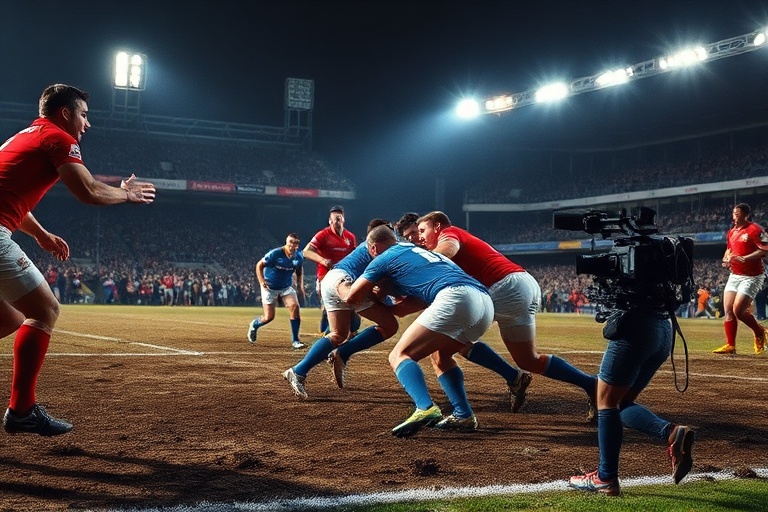
The NRL’s broadcast strategy has evolved with technology. High-definition broadcasts, multi-angle camera setups, and in-depth commentary have enhanced the viewing experience. The league has also embraced innovative formats, such as the NRL Women’s Premiership and the NRL Touch Premiership, both of which receive dedicated coverage. This inclusivity has helped rugby league maintain its relevance in a crowded sports market dominated by Australian rules football and rugby union.
International expansion has become a priority for Australian broadcasters. The NRL has struck deals with networks in the US, Europe, and Asia, ensuring that games are accessible to expatriate communities and new fans. The annual NRL Grand Final is now broadcast live in over 100 countries, a far cry from the days when matches were only seen in Sydney or Brisbane.
Beyond the Traditional Markets: Rugby League’s Global Broadcast Push
Rugby league’s push into new territories has been slow but steady, driven largely by broadcast opportunities. The sport’s governing body, the International Rugby League (IRL), has prioritized media rights as a tool for growth. In Europe, France’s Elite 1 Championship has benefited from deals with beIN Sports and Canal+, bringing top-level rugby league to French audiences. Meanwhile, in the Pacific Islands, where the sport is deeply embedded in local culture, broadcasters like Fiji TV and Sky Pacific have ensured that international competitions like the Rugby League World Cup remain accessible.
The United States presents a unique challenge and opportunity. While American football dominates the market, rugby league has found a niche through niche broadcasters and streaming platforms. The World Rugby League and the NRL have experimented with short-form content, highlights packages, and even partnerships with YouTube influencers to attract younger viewers. The 2021 Rugby League World Cup, co-hosted by England, was broadcast live in the US for the first time on Viaplay, signaling a potential shift in the market.
One of the most ambitious projects has been the launch of the Global Rugby League, an initiative aimed at unifying broadcast rights across multiple competitions. By centralizing access, the IRL hopes to make rugby league more visible on a global scale, competing with sports like rugby union and soccer for prime-time slots.
The Future: Streaming, Data, and Fan Engagement
As television gives way to digital platforms, rugby league is adapting to new ways of engaging fans. Streaming services like DAZN and Kayo Sports have disrupted traditional broadcast models, offering on-demand access to matches, archives, and exclusive content. The NRL’s partnership with Stan Sport, which includes live streaming and on-demand replays, has set a benchmark for how leagues can blend television and digital consumption.
Data and analytics are also changing how rugby league is presented on screen. Broadcasters now use real-time statistics, player tracking, and augmented reality to enhance broadcasts. These innovations help casual viewers understand the nuances of the game, while die-hard fans appreciate the depth of analysis. Social media integration has further extended the reach of broadcasts, with highlights clips and behind-the-scenes content going viral within minutes of a match ending.
Yet challenges remain. Piracy is a persistent issue, particularly in markets where rights are expensive or access is limited. The fragmentation of broadcast rights across platforms can also frustrate fans who want a single destination for all rugby league content. And while streaming offers flexibility, it risks alienating older audiences who prefer the simplicity of traditional TV.
The sport’s ability to innovate will determine its future on television. Clubs and leagues must balance tradition with modernity, ensuring that the raw intensity of rugby league—its physicality, its community spirit—is not lost in the pursuit of global audiences. The best broadcasts don’t just show a game; they capture its soul.
A Global Sport in the Digital Age
Rugby league’s journey on television is a testament to the power of media in shaping sports culture. From the industrial towns of Northern England to the beaches of Fiji and the suburbs of Sydney, broadcast rights have turned rugby league into a global language. The sport’s growth is not just about numbers; it’s about communities, identities, and shared experiences.
As technology continues to evolve, rugby league must remain agile. The rise of short-form video, interactive streaming, and personalized content presents new opportunities to engage fans. At the same time, the sport must not lose sight of what makes it unique: the passion of its supporters, the unpredictability of its matches, and the unbreakable bond between players and their communities.
Television has been the catalyst for rugby league’s expansion, but the future lies in creating a seamless, immersive experience that transcends screens. Whether through a traditional broadcast or a smartphone in a remote village, rugby league’s ability to connect people across continents will define its next chapter.