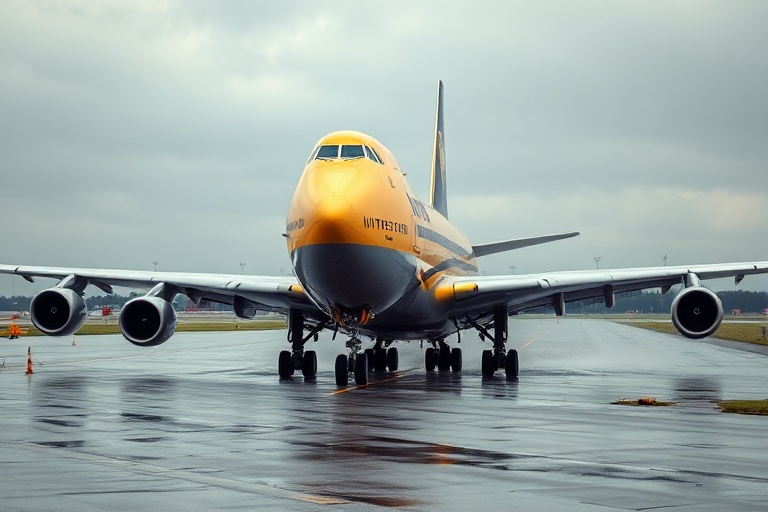
UPS Airlines operates one of the world’s largest cargo airlines, a critical but often overlooked component of global commerce. With a fleet of over 200 aircraft and daily operations spanning six continents, the airline plays a pivotal role in keeping supply chains moving. While most people associate UPS with brown delivery trucks, its aviation division quietly handles millions of packages each day, ensuring timely deliveries across oceans and time zones.
The airline’s origins trace back to 1982, when UPS first acquired a single aircraft to supplement its ground shipping operations. Since then, it has expanded into a logistics powerhouse, leveraging air transport to meet the demands of e-commerce, industrial supply chains, and emergency shipments. Today, UPS Airlines is the 11th largest cargo airline globally by freight tonnage, a testament to its operational scale and efficiency.
The Evolution of UPS Airlines: From Humble Beginnings to Global Reach
UPS Airlines’ growth mirrors the broader expansion of the shipping and logistics industry. In the 1980s, as air cargo demand surged, UPS recognized the need to diversify its transportation methods. The company’s first aircraft, a Boeing 727, was primarily used for domestic routes. By the 1990s, UPS had expanded internationally, adding routes to Europe and Asia to support its growing global customer base.
One of the airline’s defining moments came in 2001 when it launched UPS Supply Chain Solutions, a division that integrated air freight with warehousing, distribution, and customs brokerage. This move positioned UPS Airlines not just as a carrier but as a comprehensive logistics provider. Today, the airline operates hubs in key locations such as Louisville, Kentucky; Cologne, Germany; and Shenzhen, China, strategically chosen to maximize efficiency and minimize transit times.
The airline’s fleet has also evolved to meet modern demands. While it initially relied on converted passenger planes, UPS Airlines now operates a mix of dedicated freighters, including the Boeing 747, 757, and 767. The company has also invested in sustainable aviation fuel (SAF) and fuel-efficient aircraft to reduce its environmental impact, aligning with broader industry trends toward greener operations.
How UPS Airlines Operates: A Closer Look at Its Fleet and Hubs
UPS Airlines’ operational model is built around efficiency and reliability. The airline’s primary hub in Louisville, Kentucky, known as Worldport, is one of the largest automated package handling facilities in the world. Every night, thousands of packages pass through Worldport, where they are sorted, loaded onto aircraft, and dispatched to their final destinations.
The airline’s fleet consists of both owned and leased aircraft, with a focus on narrow-body and wide-body freighters. Here’s a breakdown of its key aircraft types:
- Boeing 767: The backbone of UPS Airlines’ fleet, the 767 is used for medium to long-haul routes. Its versatility and fuel efficiency make it a preferred choice for many cargo operators.
- Boeing 747: The iconic jumbo jet is used for high-capacity shipments, particularly on transcontinental routes. UPS operates both the 747-400 and the newer 747-8 freighter.
- Boeing 757: A narrow-body workhorse, the 757 is ideal for shorter routes and high-density cargo. Its ability to operate from smaller airports makes it a valuable asset.
- A300-600F: Airbus’ A300-600F is another key player in UPS’s fleet, offering a balance of capacity and range for regional and international routes.
In addition to its fleet, UPS Airlines relies on a network of secondary hubs to streamline operations. These hubs, located in cities like Dallas, Miami, and Anchorage, serve as regional sorting centers, reducing transit times and improving delivery speeds. The airline’s use of Anchorage, Alaska, as a refueling stop for Asia-bound flights is particularly strategic, allowing for efficient trans-Pacific routes.
The Broader Implications of UPS Airlines in Global Commerce
The impact of UPS Airlines extends far beyond its operational scale. As e-commerce continues to grow, the demand for fast and reliable air cargo has never been higher. UPS Airlines plays a crucial role in enabling businesses to meet consumer expectations for rapid delivery, whether it’s a small package or a large industrial shipment.
One of the most significant implications of UPS Airlines’ operations is its contribution to global trade. By connecting manufacturers, retailers, and consumers across continents, the airline facilitates the flow of goods that drive economies. For example, during the COVID-19 pandemic, UPS Airlines was instrumental in transporting medical supplies, vaccines, and personal protective equipment (PPE) worldwide, showcasing its vital role in crisis response.
Environmental sustainability is another area where UPS Airlines is making strides. The company has committed to reducing its carbon footprint by 2035, with goals to use 100% renewable electricity for its operations and invest in alternative fuels. These efforts align with the broader push within the aviation industry to adopt greener practices, though challenges remain in balancing efficiency with sustainability.
UPS Airlines also faces competition from other cargo carriers, including FedEx Express and Amazon Air. However, its integrated approach—combining air freight with ground transportation and logistics services—sets it apart. This end-to-end solution allows UPS to offer seamless shipping experiences, from warehouse to doorstep, a competitive advantage in the logistics industry.
Challenges and Future Outlook for UPS Airlines
Despite its success, UPS Airlines operates in a complex and competitive environment. Rising fuel costs, geopolitical tensions, and supply chain disruptions pose ongoing challenges. The airline must navigate these issues while also adapting to technological advancements, such as automation and artificial intelligence, to maintain its edge.
Looking ahead, UPS Airlines is poised to play an even larger role in the future of shipping. The growth of e-commerce, particularly in emerging markets, will drive demand for air cargo services. Additionally, advancements in drone delivery and autonomous aircraft could revolutionize the industry, though regulatory and safety hurdles remain.
The airline’s commitment to innovation is evident in its investments in next-generation aircraft, such as the Boeing 777F, which offers greater fuel efficiency and cargo capacity. UPS is also exploring the use of electric and hybrid-electric aircraft for regional routes, signaling a shift toward more sustainable operations.
For businesses and consumers alike, UPS Airlines remains a critical link in the global supply chain. Its ability to adapt to changing demands while maintaining reliability will determine its success in the years to come.
Exploring Further
For more insights into the logistics and shipping industry, visit our Trending and Business categories on Dave’s Locker.