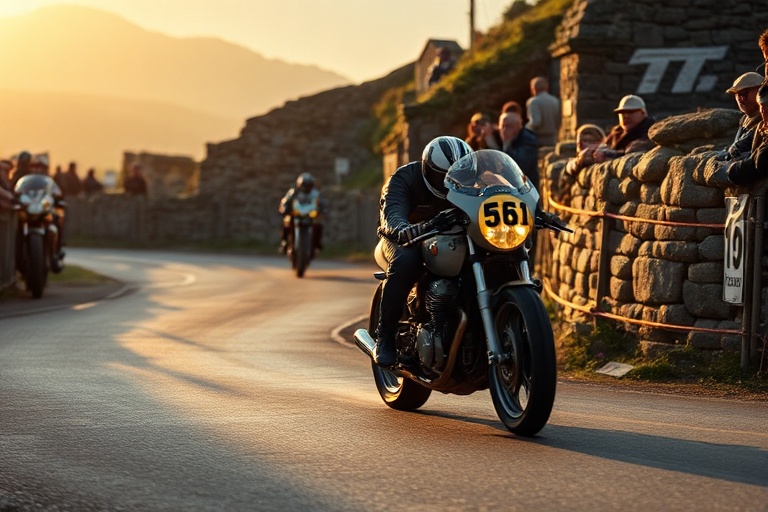
Isle of Man TT: The Ultimate Test of Speed and Skill in Motorcycle Racing
“`html
The Isle of Man TT: A High-Stakes Motorcycle Race Like No Other
Few sporting events command the same mix of reverence, danger, and sheer spectacle as the Isle of Man Tourist Trophy (TT). Now in its second century, this motorcycle race through the island’s narrow, winding roads remains the ultimate test of skill, nerve, and machine. Unlike Grand Prix races held on purpose-built circuits, the TT unfolds on public roads closed for the event—where every corner could be a racer’s last.
The Origins and Evolution of a Legendary Race
The Isle of Man TT began in 1907 as a time trial for production motorcycles, organized by the Auto-Cycle Union (ACU). It quickly grew from a modest competition into a global motorsport institution, surviving two world wars and evolving alongside the motorcycle industry. The early races were dominated by British manufacturers like Norton and Triumph, but by the mid-20th century, Italian, Japanese, and German bikes began to challenge the status quo.
The introduction of the Sidecar TT in 1923 and the Sidecar Race in 1954 broadened the event’s appeal, while the 1970s saw the rise of legendary riders such as Mike Hailwood and Giacomo Agostini. Today, the TT features multiple classes, including Superbike, Supersport, Superstock, and Sidecar, with electric bikes joining the fray in recent years. The race’s history is preserved through the TT Grandstand Museum, where visitors can trace the evolution of motorcycle technology and the daring feats of past champions.
The most iconic stretch of the course is the Mountain Mile, a straight section that climbs toward the island’s highest point. Here, riders hit speeds exceeding 180 mph, threading between stone walls and hedgerows that leave no margin for error. The course’s elevation changes and unpredictable weather add layers of complexity, ensuring that even the most experienced riders remain humble.
Why the TT Stands Apart in the World of Motorsport
The Isle of Man TT is not just a race; it’s a cultural touchstone and a technical proving ground. Unlike MotoGP or WorldSBK, which take place on closed circuits, the TT’s use of public roads creates a unique challenge. Riders must contend with road camber, damp patches, and the ever-present threat of gravel or debris. The absence of run-off areas means a single mistake can have fatal consequences—a reality that has claimed over 250 lives since the race began.
A Race of Two Halves
The TT is divided into two main periods: the practice sessions and the six race days. During practice, riders familiarize themselves with the course, gradually pushing the limits of both machine and man. These sessions are as much about refining technique as they are about survival. Riders often describe the Mountain Section as “the most dangerous stretch of road in the world,” where one misjudged turn can end a career—or a life.
The race days themselves are a blur of speed and tension. Each class competes over multiple laps, with the Superbike race covering six laps (226.38 miles) and the Sidecar race covering three (75.44 miles). The sidecars, piloted by a duo—the driver and a passenger who leans into corners at high speed—add a surreal dimension to the spectacle. The roar of the engines echoes through the glens, while spectators line the fences or perch on hillsides, binoculars in hand.
The Human Factor: Riders Who Define the TT
Few names in motorcycle racing carry the weight of the TT like Joey Dunlop, John McGuinness, and the late, great Mike Hailwood. Dunlop, known as the “King of the Mountain,” won 26 TT races during his career and became a folk hero in Ireland and beyond. His rivalry with Hailwood in the 1960s electrified crowds, while McGuinness’s record 23 victories cemented his legacy as one of the greatest TT riders of all time.
In recent years, Peter Hickman has emerged as a dominant force, setting the outright lap record at 135.452 mph in 2023. His achievement underscored the relentless progression of speed and technology, even as the TT’s dangers remain unchanged. The race continues to attract riders from around the world, drawn by the allure of glory and the knowledge that they are competing in the oldest and most prestigious motorcycle race on the planet.
The Broader Implications of the TT
The Isle of Man TT is more than a sporting event; it’s an economic and cultural phenomenon that shapes the island’s identity. Each year, the races draw over 40,000 visitors, injecting millions into the local economy. Hotels, pubs, and guesthouses operate at full capacity, while businesses from cafes to souvenir shops rely on the influx of fans. The TT also generates significant media coverage, broadcasting the event to millions worldwide and reinforcing the island’s reputation as a motorsport mecca.
Yet the TT’s legacy is not without controversy. Safety has long been a contentious issue, with critics arguing that the race prioritizes spectacle over survival. The Isle of Man government and the ACU have implemented changes over the years, including stricter bike regulations, improved protective gear, and enhanced medical response teams. However, the fundamental challenge remains: the TT is a race on roads never designed for such speeds. Each year, the community mourns the riders and spectators who lose their lives, raising difficult questions about whether the event can ever be made truly safe.
A Global Influence on Motorcycle Racing
The TT’s influence extends far beyond the Isle of Man. It has inspired similar road races, such as the North West 200 in Northern Ireland and the Ulster Grand Prix. These events share the TT’s DNA: high speeds, public roads, and a deep connection to local communities. The TT has also shaped motorcycle design, pushing manufacturers to develop bikes capable of withstanding extreme conditions while delivering unparalleled performance.
The race has also become a proving ground for emerging talent. Riders who excel at the TT often transition to Grand Prix racing, where their experience on open roads gives them a unique edge. Conversely, the TT’s technical challenges have led some top-tier riders to avoid it, preferring the controlled environments of MotoGP circuits. This divergence highlights the TT’s role as a litmus test for both machines and riders.
The TT in the Digital Age
In an era dominated by social media and streaming, the TT has adapted to modern consumption habits. Live broadcasts and onboard cameras bring the action to global audiences, while platforms like YouTube and TikTok share highlights and rider interviews. The event’s official website and apps provide real-time updates, lap times, and historical data, catering to both casual fans and hardcore enthusiasts. Yet, despite these innovations, the TT’s raw, unfiltered nature remains its greatest draw. There’s no substitute for witnessing a rider negotiate the 37.73-mile circuit at 130 mph, the wind screaming in their ears and the road disappearing beneath them.
What the Future Holds for the TT
The Isle of Man TT faces a pivotal moment as it navigates the demands of the modern world. On one hand, the race is a living museum of motorcycle history, preserving traditions that date back over a century. On the other, it must address concerns about safety, environmental impact, and inclusivity. The introduction of electric bike classes signals a step toward sustainability, but the core challenge remains: how to honor the TT’s legacy while ensuring its survival.
Looking ahead, several key trends may shape the TT’s future:
- Safety Innovations: Advances in helmet technology, bike electronics, and track modifications could reduce risks without compromising the race’s character.
- Diversity in Competition: Efforts to attract more international riders and promote women in motorcycle racing could broaden the TT’s appeal.
- Digital Integration: Augmented reality experiences and interactive fan platforms may enhance engagement while preserving the event’s authenticity.
- Environmental Considerations: The TT could explore greener practices, such as carbon offset programs or alternative fuel sources, to align with global sustainability goals.
The TT’s ability to evolve without losing its soul will determine its legacy for generations to come. For fans, riders, and the Isle of Man itself, the race remains a rite of passage—a place where dreams are made and, sometimes, shattered. It is a reminder that in a world of increasing predictability, the TT offers something rare: unfiltered speed, unbridled passion, and a connection to the raw essence of motorcycle racing.