Ebola Vaccine: A Global Health Breakthrough Decades in the Making
The development of an effective Ebola vaccine stands as one of modern medicine’s most significant achievements. From its origins in the dense forests of Central Africa to the clinical trials conducted across three continents, the vaccine’s journey reflects both scientific perseverance and international cooperation. While Ebola outbreaks have historically instilled fear due to their high fatality rates and rapid transmission, the availability of a preventive measure has fundamentally altered how global health organizations respond to emerging infectious diseases.
Ebola first emerged in 1976 during simultaneous outbreaks in Zaire (now the Democratic Republic of the Congo) and Sudan. The virus, named after the Ebola River, caused severe hemorrhagic fever with symptoms including fever, vomiting, and internal bleeding. With fatality rates often exceeding 50%, early containment efforts relied on isolation, contact tracing, and community education—strategies that proved challenging in regions with limited healthcare infrastructure. It wasn’t until the devastating West African Ebola epidemic of 2014–2016, which infected over 28,000 people and claimed more than 11,000 lives, that the world recognized the urgent need for a vaccine.
The Science Behind the Vaccine: How It Works and Why It Matters
The Ebola vaccine, known as Ervebo (rVSV-ZEBOV), received regulatory approval in 2019 following rigorous clinical trials. Developed by Merck & Co., the vaccine uses a genetically engineered vesicular stomatitis virus (VSV) that carries a surface protein from the Zaire Ebola virus. This harmless virus acts as a Trojan horse, training the immune system to recognize and fight actual Ebola virus without causing the disease itself.
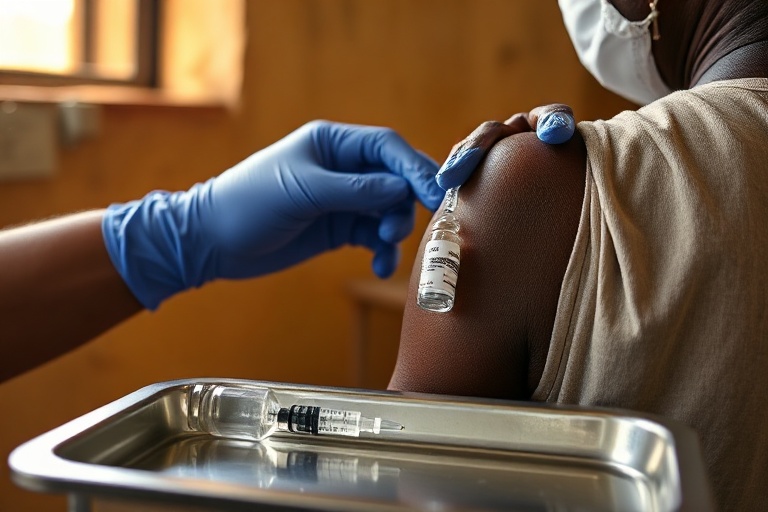
Clinical trials revealed that a single dose of Ervebo provides strong protection within 10 days. In one of the most critical studies, conducted in Guinea during the 2014–2016 outbreak, the vaccine demonstrated 100% efficacy among those who received it promptly after exposure. This “ring vaccination” approach—vaccinating contacts of infected individuals—became a cornerstone of outbreak control and has since been deployed in multiple countries, including the Democratic Republic of the Congo and Uganda.
While Ervebo targets the Zaire strain—the most lethal of the six known Ebola species—scientists continue to develop vaccines for other strains like Sudan and Bundibugyo. The ongoing research is essential because Ebola viruses are zoonotic, meaning they can jump from animals such as bats or primates to humans. Deforestation, hunting, and climate change are increasing human-wildlife interactions, raising the risk of future spillover events.
Global Collaboration: The Role of WHO, NGOs, and Local Communities
The success of the Ebola vaccine is as much a story of international collaboration as it is of medical innovation. The World Health Organization (WHO) played a pivotal role, coordinating vaccine trials across Guinea, Liberia, and Sierra Leone during one of the most complex humanitarian crises in recent memory. These trials were conducted in partnership with Médecins Sans Frontières (Doctors Without Borders), the Centers for Disease Control and Prevention (CDC), and national health ministries.
Local communities were not passive recipients of aid but active participants in the vaccination campaigns. In many villages, rumors and mistrust initially hindered vaccine acceptance. Community leaders, religious figures, and healthcare workers worked together to address misconceptions, emphasizing the vaccine’s safety and effectiveness. This grassroots engagement proved crucial in building trust and ensuring high vaccination coverage during outbreaks.
International funding also played a vital role. The Coalition for Epidemic Preparedness Innovations (CEPI), founded in 2017 with support from Norway, Germany, Japan, and the Wellcome Trust, invested over $300 million in Ebola vaccine research and development. Their commitment ensured that promising candidates could move from lab to field trials without delay—a lesson learned from previous outbreaks where funding gaps stalled progress.
Moreover, the vaccine’s deployment highlighted the importance of equitable access. Unlike many medical innovations that reach wealthy nations first, Ervebo was prioritized for use in African countries at highest risk. This approach reflects a growing global consensus: pandemic preparedness must be inclusive, with resources and technology shared across borders.
Beyond Ebola: Lessons for Future Pandemic Preparedness
The Ebola vaccine’s development and deployment offer valuable insights for addressing other emerging infectious diseases, including COVID-19 and mpox. One key lesson is the importance of preemptive research. Scientists had been studying Ebola vaccines for decades before the 2014 outbreak, but sustained funding and political will were lacking. The pandemic forced a reckoning: global health security cannot depend on reactive measures alone.
Another lesson is the need for flexible regulatory pathways. During the West African Ebola crisis, the WHO used its Emergency Use Assessment and Listing procedure to fast-track vaccine approvals. This mechanism has since been adapted for COVID-19 vaccines, demonstrating how regulatory agility can save lives in crises.
Finally, the Ebola vaccine underscores the interconnectedness of human, animal, and environmental health—a concept known as One Health. Outbreaks often originate at the human-animal interface, whether through deforestation, wildlife trade, or agricultural expansion. Integrating vaccine development with broader ecosystem monitoring could help prevent future pandemics before they begin.
As climate change alters ecosystems and global travel accelerates the spread of pathogens, the Ebola vaccine serves as both a shield and a symbol. It represents hope that science and solidarity can outpace even the most terrifying threats. Yet it also reminds us that complacency is not an option. The next pandemic may not announce itself with the dramatic symptoms of Ebola, but the tools we’ve developed—vaccines, rapid diagnostics, and community trust—will be essential in responding.
Challenges and the Road Ahead
Despite its success, the Ebola vaccine faces ongoing challenges. Supply constraints remain a concern, particularly in remote regions with limited cold-chain infrastructure. Ervebo requires refrigeration between 2 and 8 degrees Celsius, which can be difficult to maintain in areas with unreliable electricity. Efforts are underway to develop thermostable formulations and needle-free delivery systems, such as oral or intranasal vaccines.
Sustained funding is another issue. While initial investments were substantial, maintaining stockpiles and supporting vaccination campaigns requires long-term commitment. The WHO estimates that a fully funded global Ebola vaccine stockpile could prevent up to 80% of future outbreaks if deployed within seven days of detection.
Public perception continues to evolve. While vaccine hesitancy was a major hurdle in early campaigns, the COVID-19 pandemic has shifted attitudes in many communities. Still, misinformation and distrust persist, particularly in areas where governments have a history of coercive health policies. Transparent communication and community-led engagement remain essential.
Looking forward, scientists are exploring next-generation Ebola vaccines with broader protection. Some candidates, like the two-dose regimen developed by Johnson & Johnson, aim to provide immunity against multiple Ebola species. Others focus on pan-filovirus vaccines that could protect against related viruses like Marburg. These innovations could redefine pandemic preparedness.
A Legacy of Resilience and Responsibility
The Ebola vaccine is more than a medical milestone—it is a testament to what humanity can achieve when it prioritizes collective survival over individual gain. Its development required scientists to push the boundaries of virology, governments to transcend borders, and communities to confront fear with courage. In an era marked by geopolitical tensions and climate uncertainty, this collaborative spirit offers a blueprint for addressing global challenges.
For public health professionals, the vaccine is a reminder that prevention is always preferable to cure. For policymakers, it highlights the need for sustained investment in research and infrastructure. For the global community, it serves as a call to action: to build resilient health systems, to respect the natural world, and to ensure that no one is left unprotected.
The shadows of past Ebola outbreaks still linger in the memories of survivors and the scars left on communities. But with the vaccine now in our arsenal, the future looks less uncertain. The question is no longer whether we can stop Ebola—but how quickly we will act when the next threat emerges.
In the words of Dr. Peter Piot, one of the scientists who helped identify the Ebola virus in 1976: “We have the tools. What we need now is the will.”