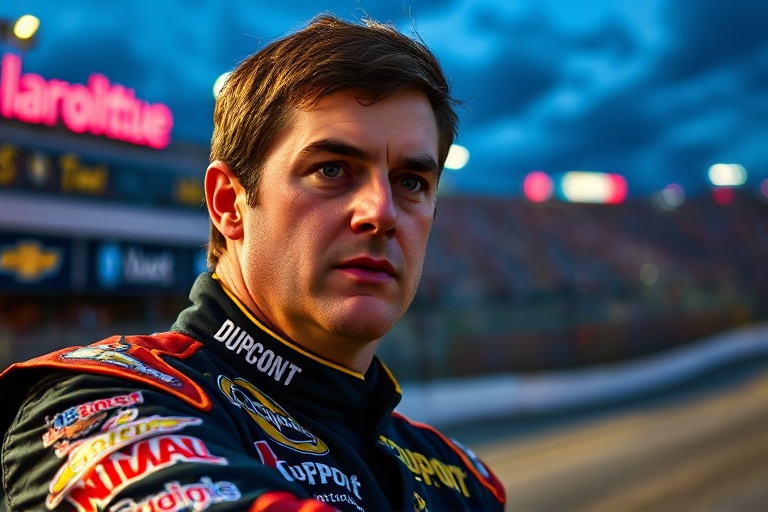
Jeff Gordon’s name isn’t just synonymous with NASCAR—it’s a bridge between American motorsports and global racing culture. For three decades, Gordon has shaped the sport’s evolution, both on the track and in the boardrooms of corporate America. His influence extends beyond victories and championships; it’s embedded in the sport’s international growth, its transformation into a mainstream spectacle, and its enduring connection to fans worldwide.
Born in 1971 in Vallejo, California, Gordon’s journey from karting prodigy to NASCAR royalty began in an era when stock car racing was still a regional fascination. Yet by the time he retired in 2015, he had redefined what it meant to be a professional racer in the 21st century. His career spanned four Cup Series titles, 93 victories, and a record 787 consecutive starts—a streak that underscored his durability and consistency. More than numbers, Gordon’s legacy is measured in the way he made NASCAR accessible to audiences beyond its traditional Southern base.
From Local Tracks to Global Stages
Gordon’s rise coincided with NASCAR’s first major push into mainstream American culture. In the 1990s, as the sport expanded beyond its Southern roots, Gordon became its most visible ambassador. His rivalry with Dale Earnhardt—two polar opposites in personality and fan appeal—fueled a decade of growth. While Earnhardt represented the gritty, blue-collar ethos of the sport, Gordon embodied the cosmopolitan, corporate-friendly future NASCAR sought to embrace.
His success on the track translated into cultural relevance. Gordon’s appearances on Late Show with David Letterman and Good Morning America weren’t just publicity stunts; they were strategic moves to position NASCAR as a family-friendly entertainment option. His 1998 victory at the Brickyard 400, broadcast live on NBC, drew one of the highest TV ratings in motorsports history—a testament to his ability to attract casual viewers. This crossover appeal laid the groundwork for NASCAR’s later international experiments, including exhibition races in Japan and Mexico.
Gordon’s global impact wasn’t limited to media exposure. His participation in the 2015 Race of Champions in Germany introduced him to European audiences unfamiliar with NASCAR. The event, which pits drivers from different motorsports disciplines against each other, highlighted Gordon’s versatility and cemented his status as a racing ambassador. While he didn’t win, his presence alone signaled NASCAR’s ambition to step beyond its North American confines.
The Business of Racing: Gordon’s Off-Track Influence
Long before retiring, Gordon had already begun shaping NASCAR’s future from behind the scenes. His business acumen rivaled his driving skills. As a co-owner of Hendrick Motorsports, he played a pivotal role in the team’s dominance, overseeing the development of drivers like Jimmie Johnson and Chase Elliott. His leadership style—collaborative yet decisive—set a new standard for owner-operators in the sport.
Off the track, Gordon’s corporate partnerships were equally strategic. His long-standing relationship with Automotive brands like Chevrolet and DuPont demonstrated how NASCAR could align with Fortune 500 companies. These alliances weren’t merely sponsorships; they were integrations. Gordon’s face appeared in ad campaigns that stretched from NASCAR-centric magazines to primetime television, normalizing stock car racing in the cultural lexicon.
- Corporate Synergy: Gordon’s deals with brands like Lowe’s and PepsiCo helped NASCAR secure major advertising revenue, particularly during its 1990s expansion.
- Media Innovation: His willingness to embrace new broadcast formats, including in-car cameras and interactive viewer experiences, foreshadowed NASCAR’s digital transformation.
- Driver Empowerment: As a founder of the Race Team Alliance, Gordon advocated for driver rights and revenue sharing, a move that reshaped the sport’s labor dynamics.
Gordon’s post-retirement ventures have further blurred the lines between racing and mainstream business. His role as a commentator for Fox Sports and his involvement in electric vehicle startups reflect his adaptability in an era where traditional motorsports face sustainability challenges. While critics argue that Gordon’s corporate persona sometimes overshadowed his on-track intensity, his ability to navigate these dual roles speaks to his broader cultural significance.
Cultural Impact: More Than Just a Driver
Gordon’s influence extends into the social fabric of American sports. He was one of the first NASCAR drivers to cultivate a diverse fanbase, appealing to audiences that transcended regional loyalties. His 1990s rivalry with Jeff Burton and Mark Martin introduced a new generation to the sport’s tactical depth, while his 2001 Daytona 500 victory—broadcast to over 20 million viewers—solidified his place in pop culture.
Yet Gordon’s impact isn’t confined to America. In markets like Mexico, where NASCAR held races in the 2000s, his name carried weight. Mexican fans, accustomed to open-wheel heroes like Pedro Rodríguez, embraced Gordon as a symbol of NASCAR’s global ambitions. Similarly, in Europe, where motorsports are dominated by Formula 1, Gordon’s participation in events like the Goodwood Festival of Speed challenged preconceptions about stock car racing’s appeal.
Gordon’s cultural footprint is also evident in his philanthropy. Through the Jeff Gordon Children’s Foundation, he has raised millions for pediatric cancer research, leveraging his celebrity to amplify causes beyond racing. His involvement with organizations like Make-A-Wish Foundation further cemented his reputation as a figure who used his platform for broader social good.
The Enduring Legacy
Jeff Gordon’s retirement in 2015 didn’t mark the end of his influence—it signaled a new chapter. Today, he remains a fixture in motorsports media, a mentor to rising stars, and a bridge between NASCAR’s past and future. His induction into the NASCAR Hall of Fame in 2017 was a foregone conclusion, but the ceremony itself underscored his role as a living legend whose contributions transcended statistics.
As NASCAR grapples with declining TV ratings and a shrinking core audience, Gordon’s legacy offers a roadmap. His ability to balance authenticity with accessibility, competition with corporate savvy, and regional identity with global appeal is a model for the sport’s next generation. Whether through his work with Hendrick Motorsports, his commentary on Fox Sports, or his advocacy for pediatric health, Gordon continues to shape NASCAR’s trajectory.
For global fans of motorsports, Jeff Gordon isn’t just a retired driver—he’s a testament to how a single figure can redefine an entire industry. His career mirrors the evolution of NASCAR itself: from a regional pastime to a global spectacle, from a driver-centric sport to a multifaceted entertainment industry. In an era where motorsports face unprecedented competition for attention, Gordon’s legacy reminds us that the most enduring stars are those who transcend their sport.