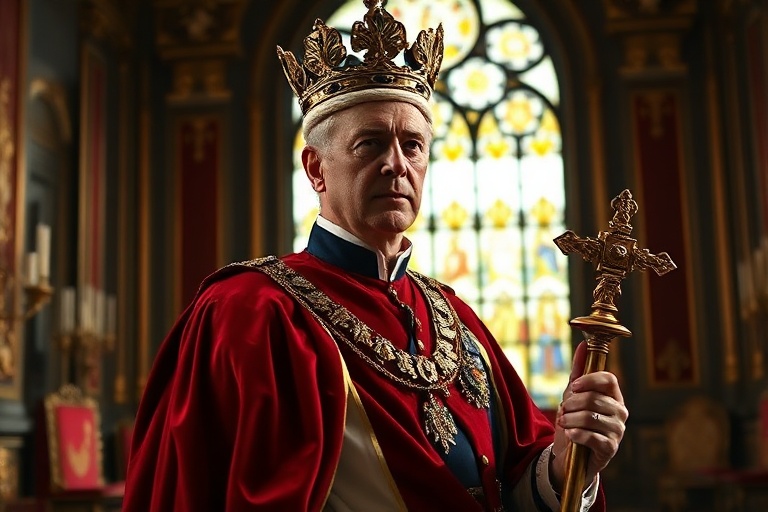
Charles Philip Arthur George ascended to the British throne on September 8, 2022, following the death of his mother, Queen Elizabeth II. At 73, he became the oldest monarch to assume the crown in British history, marking the start of a new era for the United Kingdom. His reign, known as Charles III, carries the weight of tradition while navigating the complexities of a modern monarchy.
The transition from Queen Elizabeth II to King Charles III was not merely a change in leadership but a shift in the symbolic role of the monarchy itself. Elizabeth II’s 70-year reign had defined stability and continuity, whereas Charles III’s ascension introduced questions about the future direction of the British monarchy and its place in a rapidly evolving world.
The Path to the Throne: A Lifetime of Preparation
Born on November 14, 1948, Charles was the eldest son of Queen Elizabeth II and Prince Philip, Duke of Edinburgh. His early life was shaped by the expectations of royal duty, and he became the longest-serving Prince of Wales before his coronation. His education at Gordonstoun, a rigorous Scottish boarding school, and later at Trinity College, Cambridge, prepared him academically, though his time at the latter was cut short due to royal obligations.
Charles’s military service further solidified his reputation as a dedicated public servant. He trained at the Royal Air Force College Cranwell and later served in the Royal Navy, flying helicopters and commanding a minesweeper. His commitment to duty mirrored the traditional values of the monarchy, even as he sought to modernize its image.
As Prince of Wales, Charles was deeply involved in philanthropic work, founding the Prince’s Trust in 1976 to support disadvantaged young people. His advocacy for environmental causes, particularly his warnings about climate change decades before it became a mainstream concern, earned him both respect and criticism. Some viewed him as a forward-thinking leader, while others saw him as meddling in political affairs.
Challenges and Controversies in the Early Reign
The early years of Charles III’s reign have been marked by both continuity and disruption. One of the most immediate challenges was the monarchy’s role in a politically divided United Kingdom. Following the death of Queen Elizabeth II, the nation faced economic uncertainty, a cost-of-living crisis, and debates over its relationship with the European Union and the Commonwealth.
Charles III has also had to address the monarchy’s evolving relationship with the public. The royal family’s popularity surged after Queen Elizabeth II’s death, but scrutiny of the institution has persisted. Issues such as royal finances, transparency, and the monarchy’s relevance in a modern democracy have remained points of contention.
A notable moment in his early reign was his coronation on May 6, 2023. The ceremony, steeped in centuries of tradition, was scaled back compared to previous coronations, reflecting both financial constraints and a desire to align with contemporary expectations. The event drew global attention, with millions watching as Charles III was formally crowned alongside his wife, Camilla, who became Queen Consort.
Key Points About King Charles III’s Early Reign
- Oldest monarch to ascend the throne: Charles III was 73 at the time of his coronation, making him the oldest British monarch in history.
- Environmental advocacy: His long-standing commitment to climate action has shaped his public image and policy priorities.
- Coronation modifications: The 2023 coronation was shorter and less expensive than previous ceremonies, reflecting modern expectations.
- Public perception challenges: The monarchy continues to face debates over its cost, transparency, and relevance in a changing society.
- Military and diplomatic roles: Charles III has maintained the monarchy’s tradition of military service and diplomatic engagement, though with a more modern approach.
The Broader Implications of Charles III’s Reign
King Charles III’s reign is occurring at a pivotal moment for the British monarchy. The institution, which has survived for over a thousand years, now faces pressures from globalization, digital media, and shifting public attitudes toward hereditary leadership. His ability to adapt while preserving tradition will determine the monarchy’s future.
One of the most significant implications of his reign is its impact on the Commonwealth. As the head of the Commonwealth, Charles III plays a symbolic role in maintaining ties with 56 member nations, many of which are former British colonies. His relationships with leaders in Africa, Asia, and the Caribbean will be crucial in shaping the organization’s future, particularly as debates over colonialism and reparations continue.
Domestically, Charles III’s reign coincides with a period of political instability in the UK. The country has seen multiple prime ministers since 2022, and the monarchy’s role in times of crisis has come under scrutiny. Whether the monarchy can remain a unifying force in a divided nation remains an open question.
Another critical area is the monarchy’s financial management. The Sovereign Grant, which funds royal activities, has faced criticism for its transparency and accountability. Charles III has pledged to modernize the monarchy’s finances, but the challenge of balancing tradition with fiscal responsibility will be a defining issue of his reign.
Looking Ahead: The Future of the Monarchy Under Charles III
The long-term success of Charles III’s reign will depend on his ability to navigate these challenges while maintaining the monarchy’s relevance. His son, Prince William, and his wife, Catherine, Princess of Wales, are already playing increasingly prominent roles, suggesting a gradual transition of power within the royal family.
Charles III has also hinted at his desire to reduce the monarchy’s size, signaling a potential shift toward a more streamlined institution. This could involve younger royals taking on more responsibilities, allowing the monarchy to adapt to a changing world without losing its core identity.
Ultimately, the reign of King Charles III is a study in contrasts: tradition versus modernity, continuity versus change. His ability to reconcile these forces will shape not only the future of the British monarchy but also the nation’s sense of identity in an increasingly uncertain world.
As the first British monarch born in the post-World War II era, Charles III represents a bridge between the past and the future. His reign will be defined by how well he bridges that gap.