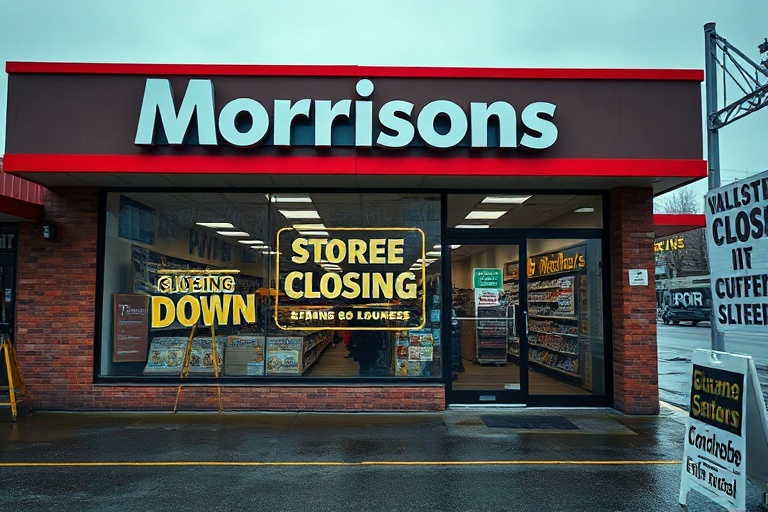
Morrisons has announced the closure of 18 convenience stores across the UK, marking a significant shift in its high street strategy. The decision reflects broader challenges facing traditional supermarkets as consumer habits evolve and competition from discounters and online grocers intensifies. While the move may seem drastic, it underscores Morrisons’ efforts to streamline operations amid financial pressures.
The closures, confirmed in early 2024, will affect stores in locations including Manchester, Birmingham, and London. A company spokesperson stated that the closures were part of a “strategic review” to focus on more profitable formats and locations. This follows Morrisons’ earlier decision to exit the wholesale business and its ongoing partnership with Amazon for grocery deliveries.
The Broader Context: Why Are These Closures Happening?
Morrisons’ convenience store closures are not occurring in isolation. They represent a wider trend among traditional supermarkets grappling with shifting consumer preferences. Online grocery shopping has surged since the pandemic, with younger shoppers particularly favoring delivery and click-and-collect services. Meanwhile, discounters like Aldi and Lidl continue to gain market share by offering lower prices, forcing established players to rethink their strategies.
The economic climate has also played a role. Rising operational costs, including energy bills and wages, have squeezed profit margins. Morrisons, which has long positioned itself as a mid-market supermarket, has struggled to compete on price with discounters while maintaining its premium positioning. The closures are an attempt to cut losses in unprofitable segments of its business.
Another factor is Morrisons’ partnership with Amazon. Since 2021, Morrisons has supplied groceries for Amazon’s UK shoppers, a deal that has provided a lifeline in the face of declining in-store sales. This partnership may have influenced the decision to prioritize certain store formats over others.
What Does This Mean for Shoppers?
The closures will inconvenience some shoppers, particularly those who rely on local convenience stores for quick trips. However, Morrisons has stated that it will increase investment in its remaining stores, including larger “superstores” and online services. For customers in areas affected by the closures, alternatives such as Tesco Express, Sainsbury’s Local, and Co-op stores may become more popular.
Here’s what shoppers can expect in the coming months:
- Fewer Convenience Options: Some shoppers will need to travel further to access Morrisons’ remaining stores or switch to competitors.
- Potential Price Increases: With fewer stores in operation, Morrisons may focus on higher-margin products, which could lead to price adjustments.
- Enhanced Online Services: The company is likely to push its delivery and click-and-collect services to compensate for the closures.
- Possible Job Losses: Store closures typically result in redundancies, though Morrisons has not yet confirmed the number of affected staff.
For loyal Morrisons shoppers, the closures may feel like a betrayal of the brand’s community-focused identity. However, the company insists that these changes are necessary to secure its long-term future in a highly competitive market.
Industry Implications: A Sign of the Times
The closures are a microcosm of the challenges facing the UK grocery sector. Traditional supermarkets are under pressure from all sides: discounters are winning on price, online retailers are dominating convenience, and inflation is eroding consumer spending power. Morrisons’ decision to close unprofitable stores is a pragmatic response, but it also highlights the difficulties of adapting to a rapidly changing retail landscape.
Other supermarket chains have taken different approaches. Tesco, for example, has invested heavily in its convenience store format, while Sainsbury’s has focused on expanding its online grocery business. Morrisons’ strategy suggests a more surgical approach—cutting losses where necessary while doubling down on areas where it can compete effectively.
There are also questions about the impact on local economies. Convenience stores often play a vital role in communities, providing jobs and acting as social hubs. The closures could leave gaps that other retailers may struggle to fill, particularly in areas with lower footfall.
What’s Next for Morrisons?
Morrisons’ convenience store closures are just one part of a larger transformation. The company has been undergoing a significant restructuring effort, including the sale of its wholesale business and a renewed focus on its core supermarket operations. The next phase will likely involve further investments in technology, supply chain efficiency, and customer experience.
For now, Morrisons is urging affected shoppers to use its online services or visit its remaining stores. The company has also pledged to support staff through the transition, though details remain scarce. Whether these changes will be enough to reverse Morrisons’ fortunes remains to be seen.
One thing is clear: the grocery sector will continue to evolve, and Morrisons’ latest moves are a reflection of that. For shoppers, the closures may be disruptive in the short term, but they could also pave the way for a more streamlined and competitive Morrisons in the future.
Stay tuned for updates as more details emerge about the closures and Morrisons’ long-term strategy. In the meantime, shoppers in affected areas may want to explore alternative options to ensure they don’t miss out on their favorite products.
For more insights into the grocery industry, visit our News and Business sections.