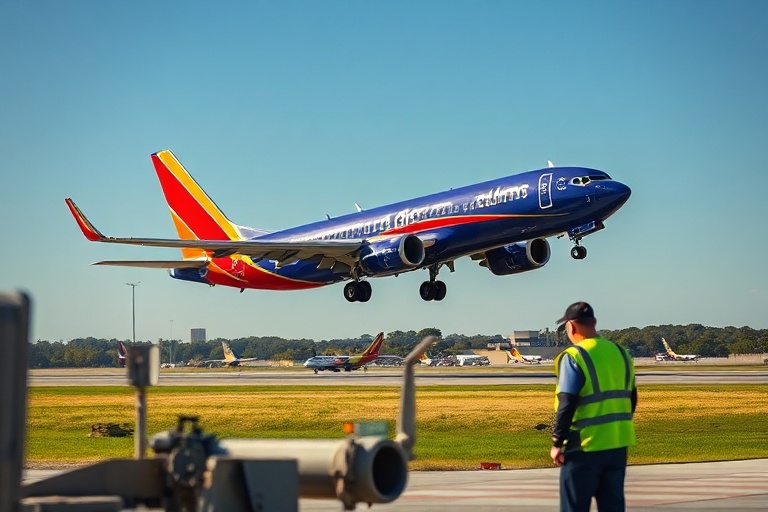
Southwest Airlines, long celebrated for its customer-friendly policies and no-frills approach, has encountered significant operational challenges in recent months. The airline, which prides itself on its point-to-point route system and reliance on a single aircraft type, has faced disruptions that have impacted both its workforce and passengers. While the company remains a dominant player in the U.S. airline industry, these issues have raised questions about its long-term resilience and adaptability in an increasingly competitive market.
Operational Disruptions and Staffing Concerns
In late 2023 and early 2024, Southwest Airlines experienced a series of high-profile operational meltdowns, most notably during the holiday travel season. These disruptions were attributed to a combination of factors, including severe winter weather, outdated scheduling systems, and a shortage of available crew members. The airline’s reliance on a single aircraft model—the Boeing 737—amplified the problem, as any maintenance issues or delays in parts delivery cascaded across the entire fleet.
The fallout from these disruptions was immediate and widespread. Thousands of flights were canceled or delayed, leaving passengers stranded and damaging the airline’s reputation for reliability. Southwest’s CEO, Bob Jordan, acknowledged the challenges in a public statement, emphasizing the need for improved operational efficiency and workforce management. The airline has since invested in upgrading its scheduling software and increasing staffing levels, but the road to recovery remains uneven.
Passenger Impact and Customer Trust
The operational failures have not only inconvenienced travelers but also eroded trust in Southwest’s ability to deliver consistent service. Social media platforms lit up with complaints from passengers who found themselves stuck at airports for days, often without adequate compensation or clear communication from the airline. While Southwest has offered vouchers and refunds in some cases, the damage to its customer-centric image has been substantial.
Industry analysts suggest that the airline’s troubles highlight broader vulnerabilities in the U.S. airline sector, where staffing shortages and outdated technology continue to pose significant risks. For Southwest, which has historically differentiated itself through customer service, these disruptions have underscored the need for a more agile and resilient operational model. The airline’s leadership has committed to addressing these issues, but the timeline for full recovery remains uncertain.
Financial Performance and Market Position
Despite these challenges, Southwest Airlines has maintained a strong financial position, buoyed by consistent demand for domestic travel. In its most recent quarterly report, the airline reported a net income of $200 million, though this figure fell short of analyst expectations. Revenue remained robust, driven by high load factors and strong pricing power in key markets. However, the operational disruptions have weighed on investor confidence, with Southwest’s stock price experiencing volatility in response to each new round of cancellations.
The airline’s financial health is further complicated by rising fuel costs and increased competition from low-cost carriers like Spirit Airlines and Frontier Airlines. While Southwest’s brand loyalty and extensive route network provide a competitive edge, the recent operational struggles have made it harder to sustain premium pricing in some markets. Analysts at Travel have noted that Southwest’s ability to balance cost management with service reliability will be critical in determining its long-term financial trajectory.
Strategic Responses and Future Outlook
In response to these challenges, Southwest Airlines has outlined a multi-pronged strategy aimed at stabilizing operations and restoring customer confidence. Key initiatives include:
- Technology Upgrades: The airline is investing in next-generation scheduling and crew management software to improve real-time decision-making and reduce the risk of cascading delays.
- Workforce Expansion: Southwest is aggressively recruiting and training new pilots, flight attendants, and maintenance technicians to address staffing shortages and improve operational flexibility.
- Customer Compensation Reforms: The airline has revised its policies around compensation for disrupted travel, offering more transparent and generous reimbursement options for affected passengers.
- Fleet Diversification: While Southwest remains committed to its all-Boeing 737 fleet, there are discussions about exploring opportunities to add smaller regional jets for certain routes, reducing reliance on a single aircraft type.
These steps reflect a broader recognition within the airline that its traditional model may no longer be sufficient to navigate the complexities of the modern travel industry. Industry experts suggest that Southwest’s ability to execute on these initiatives will determine whether it can reclaim its reputation as a reliable and customer-focused airline.
Industry Implications and Competitive Landscape
The challenges facing Southwest Airlines are not isolated but rather indicative of broader trends within the airline industry. The post-pandemic recovery has been uneven, with labor shortages, supply chain issues, and rising costs creating persistent headwinds for carriers of all sizes. For Southwest, the stakes are particularly high, given its reliance on a narrow operational model and its status as a market leader.
Competitors such as Delta Air Lines and United Airlines have also faced operational disruptions in recent months, though none have matched the scale of Southwest’s struggles. This has led some analysts to question whether the industry’s reliance on just-in-time scheduling and lean staffing models is sustainable in the long term. The recent failures at Southwest may serve as a cautionary tale for other carriers, prompting a reevaluation of operational strategies and risk management practices.
For consumers, the turbulence at Southwest raises important questions about airline reliability and the trade-offs between cost and service. While budget-conscious travelers may continue to favor Southwest for its low fares, those prioritizing punctuality and customer service may increasingly look to alternatives. The airline’s ability to address these concerns will be critical in shaping its future competitiveness.
The Road Ahead for Southwest Airlines
As Southwest Airlines works to overcome its current challenges, the airline’s leadership faces a daunting task: restoring operational reliability while maintaining financial discipline. The coming months will be critical in determining whether the airline can successfully implement its strategic initiatives and regain the trust of passengers and investors alike.
For now, travelers are advised to monitor Southwest’s performance closely, particularly during peak travel periods. The airline’s website and app remain the best sources for real-time updates, though customers should also consider travel insurance and flexible booking options when planning trips. While Southwest’s troubles are a setback, they also present an opportunity for the airline to emerge stronger and more resilient in the long run.
Ultimately, the story of Southwest Airlines is one of adaptation and resilience. Like the airline’s famous “low-fare” model, its ability to pivot in the face of adversity will define its next chapter. For now, the skies remain turbulent, but the destination—if reached safely—could be a brighter, more reliable future.