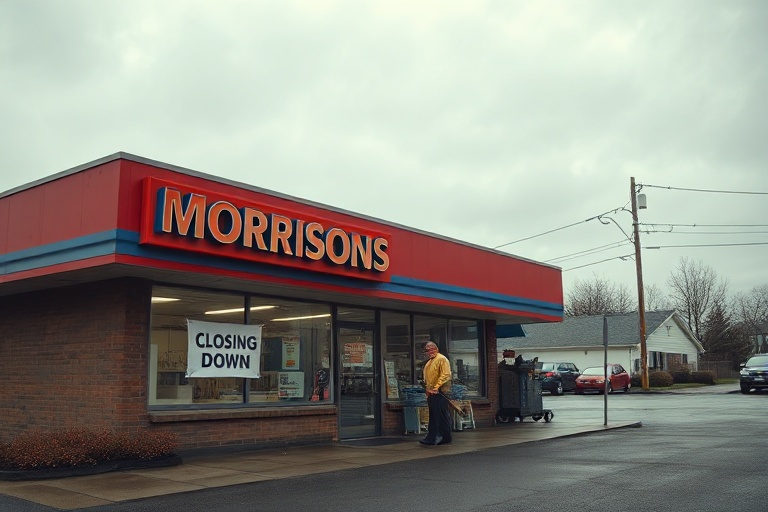
Morrisons Convenience Store Closures: Why 35 Stores Are Shutting
“`html
Morrisons Convenience Store Closures: What’s Behind the Shutdowns?
Morrisons has confirmed plans to close 35 of its convenience stores, a move that signals a strategic shift for the UK supermarket chain. The closures, announced as part of a broader restructuring plan, reflect the challenges facing traditional bricks-and-mortar retail in an increasingly competitive market. While the decision may seem abrupt, it underscores deeper trends reshaping how consumers shop—and where they choose to spend their time.
The closures are not isolated incidents but part of a broader trend affecting the grocery sector. Supermarkets are facing mounting pressure from online delivery services, discount chains, and changing consumer habits. For Morrisons, the decision to shutter these stores highlights a calculated pivot toward efficiency and digital growth. Yet it also raises questions about the future of local convenience retail and the communities that rely on these outlets.
Why Morrisons Is Closing Its Convenience Stores
Morrisons’ convenience store closures are driven by a combination of financial pressures and strategic realignment. The company has been investing heavily in its online grocery business and expanding its larger supermarket format, where margins are typically higher. Convenience stores, while valuable for foot traffic, often operate on thinner margins due to higher operational costs and lower average spend per customer.
The closures also align with a wider industry trend. Competitors like Tesco and Sainsbury’s have similarly streamlined their convenience portfolios, focusing on locations with the highest footfall and profitability. Morrisons’ decision reflects a pragmatic approach to portfolio management in a market where scale and efficiency dictate survival.
- Cost pressures: Rising wages, energy bills, and supply chain disruptions have squeezed margins across the sector.
- Changing consumer behaviour: More shoppers are opting for online grocery deliveries or visiting larger superstores for bulk purchases.
- Focus on digital growth: Morrisons is prioritising its online platform, Morrisons.com, which has seen significant investment and growth in recent years.
- Store performance: Some locations may no longer meet profitability thresholds due to declining footfall or rising costs.
The Broader Impact on Local Communities
The closure of convenience stores can have a disproportionate effect on local communities, particularly in areas where residents rely on nearby shops for daily essentials. These stores often serve as vital hubs, especially for elderly residents, those without reliable transport, or individuals in areas with limited access to larger supermarkets.
For small towns and neighbourhoods, the loss of a convenience store can mean a longer journey to the nearest supermarket, which may not always be feasible for everyone. This shift could exacerbate what’s known as “food deserts”—areas where affordable, healthy food options are scarce. While Morrisons has stated it will support affected staff through redeployment or redundancy packages, the social impact extends beyond employment.
Local councils and community groups may need to step in to fill the gap, either by supporting alternative retailers or exploring community-led initiatives like volunteer-run shops. The closures also highlight the need for broader policy discussions about how to sustain essential retail services in underserved areas.
What This Means for the Grocery Sector
The Morrisons closures are a microcosm of larger shifts occurring across the grocery industry. As online shopping continues to grow—accelerated by the pandemic—traditional supermarket chains are re-evaluating their physical footprint. The convenience store model, once a staple of the high street, is increasingly being tested by changing consumer preferences and economic pressures.
For Morrisons, the closures could be a necessary step toward long-term sustainability. The company has been investing in automation, digital infrastructure, and larger store formats to compete with rivals like Aldi and Lidl, which have aggressively expanded their market share. By focusing on its core strengths—such as its vertically integrated supply chain and growing online business—Morrisons aims to carve out a niche in a crowded market.
However, the closures also serve as a reminder of the challenges facing traditional retail. The rise of discount supermarkets, the dominance of online giants like Amazon, and the cost-of-living crisis have all contributed to a more competitive landscape. For Morrisons, the strategy is clear: adapt or risk falling further behind.
Looking Ahead: What’s Next for Morrisons?
The closures mark a significant moment in Morrisons’ evolution, but they are unlikely to be the last. The company has signalled its intent to focus on its online grocery business, which has seen steady growth since the pandemic. By leveraging its existing infrastructure—such as its network of regional distribution centres—Morrisons is positioning itself to compete more effectively in the digital space.
There are also opportunities to repurpose closed stores. Some could be converted into click-and-collect hubs, micro-fulfilment centres, or even community spaces. Morrisons has a history of innovation, and these closures may pave the way for new revenue streams or operational efficiencies.
Yet the human impact of these changes cannot be ignored. For employees, the closures may bring uncertainty, though Morrisons has committed to supporting staff through the transition. For customers, the loss of convenient access to groceries could be a significant inconvenience, particularly in rural or underserved areas.
As the grocery sector continues to evolve, Morrisons’ strategy will be closely watched. The closures are a bold move, but they reflect the harsh realities of modern retail. Whether this pivot will secure the company’s future remains to be seen—but it’s a clear indication that the industry is entering a new phase.
Key Takeaways
- Morrisons is closing 35 convenience stores as part of a strategic realignment toward online growth and larger supermarket formats.
- The closures reflect broader industry trends, including rising costs, changing consumer habits, and the rise of discount retailers.
- Local communities may face challenges, particularly in areas with limited access to alternative grocery options.
- The move highlights the need for innovation in retail, as traditional convenience models come under pressure.
- Morrisons’ future strategy will likely focus on digital expansion and operational efficiency.
For more insights into the retail sector, explore our News and Business categories on Dave’s Locker.
As the grocery landscape continues to shift, one thing is certain: the days of the traditional convenience store model are numbered. For Morrisons, the closures are a calculated risk—but one that could determine whether the company thrives or simply survives in the years ahead.