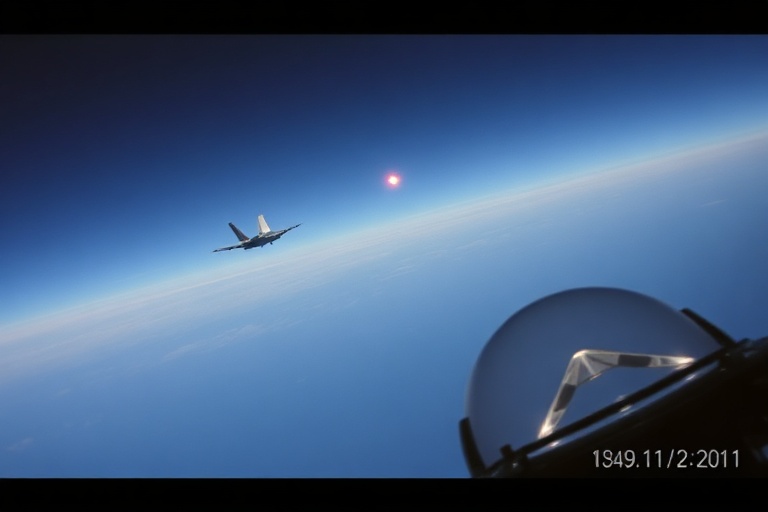
Pentagon UFO Videos: The Truth Behind the Military Footage
“`html
Pentagon UFO Videos: What We Know So Far
The Pentagon’s release of previously classified UFO (Unidentified Flying Object) videos marked a rare moment of transparency from the U.S. government. These videos, originally captured by military pilots, have fueled public fascination and sparked debates about national security, scientific inquiry, and the possibility of extraterrestrial life. Below, we break down the key details, controversies, and implications surrounding these enigmatic recordings.
The Origin of the Pentagon UFO Videos
Three primary videos—FLIR1, Gimbal, and GoFast—were first leaked to the public between 2017 and 2018. They were later officially released by the Pentagon in April 2020 as part of a broader effort to declassify UAP (Unidentified Aerial Phenomena) footage for transparency. The videos were recorded by Navy pilots using advanced infrared and optical cameras during training exercises off the East Coast of the United States.
The Pentagon confirmed the authenticity of these videos in a September 2019 statement, stating that they did not represent a threat to national security. However, they provided no definitive explanation for the objects’ behavior, which included rapid acceleration, flight at hypersonic speeds without sonic booms, and the ability to operate without visible propulsion. The military’s acknowledgment of these videos shifted the conversation from conspiracy theories to serious government interest in UAPs.
Key Observations from the Footage
The videos offer glimpses of phenomena that defy conventional aeronautical explanations. In FLIR1, an infrared camera captures a fast-moving object that appears to change direction abruptly. The Gimbal footage shows a cylindrical object rotating while moving against the wind, and GoFast depicts an object accelerating at extreme velocities. Military pilots who encountered these objects reported confusion and concern, as their radar systems failed to track them consistently.
These discrepancies have led to multiple hypotheses. Some suggest the objects could be advanced human-made technology, possibly developed by adversarial nations. Others argue for natural atmospheric phenomena or sensor anomalies. The lack of definitive answers has only deepened the mystery, prompting calls for further investigation.
The Pentagon’s UAP Program and Congressional Oversight
In response to growing public and congressional pressure, the Pentagon established the Unidentified Aerial Phenomena Task Force (UAPTF) in August 2020. This initiative was tasked with collecting and analyzing reports of UAPs from military personnel and intelligence agencies. The UAPTF’s findings, released in June 2021, acknowledged 144 UAP sightings from 2004 to 2021 but concluded that most could not be explained. Only one case was identified as a large, deflating balloon, while the rest remained classified as unexplained.
Congress has since taken a more active role in UAP oversight. In December 2021, the National Defense Authorization Act (NDAA) included provisions mandating the Pentagon to establish a new office dedicated to UAP analysis. This office, now known as the Airborne Object Identification and Management Synchronization Group (AOIMSG), aims to improve data collection and interagency coordination. Lawmakers like Senator Kirsten Gillibrand and Representative Ruben Gallego have been vocal advocates for transparency, pushing for declassified briefings and public disclosures.
Challenges in UAP Research
Investigating UAPs presents significant challenges. Unlike traditional military threats, UAPs often lack consistent radar signatures or physical evidence. Eyewitness accounts, while compelling, are subjective and prone to misinterpretation. The stigma surrounding UFOs has also hindered scientific inquiry, with many researchers reluctant to engage with the topic due to its association with fringe theories.
Another hurdle is the limited data available. Most UAP sightings are fleeting, captured only in brief video or sensor recordings. The Pentagon’s reluctance to release classified data has further complicated efforts to draw conclusions. Despite these obstacles, the renewed government interest has encouraged scientists and researchers to approach the topic with greater rigor.
Public Reaction and Scientific Perspectives
The release of the Pentagon UFO videos captivated audiences worldwide, inspiring documentaries, podcasts, and academic discussions. Public fascination has been driven by a mix of curiosity, skepticism, and hope that these phenomena might hint at life beyond Earth. However, the scientific community remains divided on the subject.
Some researchers argue that the videos warrant serious study. Avi Loeb, a Harvard astrophysicist, has called for a more scientific approach to UAPs, suggesting that they could represent technology from an unknown civilization. His Galileo Project, launched in 2021, aims to systematically search for extraterrestrial technological signatures using advanced telescopes and AI-driven analysis.
Others remain cautious, emphasizing the need for skepticism and rigorous evidence. The scientific method demands reproducibility and peer review, which are difficult to achieve with fleeting, unexplained phenomena. The U.S. government’s involvement has also raised questions about potential disinformation or misdirection, though no concrete evidence supports such claims.
The Role of Whistleblowers
In July 2023, former intelligence officer David Grusch testified before Congress, alleging that the U.S. government has been operating secret programs to recover and reverse-engineer UAP technology. Grusch’s claims, which include accusations of a decades-long cover-up, have intensified public interest and congressional scrutiny. While his testimony has been met with both support and skepticism, it has underscored the need for further investigation.
The Pentagon has denied the existence of such programs but has acknowledged ongoing efforts to analyze UAP reports. The Office of the Director of National Intelligence (ODNI) has committed to releasing annual UAP reports, though details remain classified. The interplay between whistleblowers, government agencies, and independent researchers continues to shape the narrative around UAPs.
What’s Next for UAP Research?
The future of UAP research hinges on increased transparency, scientific collaboration, and technological advancements. The Pentagon’s AOIMSG and NASA’s independent UAP study team, announced in 2022, represent steps toward a more structured approach. NASA’s team, led by astrophysicist David Spergel, aims to examine UAPs through a scientific lens, focusing on data analysis and potential sensor technologies.
Technological innovations, such as improved radar systems and AI-driven anomaly detection, could also enhance our ability to study UAPs. Projects like the Sky Hub initiative, which uses a network of cameras to monitor the sky, demonstrate how citizen science can contribute to the field. Meanwhile, international cooperation, such as the recent UAP sightings reported by NATO allies, suggests a global interest in understanding these phenomena.
For now, the Pentagon UFO videos remain an unsolved puzzle. They challenge our understanding of aerospace technology, military preparedness, and the limits of human knowledge. Whether they represent a breakthrough in physics, an artifact of sensor limitations, or something more extraordinary, their legacy is undeniable: a reminder that the universe still holds mysteries we are only beginning to explore.
As research progresses, the conversation around UAPs will likely evolve. The intersection of government transparency, scientific inquiry, and public curiosity ensures that this topic will remain a focal point for years to come. For those eager to dive deeper, resources like Dave’s Locker’s Analysis section offer curated insights and updates on the latest developments.