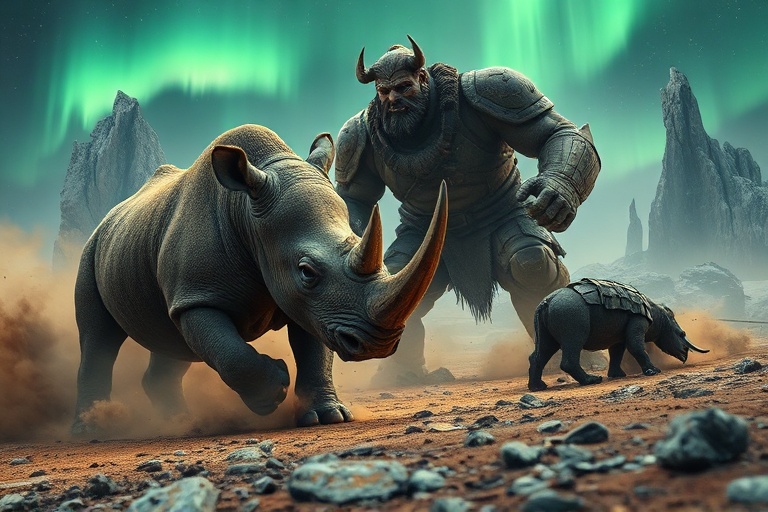
Rhinos vs Giants: Nature’s Power vs Mythic Might
“`html
Rhinos vs Giants: When Nature and Myth Collide
The clash between rhinoceroses and giants isn’t just a battle of sheer size—it’s a collision of raw power, ancient symbolism, and cultural narratives that stretch back millennia. While rhinos are real, formidable creatures with a lineage dating back 50 million years, giants exist in the realm of myth and folklore across the globe. Yet, when these two forces are pitted against each other in stories, games, or even modern media, the results are anything but one-sided.
This isn’t merely a tale of predator versus prey. It’s a story about perception, power, and the ways humanity has mythologized the natural world. From the horned beasts of the African savanna to the towering figures of Norse sagas and Asian legends, the contrast between rhinos and giants reveals much about how cultures interpret strength, size, and the unknown.
The Rhino: A Living Relic of Raw Power
The rhinoceros stands as one of Earth’s most resilient survivors. With three surviving species in Africa and two in Asia, these animals have endured for millions of years, weathering ice ages and human expansion. A fully grown rhino can weigh up to 2,500 kilograms—more than a small car—with a horn that can grow over a meter long. Their thick skin, which resembles armor, and their explosive temper make them nearly untouchable in their domain.
But rhinos are more than just physical powerhouses. They are keystone species, shaping the ecosystems they inhabit. In Africa, white rhinos graze on grass, keeping it short and preventing wildfires. In Asia, the Javan rhino’s presence in dense rainforests influences plant growth and animal behavior. Their decline—due to poaching and habitat loss—has shown how deeply their existence is woven into the health of their environments.
Despite their strength, rhinos are vulnerable. Their horns are tragically sought after, driving them toward extinction. Conservation efforts have become a global priority, with organizations like World Wildlife Fund leading the charge. Yet, in the stories we tell, rhinos often represent something greater: an indomitable force of nature that refuses to be tamed.
Giants in Global Myth: From Titans to Trolls
Giants are not a single archetype but a diverse cast of towering figures found in nearly every culture. In Norse mythology, the Jötnar were primordial beings who challenged the gods, embodying chaos and untamed nature. The Greek Titans, led by Cronus, ruled before being overthrown by Zeus. Meanwhile, in Hindu tradition, the rakshasas were giant demons with supernatural powers, often clashing with gods like Rama.
In African folklore, giants appear in stories like the Zulu tale of uMuntu omkhulu, a giant who tests the wisdom of travelers. East Asian traditions feature the tiān zhú or “heavenly pillars,” colossal beings said to hold up the sky. Even in European medieval literature, giants like Goliath or the giant of Mont Saint-Michel symbolized overwhelming, often malevolent forces.
What unites these myths is the idea of giants as forces that defy human scale. They are not just big—they are symbols of the sublime, the incomprehensible, and sometimes the terrifying. Unlike rhinos, which are bound by biology, giants exist in the realm of the imagination, where size equals power, and power often equals danger.
When Myth Meets Reality: Who Would Win?
If a rhino and a giant were to face off, the outcome would depend entirely on the context. In a physical fight, the rhino’s speed, agility, and natural weapons give it a clear advantage. A rhino can charge at 55 km/h, delivering a force powerful enough to flip a car. Its horn is a lethal weapon, capable of goring or impaling opponents. A giant, no matter how large, would struggle to match that combination of speed and precision—unless their strength is supernatural.
However, giants often possess traits that level the playing field. In many myths, giants are immune to conventional weapons, possess magical abilities, or regenerate rapidly. A Norse Jötunn might withstand a rhino’s charge with sheer endurance, while a Hindu rakshasa could use illusions or curses to outmaneuver a charging beast. In such a scenario, brute force alone wouldn’t guarantee victory.
Culturally, the matchup reflects deeper themes. A rhino defeating a giant could symbolize nature’s triumph over myth—a reminder that reality often surpasses legend. Conversely, a giant overcoming a rhino might represent humanity’s fear of the unknown, or the idea that even the strongest creatures can be overwhelmed by forces beyond their control.
The Cultural Legacy of Rhinos and Giants
The contrast between rhinos and giants isn’t just a thought experiment—it’s a lens through which we examine our relationship with nature and mythology. In modern media, this dynamic plays out in surprising ways:
- Video Games: Titles like Monster Hunter and ARK: Survival Evolved feature rhino-like creatures and giant humanoid bosses, forcing players to adapt strategies for both real and mythical threats.
- Literature: Works like The Lion, the Witch and the Wardrobe draw on giant mythology, while conservation narratives like The Rhino with Glue-On Shoes highlight the real-world plight of rhinos.
- Art and Symbolism: The rhino appears in cave paintings and modern activism, while giants adorn everything from Renaissance art to fantasy novels, representing different facets of power.
One of the most striking examples is the use of rhinos and giants in African and Asian storytelling. In some traditions, rhinos are seen as guardians or sacred beings, while giants represent the chaos of the wild. In others, giants are benevolent figures who teach humans lessons about humility. These narratives show how cultures adapt myths to reflect their values and environments.
Today, the rhino’s fight for survival contrasts sharply with the giants of yore—no longer invincible, but struggling against human greed. Meanwhile, the giants of myth endure in our collective imagination, reminding us of the stories we tell to explain the world.
The Bigger Picture: Power, Survival, and Storytelling
The rhino vs. giant dichotomy is ultimately about more than size or strength. It’s about the stories we tell to make sense of power—whether it’s the raw, biological power of nature or the mythic power of legends. Rhinos ground us in reality, while giants lift us into the realm of the extraordinary. Together, they form a duality that has shaped human thought for thousands of years.
As conservation efforts continue to protect rhinos, and as new generations reinterpret myths for modern audiences, the clash between these two forces will remain a powerful metaphor. One represents the fragility of life in the face of extinction. The other embodies the enduring allure of the impossible. In the end, perhaps the real victory isn’t in deciding who would win, but in recognizing the lessons both offer about power, survival, and the stories that shape us.