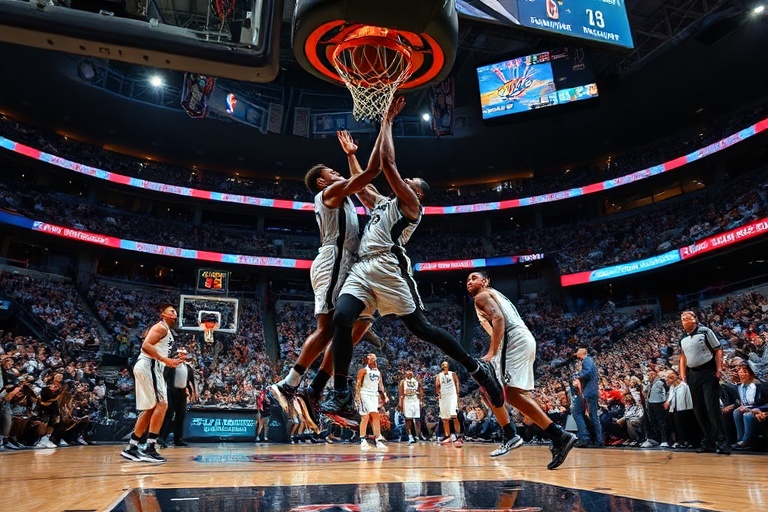
The San Antonio Spurs and Oklahoma City Thunder faced off in a pivotal Game 3 of their first-round playoff series, a matchup that crystallized the broader themes of this postseason. The Thunder entered as the higher seed and favorites, but San Antonio’s disciplined approach threatened to expose Oklahoma City’s flaws. What unfolded was a contest that swung on execution, adjustments, and the kind of small, unglamorous details that often decide playoff basketball.
For the Spurs, this game was about more than just winning—it was about proving their system still works against a team built for a different era. The Thunder, meanwhile, had to show they could adapt when their athleticism and transition game were neutralized. The result was a tightly contested affair where fundamentals and coaching decisions mattered more than star power.
Key Storylines From a Defensive Struggle
This wasn’t a game defined by high-scoring runs or individual brilliance. Instead, it was a slog marked by defensive intensity, missed opportunities, and coaching gambles. Both teams shot under 42% from the field, and turnovers played an outsized role in shaping the outcome. The Spurs held a late lead but couldn’t close the door, while Oklahoma City’s offense sputtered in the fourth quarter.
Several themes stood out:
- Transition defense vs. half-court execution: The Thunder thrive when they can push the pace, but San Antonio’s ball movement and patience turned the game into a methodical chess match.
- Coaching adjustments: OKC’s decision to sit Shai Gilgeous-Alexander down the stretch raised questions about their late-game strategy, while San Antonio’s defensive schemes stifled easy looks.
- Role players rising: For the Spurs, bench contributors like Jeremy Sochan and Malaki Branham made timely plays, while Oklahoma City’s secondary options failed to provide consistent support.
- Free throw disparity: The Spurs attempted 30 free throws to Oklahoma City’s 22, a reflection of their ability to draw contact in the paint and control tempo.
The game’s turning point came in the third quarter, when the Spurs went on a 12-2 run to take control. A mix of defensive stops, offensive rebounds, and clutch shooting from Devin Vassell pushed San Antonio ahead. The Thunder responded with a flurry of three-pointers, but their inability to generate easy buckets in the half court ultimately cost them.
What This Means for the Series and Beyond
The loss forces Oklahoma City to confront a harsh reality: their offensive firepower isn’t enough if they can’t solve San Antonio’s system. The Thunder’s strengths—athleticism, transition play, and deep shooting—were neutralized by the Spurs’ disciplined approach. If they can’t adjust, this series may not last much longer.
For San Antonio, the win is a validation of their methodical style. In an era where pace and efficiency dominate, the Spurs proved that fundamentals still matter. Their ability to limit mistakes and force opponents into bad shots could carry them deep into the postseason. However, the Thunder’s talent means this series isn’t over. A Game 4 loss would put Oklahoma City in a precarious position, but their roster is too deep to roll over.
The broader implications extend beyond this series. The Spurs’ success challenges the narrative that modern basketball must be played at warp speed. Meanwhile, the Thunder’s struggles highlight the limitations of relying too heavily on isolation-heavy offense and transition opportunities. If they can’t adapt, their ceiling may be lower than expected.
Three Takeaways That Will Shape the Next Games
As the series shifts back to Oklahoma City, these are the key factors that will determine the outcome:
- Can the Thunder rediscover their half-court offense? Their transition game is dangerous, but San Antonio’s defense is built to slow things down. Oklahoma City must find ways to create efficient shots in the half court.
- Will San Antonio’s role players continue to step up? The Spurs’ stars carried them in Game 3, but if their bench production dips, the Thunder could exploit mismatches.
- How will coaching decisions impact momentum? Both teams made critical calls in Game 3, and the wrong adjustment at the wrong time could swing the series.
The Spurs now hold a 2-1 lead, but the Thunder’s home-court advantage and offensive firepower mean this series is far from decided. Game 4 will be a test of resilience for both teams, with the loser facing elimination pressure.
Conclusion: The Playoff Grind Respects No One
Game 3 was a reminder that playoff basketball isn’t about flash or individual brilliance—it’s about execution, adjustments, and the ability to thrive under pressure. The Spurs’ win was built on defense, fundamentals, and timely plays, while the Thunder’s loss exposed their struggles against structured opponents.
As the series moves forward, the question isn’t just about who has the better players, but who can adapt when the game tightens. The Spurs have shown they can play the long game, but the Thunder’s talent means they’re never out of it. One more loss for Oklahoma City could end their season, but their roster is too deep to count out just yet.
For San Antonio, this is a chance to prove they belong among the league’s elite. For Oklahoma City, it’s a moment to regroup and find a way to outexecute a team that refuses to panic. The next game could define the series—and perhaps, the future of both franchises.
For more analysis on playoff trends and team strategies, visit our Sports and Analysis sections.