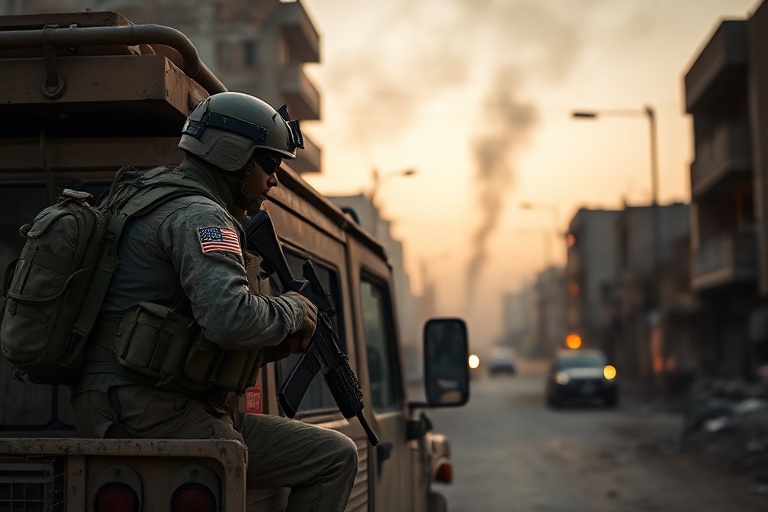
The Iraq War, which began in March 2003, remains one of the most controversial conflicts of the 21st century. Triggered by claims of Saddam Hussein’s possession of weapons of mass destruction, the war reshaped the Middle East and left a legacy of instability, human suffering, and geopolitical tension. While the initial phase saw the rapid fall of Baghdad, the subsequent years were marked by insurgency, sectarian violence, and a prolonged occupation that tested the limits of global diplomacy.
The Origins of the Conflict
The roots of the Iraq War trace back to the 1991 Gulf War and the subsequent no-fly zones enforced by the United States and its allies. Saddam Hussein’s regime was accused of violating international resolutions, particularly regarding the production and storage of chemical and biological weapons. The 9/11 attacks in 2001 intensified scrutiny on regimes deemed hostile to Western interests, with Iraq emerging as a primary target due to its defiance of UN weapons inspectors.
In October 2002, the U.S. Congress authorized the use of military force against Iraq, citing intelligence reports that suggested Hussein possessed weapons of mass destruction (WMDs). The Bush administration argued that removing Saddam from power was necessary to prevent further aggression and stabilize the region. However, the intelligence used to justify the invasion was later discredited, raising serious questions about the decision-making process behind the war.
The international community was deeply divided over the impending conflict. While the U.S. and the UK forged ahead with military action, France, Germany, and Russia opposed the war, insisting that diplomacy and continued weapons inspections should take precedence. The lack of a UN Security Council resolution authorizing the invasion further strained global relations, setting the stage for a fractured post-war landscape.
Operation Iraqi Freedom and Its Immediate Aftermath
On March 20, 2003, coalition forces launched Operation Iraqi Freedom, a military campaign designed to swiftly dismantle Saddam Hussein’s regime. Within weeks, Baghdad fell, and Hussein was captured in December 2003. The initial phase of the war was hailed as a success by the Bush administration, which declared an end to major combat operations in May 2003. Yet, the euphoria of victory was short-lived.
The vacuum left by the collapse of the Iraqi government led to widespread looting and chaos. Infrastructure, already weakened by years of sanctions and conflict, crumbled further. The coalition’s failure to secure key sites, including hospitals and museums, resulted in the loss of invaluable cultural artifacts and a breakdown in public order. Meanwhile, the absence of a clear reconstruction plan left millions of Iraqis without essential services, from electricity to clean water.
The humanitarian toll of the war was immediate and devastating. According to the Iraq Body Count project, civilian casualties during the conflict exceeded 200,000 by 2011, with many more injured or displaced. The displacement crisis was particularly acute, with millions of Iraqis fleeing their homes to escape violence. Neighboring countries like Jordan and Syria absorbed the bulk of these refugees, straining their own resources and sparking long-term demographic shifts.
Key Milestones in the First Year
- April 9, 2003: Fall of Baghdad marks the end of Saddam Hussein’s rule.
- May 1, 2003: President Bush declares the end of major combat operations.
- December 13, 2003: Saddam Hussein is captured near Tikrit, symbolizing the apparent success of the invasion.
- March 2004: The Abu Ghraib prison scandal erupts, revealing widespread abuse and torture by U.S. military personnel.
The Rise of Insurgency and Sectarian Violence
As the occupation dragged on, resistance to coalition forces grew. What began as sporadic attacks by remnants of Saddam’s regime evolved into a full-blown insurgency, fueled by foreign fighters, Iraqi nationalists, and sectarian militias. The 2003 bombing of the U.N. headquarters in Baghdad, which killed 22 people, underscored the vulnerability of international aid workers and the escalating chaos.
Sectarian divisions deepened as Sunni and Shia groups clashed for control. The bombing of the al-Askari Mosque in Samarra in 2006, a revered Shia shrine, ignited a wave of retaliatory violence that pushed Iraq to the brink of civil war. The U.S. troop surge in 2007, combined with the Anbar Awakening—a Sunni tribal movement against Al-Qaeda—temporarily reduced violence. However, the underlying tensions remained unresolved.
By 2008, the U.S. had begun to withdraw combat troops, but the damage to Iraq’s social fabric was irreversible. The war had not only failed to deliver on its promise of democracy but had also exacerbated ethnic and religious fractures. The rise of groups like Al-Qaeda in Iraq (AQI) foreshadowed the emergence of the Islamic State (ISIS) a decade later, which would seize vast swathes of territory in both Iraq and Syria.
A Global Reckoning and Lingering Questions
The Iraq War left an indelible mark on global politics. The conflict exposed the limitations of unilateral military intervention and the dangers of relying on flawed intelligence. The war’s legacy continues to influence debates on foreign policy, particularly regarding regime change and the use of preemptive strikes. In the United States, the war eroded public trust in government institutions and sparked a wave of anti-war sentiment that shaped the 2008 election.
Internationally, the war strained alliances and reshaped the balance of power. The European Union was left divided, with some nations viewing the U.S. as an unreliable partner. Meanwhile, Russia and China capitalized on American overreach to expand their influence in the Middle East and beyond. The war also highlighted the growing role of private military contractors, whose presence blurred the lines between combatants and civilians.
For Iraqis, the consequences were even more profound. The country’s infrastructure, once a regional leader, was left in ruins. Healthcare, education, and basic utilities remained in disrepair for years. Political corruption flourished in the post-Saddam era, and the promise of democratic elections was marred by widespread fraud and sectarian quotas. Today, Iraq remains a fragile state, grappling with political instability, economic challenges, and the ever-present threat of extremism.
Lessons from the Iraq War
- Intelligence Failures: The reliance on flawed intelligence about WMDs demonstrated the dangers of politicizing security assessments.
- Hubris of Military Intervention: The assumption that democracy could be imposed by force ignored the complex social and historical realities of Iraq.
- Humanitarian Costs: The war’s civilian toll underscored the need for robust post-conflict planning and protection of vulnerable populations.
- Geopolitical Shifts: The conflict accelerated the decline of U.S. global influence and emboldened rival powers to challenge American dominance.
As the world reflects on the Iraq War, it serves as a cautionary tale about the unintended consequences of military action. The war did not bring stability to the Middle East; instead, it sowed the seeds for future conflicts and humanitarian crises. For policymakers and citizens alike, the lessons of Iraq remain a stark reminder of the high stakes involved in decisions that shape global security.