Why ‘Ladies First’ Still Matters in Modern Society
“`html
Ladies First: The Unspoken Rules of Priority and Respect
The phrase “ladies first” carries weight beyond its four words. It’s a social convention that shapes interactions in queues, doorways, and even digital spaces. While its origins trace back to chivalry, the principle has evolved into something more nuanced—a blend of tradition, respect, and practicality. But where did this idea come from, and how does it function in modern society?
Historically, the concept emerged from 18th-century European etiquette, where men were expected to defer to women as a sign of respect and protection. This wasn’t just about politeness; it reflected broader gender roles of the time. Over centuries, the phrase expanded beyond door-holding and seat-offering to become a cultural shorthand for prioritizing women in various contexts.
Today, “ladies first” isn’t just a relic of the past. It’s a living principle that adapts to new social norms while retaining its core meaning. But its application isn’t always straightforward. How do we balance tradition with equality? When does deference become condescension?
The Origins of “Ladies First”
The phrase gained prominence in the 1700s, rooted in the idea of courtly love and the “protector” role assigned to men. Books like Cassell’s Handbook of Etiquette (1860) codified the practice, advising men to yield precedence to women in social settings. This wasn’t about superiority—it was about signaling a woman’s importance in a rigidly hierarchical society.
By the Victorian era, “ladies first” had become a cornerstone of gentlemanly conduct. Men were taught to stand when a woman entered a room, offer their seats, and walk on the outer side of the sidewalk (to shield her from mud splashes). These gestures weren’t just performative; they reinforced a woman’s status as a valued member of society.
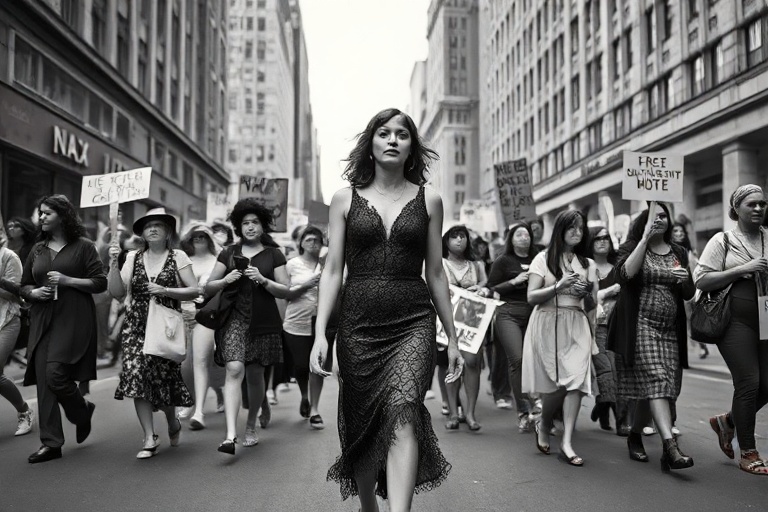
Interestingly, the phrase’s popularity surged again in the early 20th century, particularly in the U.S., as part of the women’s suffrage movement. Advocates framed equality as an extension of chivalry—why fight for the vote if men wouldn’t even let a woman enter a room first?
Modern Interpretations: Respect or Relic?
Fast-forward to today, and “ladies first” exists in a gray area. Some argue it’s outdated, a remnant of patriarchal norms that reinforce gender hierarchies. Others see it as a simple act of courtesy, a way to acknowledge women’s presence without implying inferiority.
Critics point out that the phrase can feel performative or even patronizing. For example, in professional settings, women often face the dilemma of whether they want to be prioritized or treated as equals without special treatment. The line between respect and infantilization is thin.
Yet defenders of the phrase argue that it’s not about superiority—it’s about visibility. In a world where women’s contributions are still sidelined, small gestures like “ladies first” can serve as a reminder that their presence matters.
- In public spaces: Holding doors or yielding seats can feel like a genuine courtesy when done without expectation.
- In digital spaces: Prioritizing women’s voices in conversations (e.g., in gaming or tech forums) helps combat the “bro culture” that often dominates these spaces.
- In professional settings: The phrase can backfire if it’s used to dismiss women’s competence—for example, assuming a woman needs help because she’s female.
Ultimately, the key lies in intent. If “ladies first” is a reflex born of respect—not obligation—it retains its value. If it’s a rigid rule enforced without context, it risks losing meaning.
Where “Ladies First” Still Holds Power
Despite debates, the principle isn’t obsolete. In certain contexts, it serves a practical purpose. Take the music industry, for example. In genres like hip-hop, where male dominance is the norm, women often face an uphill battle for visibility. Initiatives like Dave’s Locker’s music coverage highlight how prioritizing female artists in playlists and reviews can shift industry dynamics.
Similarly, in gaming—another male-dominated space—movements like #WomenInGaming emphasize the need for inclusive practices. Tournaments, panels, and even in-game matchmaking can benefit from a “ladies first” approach to balance representation.
Even in daily life, the phrase can act as a subtle corrective. In crowded spaces like elevators or public transit, it’s not about who “deserves” to go first—it’s about acknowledging that women should feel as entitled to space and ease as men do.
The Future of the Phrase
So, does “ladies first” have a place in the 21st century? The answer lies in flexibility. The phrase can evolve into a more inclusive principle: people first, with an emphasis on marginalized groups who’ve historically been pushed aside.
Consider the shift toward gender-neutral language in public bathrooms or event seating. These changes reflect a broader effort to move beyond binary norms while still addressing historical inequities. “Ladies first” could follow a similar path—remaining relevant not as a rule, but as a guiding sentiment.
What’s clear is that the phrase’s power depends on who wields it. When used sincerely, it’s a small but meaningful acknowledgment of respect. When weaponized or performed, it loses its essence entirely.
Perhaps the real lesson isn’t in the words themselves, but in the mindset behind them. A world where “first” isn’t about hierarchy but about fairness—that’s a world worth striving for.