<!DOCTYPE html>
<html lang="en">
<head>
    <meta charset="UTF-8">
    <meta name="viewport" content="width=device-width, initial-scale=1.0">
    <title>Tom Clancy's Jack Ryan: Ghost War Review - Action Meets Modern Espionage</title>
</head>
<body>
    <article>
        <h1>Tom Clancy's Jack Ryan: Ghost War Review – When Action Meets Modern Espionage</h1>

        <p>Amazon's political thriller series <em>Tom Clancy's Jack Ryan</em> has returned for a fourth season with <em>Ghost War</em>, continuing to blend high-stakes geopolitical drama with pulse-pounding action. This latest installment raises the stakes both in terms of narrative scope and visual spectacle, delivering a story that feels increasingly relevant in today’s fractured global landscape.</p>

        <p>Set against the backdrop of escalating tensions between the United States, Russia, and China, <em>Ghost War</em> follows CIA analyst-turned-operative Jack Ryan (John Krasinski) as he uncovers a covert plot that threatens to ignite a global conflict. The season introduces fresh adversaries while deepening the show’s exploration of intelligence operations, personal sacrifice, and the blurred lines between war and diplomacy.</p>

        <h2>The Evolution of Jack Ryan: From Analyst to Action Hero</h2>

        <p>When the series premiered in 2018, it distinguished itself by focusing on the intellectual and analytical side of espionage rather than the gunfights and car chases typical of the genre. John Krasinski’s portrayal of Jack Ryan emphasized cerebral problem-solving over physical confrontation, a refreshing contrast to the muscle-bound heroes of spy fiction.</p>

        <p>By <em>Ghost War</em>, however, the character has undergone a noticeable transformation. While Ryan still relies on his analytical mind, the season forces him into more direct confrontations. The shift reflects a broader evolution in the series itself, one that acknowledges audience expectations without abandoning its core strengths.</p>

        <p>The supporting cast remains a highlight. Wendell Pierce returns as James Greer, Ryan’s CIA mentor, whose world-weariness provides a grounded counterbalance to the protagonist’s idealism. The introduction of new characters, including CIA operative Lola Breeze (Noomi Rapace), adds depth to the narrative, though their roles feel somewhat underdeveloped compared to seasoned players.</p>

        <h3>Key Themes in Ghost War</h3>

        <p>The fourth season explores several themes that resonate in today’s geopolitical climate:</p>

        <ul>
            <li><strong>Cyber Warfare and Modern Threats:</strong> The season delves into the role of digital espionage and how state actors weaponize information, a timely topic given recent high-profile cyberattacks.</li>
            <li><strong>The Cost of Secrecy:</strong> Ryan’s journey questions the ethical boundaries of intelligence operations, particularly when civilian lives hang in the balance.</li>
            <li><strong>Personal Sacrifice:</strong> The series continues to examine how personal relationships strain under the demands of duty, a recurring motif that humanizes its characters.</li>
            <li><strong>Global Power Struggles:</strong> The geopolitical chessboard expands to include not just the U.S. and Russia, but also China and smaller nations caught in the crossfire.</li>
        </ul>

        <h2>Action and Authenticity: Striking the Right Balance</h2>

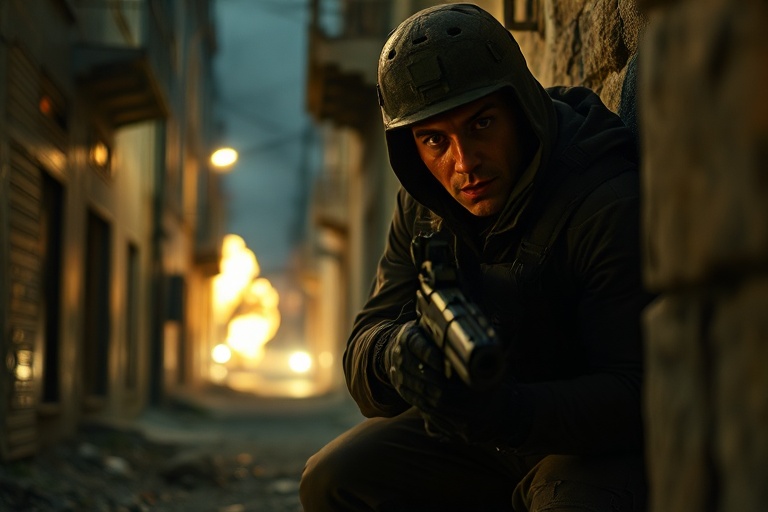
        <p>One of the challenges facing <em>Tom Clancy’s Jack Ryan</em> has always been balancing its cerebral roots with the action expectations set by its source material. <em>Ghost War</em> leans harder into set pieces, with sequences that rival big-budget blockbusters in scale and intensity.</p>

        <p>The standout moments include a tense hostage rescue in a war-torn city and a climactic confrontation that plays out across multiple global locations. These scenes are executed with a level of realism that sets the series apart from more fantastical spy fare. The use of practical effects and real-world locations lends authenticity to the chaos, even as the plot occasionally stretches credibility.</p>

        <p>Yet for all its action, the series doesn’t lose sight of its political underpinnings. The villains, while often one-dimensional, serve as foils to Ryan’s moral compass. The show’s willingness to grapple with complex issues—such as the morality of drone strikes or the collateral damage of covert operations—gives it an edge over purely escapist entertainment.</p>

        <h2>Broader Implications: Why Ghost War Matters</h2>

        <p>The resurgence of great-power competition in recent years has made stories like <em>Ghost War</em> more than just entertainment. They serve as a lens through which audiences can examine real-world tensions, even if the show takes creative liberties. The series’ portrayal of a world on the brink of conflict reflects anxieties about nuclear escalation, cyber warfare, and the erosion of diplomatic norms.</p>

        <p>Moreover, <em>Ghost War</em> arrives at a time when the line between fiction and reality feels increasingly thin. The show’s exploration of disinformation campaigns and AI-driven warfare mirrors contemporary concerns about deepfakes, election interference, and autonomous weapons. While it doesn’t claim to predict the future, the series succeeds in making abstract threats feel tangible.</p>

        <p>For fans of the genre, <em>Ghost War</em> delivers the thrills they crave. For casual viewers, it offers a compelling entry point into the world of geopolitical thrillers. And for critics, it provides ample material to dissect the ethics of modern warfare and the role of intelligence in shaping global events.</p>

        <h3>What Works and What Falls Short</h3>

        <p>Strengths:</p>
        <ul>
            <li>A return to the show’s roots with a focus on intelligence and strategy, albeit with more action.</li>
            <li>Strong performances, particularly from Krasinski and Pierce, who anchor the series emotionally.</li>
            <li>Visually impressive sequences that push the boundaries of what a streaming series can deliver.</li>
        </ul>

        <p>Weaknesses:</p>
        <ul>
            <li>Some plot conveniences and underdeveloped characters dilute the overall impact.</li>
            <li>The pacing occasionally stumbles, with a few episodes feeling like filler between major set pieces.</li>
            <li>The season’s reliance on CGI and digital effects occasionally betrays its otherwise grounded aesthetic.</li>
        </ul>

        <p>Ultimately, <em>Ghost War</em> succeeds in delivering a high-octane thriller that doesn’t shy away from the complexities of modern espionage. It’s a reminder that the best spy stories aren’t just about explosions and shootouts—they’re about the people who make life-and-death decisions behind the scenes.</p>

        <h2>A Look Ahead: The Future of Jack Ryan</h2>

        <p>With four seasons under its belt, <em>Tom Clancy’s Jack Ryan</em> has established itself as a staple of the political thriller genre. The question now is whether it can sustain its momentum. The introduction of new adversaries and shifting geopolitical dynamics suggests there’s plenty of story left to tell.</p>

        <p>For John Krasinski, the role has become a defining part of his career, allowing him to transition from comedy and drama into action. As Ryan’s journey continues, it will be interesting to see how the character evolves—whether he remains a reluctant hero or fully embraces the mantle of a man of action.</p>

        <p>The series also raises questions about the future of the spy genre in an era dominated by streaming. With competitors like <em>The Night Manager</em> and <em>Homeland</em> redefining the landscape, <em>Jack Ryan</em> must continue to innovate to stay relevant. Whether it’s through deeper character arcs, more ambitious storytelling, or a willingness to tackle unflinching political realities, the show has the potential to set the standard for years to come.</p>

        <p>For now, <em>Ghost War</em> stands as a testament to the enduring appeal of the spy thriller. It’s a show that understands the power of a well-timed explosion, but also the weight of a single decision that could change the world.</p>
    </article>