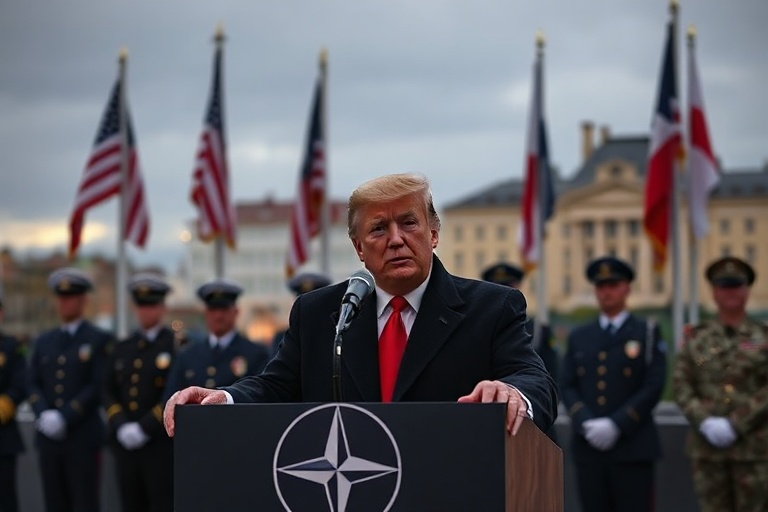
The announcement of additional U.S. troop deployments to Poland during Donald Trump’s presidency marked a significant moment in transatlantic military relations. While framed as a response to regional security concerns, the move also carried political undertones that resonated in both Warsaw and Washington. The decision underscored the evolving dynamics between NATO allies and raised questions about the long-term implications for European defense.
Poland, a key NATO member since 1999, has long sought a stronger U.S. military presence on its soil. The deployment of roughly 1,000 additional troops in 2019 was positioned as a response to Russia’s annexation of Crimea and ongoing tensions in Eastern Europe. Yet the timing and nature of the move also reflected broader geopolitical calculations, particularly as Trump’s administration pursued a transactional approach to alliances.
The Context Behind the Deployment
Poland’s push for a permanent U.S. military base gained momentum in the mid-2010s, as concerns over Russian aggression grew. The country’s government, led by the Law and Justice Party (PiS), argued that a stronger U.S. presence would deter potential threats from Moscow. Trump’s willingness to entertain the idea aligned with his broader skepticism of NATO burden-sharing, where he frequently criticized European allies for not meeting defense spending targets.
Under the European Deterrence Initiative (EDI), the U.S. had already increased rotational forces in Poland and the Baltic states. However, the 2019 deployment represented a more concrete commitment. The troops were assigned to a new headquarters in Poznań, symbolizing a long-term presence rather than temporary rotations.
The decision also came amid broader tensions between Trump and European leaders. His administration’s skepticism of NATO clashed with the alliance’s traditional consensus on collective defense. Yet, the Poland deployment suggested that, despite his rhetoric, Trump was willing to reinforce security commitments in strategically vital regions.
Strategic Implications for NATO and Europe
The troop deployment had ripple effects across NATO’s eastern flank. Poland’s strategic location made it a critical hub for U.S. military operations in Central and Eastern Europe. The move sent a clear signal to Russia that NATO remained committed to deterring aggression, even under a president known for his unpredictable foreign policy.
However, the deployment also highlighted divisions within NATO. Some European allies viewed the U.S. approach as unpredictable, particularly given Trump’s repeated criticisms of NATO and his calls for allies to pay more for their defense. The Poland deployment, while welcomed by Warsaw, raised concerns in other capitals about the reliability of U.S. commitments.
Militarily, the deployment enhanced NATO’s ability to respond to crises in the region. The U.S. troops in Poland were part of a broader effort to strengthen NATO’s eastern flank, complementing existing battle groups in the Baltic states and Romania. The move also facilitated joint exercises and improved interoperability between U.S. and Polish forces.
Yet the political context of the deployment could not be ignored. Trump’s transactional approach to alliances meant that the Poland move was often framed in terms of cost and benefit rather than shared values. This raised questions about the long-term sustainability of U.S. commitments in Europe, particularly if political winds shifted in Washington.
Poland’s Role in the Broader NATO Strategy
Poland’s efforts to secure a permanent U.S. military presence were driven by both security concerns and political ambitions. The country’s government saw the deployment as a way to solidify its position within NATO and enhance its deterrence capabilities. However, the move also reflected Poland’s broader geopolitical strategy, which included deepening ties with the U.S. while balancing relations with other European powers.
The deployment also had implications for Poland’s domestic politics. The Law and Justice Party (PiS) used the move to bolster its image as a strong defender of national security, contrasting its approach with that of previous governments. However, critics argued that the deployment was more about political symbolism than tangible security benefits.
Public and Political Reactions
The announcement of the troop deployment elicited mixed reactions in Poland and beyond. In Warsaw, the move was widely praised by government officials and defense analysts, who saw it as a crucial step in enhancing the country’s security. However, opposition figures and some members of the public expressed skepticism, questioning whether the deployment would truly deter Russian aggression.
In the U.S., the reaction was equally divided. Supporters of the deployment argued that it reinforced NATO’s eastern flank and sent a strong message to Moscow. Critics, however, saw it as a politically motivated move designed to appease a key NATO ally while avoiding deeper commitments to European security.
The deployment also sparked debates about the future of U.S. military presence in Europe. Some analysts argued that the move was a step toward a more permanent U.S. military footprint in Poland, while others warned that it could set a precedent for further withdrawals from other regions.
Looking Ahead: The Future of U.S.-Poland Military Relations
The troop deployment to Poland represented a significant moment in U.S.-Poland military relations, but its long-term impact remains uncertain. The political dynamics in both countries could shape the future of the deployment, particularly as leadership changes in Washington and Warsaw.
For now, the troops remain in Poland, serving as a tangible reminder of the U.S. commitment to NATO’s eastern flank. However, the broader question of how sustainable this commitment is remains unanswered. As European allies grapple with the implications of Trump’s foreign policy, the Poland deployment serves as both a strategic asset and a political bargaining chip.
Ultimately, the decision to deploy troops to Poland reflects the complex interplay between security concerns, political calculations, and alliance dynamics. Whether it marks a lasting shift in NATO’s posture or a temporary response to geopolitical pressures will depend on the evolving relationship between the U.S., Poland, and the broader transatlantic alliance.
Key Takeaways
- The deployment of U.S. troops to Poland in 2019 was framed as a response to regional security concerns but also carried political undertones.
- The move enhanced NATO’s deterrence capabilities in Eastern Europe but raised questions about the long-term sustainability of U.S. commitments.
- Poland’s strategic location made it a critical hub for U.S. military operations, but political divisions within NATO persisted.
- The future of the deployment remains uncertain, shaped by evolving political dynamics in both the U.S. and Poland.
As the transatlantic alliance continues to navigate these challenges, the Poland deployment serves as a case study in the complexities of modern military cooperation. Whether it ultimately strengthens NATO’s eastern flank or becomes a relic of a more transactional era in U.S. foreign policy will depend on the decisions made in the years ahead.
For further reading on NATO’s evolving strategies, explore our News section, where we analyze the latest developments in global security. To understand how U.S. military deployments impact regional dynamics, visit our Analysis category for in-depth discussions.