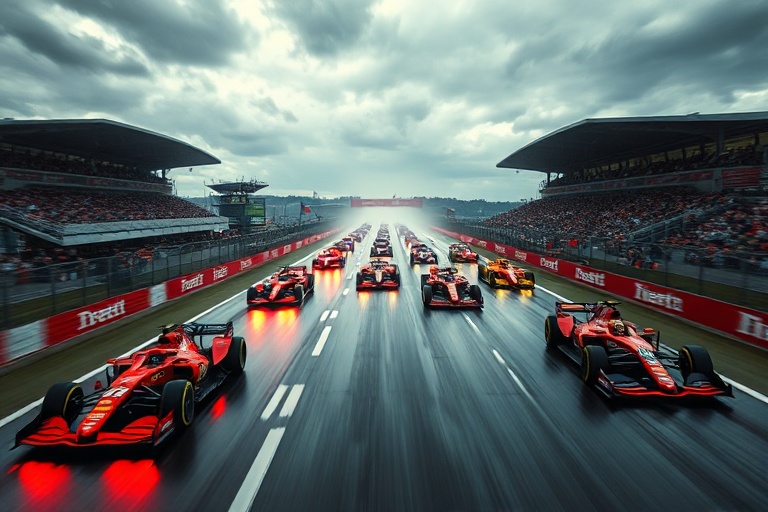
Why the Canadian Grand Prix is F1’s Ultimate Test of Skill and Strategy
“`html
The Canadian Grand Prix: A Race of Grit, Strategy, and Canadian Pride
The Canadian Grand Prix has long stood as a unique fixture in the Formula 1 calendar, offering teams and drivers a chance to test their mettle on the technical Circuit Gilles Villeneuve in Montreal. Unlike the high-speed straights of Monza or the sweeping corners of Spa, this track demands precision, patience, and a touch of audacity. The race often produces unexpected outcomes, from dramatic overtakes to strategic masterstrokes, making it one of the most unpredictable stops on the F1 calendar.
Nestled in the heart of the Quebecois summer, the Canadian Grand Prix isn’t just another race—it’s a celebration of motorsport culture, a proving ground for emerging talent, and a rare opportunity for teams to showcase their adaptability. With its mix of slow-speed chicanes and long, flat-out runs, the track forces drivers to balance aggression with control, a challenge that has led to some of the most iconic moments in F1 history.
The Circuit Gilles Villeneuve: A Track That Demands Respect
Named after the legendary Gilles Villeneuve, the Circuit Gilles Villeneuve is a paradox of speed and precision. The track’s layout, with its tight hairpins and long straightaways, rewards drivers who can manage tire wear while maintaining relentless pace. The Wall of Champions—a seemingly innocuous barrier at the exit of the final chicane—has claimed more than its fair share of reputations, serving as a humbling reminder that even the best can falter when pushed too hard.
What makes this circuit so compelling is its ability to expose weaknesses. Teams that arrive with an unbalanced car often find themselves struggling to keep up, while those with a well-rounded setup can leapfrog their rivals. The 2023 race was a perfect example, where Lewis Hamilton’s Mercedes struggled with tire degradation, while Max Verstappen’s Red Bull dominated with a car that seemed tailor-made for the demands of Montreal.
The Circuit Gilles Villeneuve also plays host to some of the most intense wheel-to-wheel racing in F1. The long straight between Turns 13 and 14 provides ample opportunity for daring overtakes, while the final chicane often sees multi-corner battles that test even the most seasoned drivers. It’s a track where mistakes are punished severely, and where a single lapse in concentration can derail an entire race.
Key Moments That Defined the Canadian Grand Prix
The Canadian Grand Prix has delivered its fair share of unforgettable moments, from last-lap dramas to underdog triumphs. Below are some of the most defining races and incidents that have etched this event into F1 lore:
- 1995: Jean Alesi’s Emotional Victory – Driving a Ferrari, Alesi delivered a masterclass in tire management, holding off Michael Schumacher in treacherous wet conditions. The win was a career highlight for the French-Algerian driver, who had spent years chasing success with the prancing horse.
- 2007: Lewis Hamilton’s Debut Win – In only his sixth F1 race, Hamilton took the checkered flag in Montreal, becoming the youngest race winner in history at the time. His victory marked the beginning of a rivalry that would define an era.
- 2011: Jenson Button’s Rain Masterclass – Button’s McLaren displayed remarkable adaptability in a race that saw multiple red flags due to rain. His ability to manage changing conditions earned him a hard-fought win.
- 2019: Lewis Hamilton’s Record-Breaking 100th Win – Hamilton’s victory in Montreal was his 100th F1 triumph, a milestone that cemented his status as one of the sport’s all-time greats. The race was also notable for Sebastian Vettel’s dramatic crash in qualifying.
- 2022: Max Verstappen’s Dominance and Controversy – Verstappen’s Red Bull was untouchable, but the race was marred by a collision with Nicholas Latifi, which led to a safety car and a dramatic late-race restart. The incident sparked debates about racing etiquette and the limits of aggression.
The Broader Implications: Why the Canadian GP Matters Beyond the Podium
The Canadian Grand Prix isn’t just a standalone event—it’s a microcosm of broader trends in Formula 1. The race often serves as a litmus test for teams’ development programs, revealing which constructors are making progress and which are falling behind. For example, the 2023 race highlighted the struggles of Ferrari and Mercedes, both of whom arrived in Montreal with underwhelming pace compared to Red Bull.
Beyond the technical aspects, the Canadian GP also plays a crucial role in F1’s global expansion. Montreal is one of the few North American races on the calendar, and its presence helps bridge the gap between Europe and the Americas. The event attracts a diverse fanbase, from die-hard petrolheads to casual spectators drawn in by the spectacle of high-octane racing.
The race also serves as a reminder of F1’s unpredictable nature. Unlike circuits where dominance is expected, Montreal frequently throws up surprises. This unpredictability keeps fans engaged and ensures that no team can afford to rest on its laurels. For drivers, the Canadian GP is a chance to prove their versatility, as the track’s demands differ significantly from other venues.
Additionally, the Canadian Grand Prix has become a platform for social and environmental initiatives. In recent years, there has been a growing emphasis on sustainability within F1, and Montreal has been at the forefront of these efforts. The event has introduced measures to reduce its carbon footprint, from electric vehicle showcases to partnerships with local environmental organizations.
What’s Next for the Canadian Grand Prix?
Looking ahead, the Canadian Grand Prix faces both challenges and opportunities. The sport’s shift toward hybrid engines and sustainable fuels means that the Circuit Gilles Villeneuve will need to adapt. The track’s long straights and high-speed corners make it a natural fit for the new power units, but teams will need to fine-tune their setups to maximize efficiency.
There are also questions about the race’s future in an increasingly competitive calendar. With F1 expanding to new markets, including Las Vegas and Miami, the Canadian GP must continue to justify its place on the calendar. The event’s unique atmosphere, combined with its rich history, gives it a strong case for longevity. However, organizers will need to innovate to keep fans engaged, whether through fan zones, interactive experiences, or sustainability initiatives.
For drivers, the Canadian GP remains a rite of passage. The track’s unforgiving nature means that even the most talented competitors must approach it with humility. As F1 evolves, the race will continue to test the limits of human and machine, ensuring that the Circuit Gilles Villeneuve remains one of the most respected—and feared—venues on the calendar.
Whether you’re a lifelong fan or a casual observer, the Canadian Grand Prix offers something for everyone. It’s a race where strategy, skill, and a bit of luck collide, creating moments that linger in the memory long after the checkered flag has fallen.
For more on the technical side of F1, check out our Analysis section, where we break down the strategies and innovations shaping the sport. If you’re interested in the broader cultural impact of motorsport, don’t miss our Entertainment category, which explores the intersection of racing and pop culture.