St. Louis Cardinals vs. Cincinnati Reds: A Historic Rivalry with Global Appeal
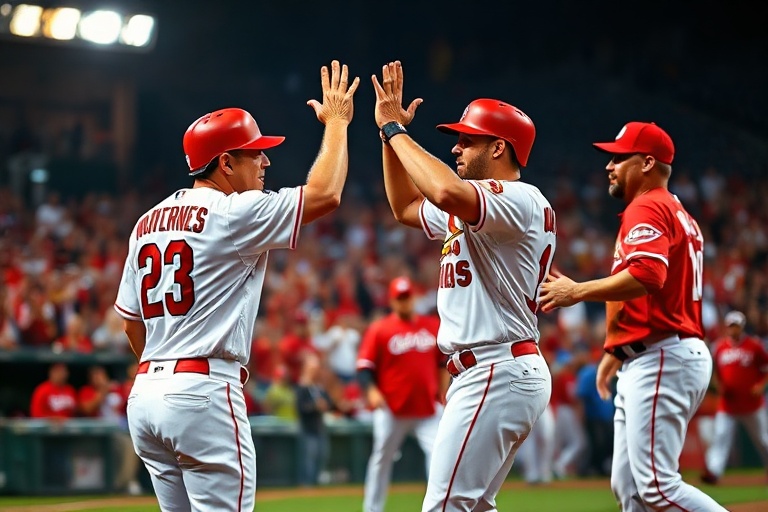
The St. Louis Cardinals and Cincinnati Reds have shared one of baseball’s most enduring rivalries since the National League’s founding in 1876. While their matchups are deeply rooted in Midwestern tradition, the Cardinals vs. Reds series carries significance far beyond the borders of the United States. This rivalry reflects broader themes in global sports culture: regional pride, generational fandom, and the evolving nature of baseball’s international appeal.
The Cardinals, often called “Baseball’s Greatest Franchise,” and the Reds, known as “America’s Team” during their 1970s heyday, represent two distinct but intertwined baseball philosophies. The Cardinals have long been associated with organizational excellence, while the Reds have symbolized both innovation and tradition. Together, they form a narrative that resonates with fans from Tokyo to Toronto.
The Origins: From Early League Tensions to Baseball’s First True Rivalry
The rivalry began in the late 19th century as the two clubs competed in the American Association before the Reds joined the National League in 1892. Early meetings were marked by on-field aggression and off-field disputes over player contracts and league rules. In 1898, a brawl broke out during a game in Cincinnati that led to both teams being fined and temporarily suspended from the league.
By the 1930s, the rivalry had matured into a respected part of baseball culture. The Cardinals’ dominance under manager Branch Rickey and the Reds’ emergence as contenders created a natural contrast. That contrast deepened in the 1960s and ’70s when both teams became central figures in the rise of the National League as a power center.
This period saw the Reds develop their identity as the “Big Red Machine,” a team that combined speed, power, and precision under manager Sparky Anderson. Meanwhile, the Cardinals continued to build a legacy of clutch play and postseason success, culminating in World Series titles in 1964, 1967, and 1982.
Cultural Impact: How a Midwestern Rivalry Became a Global Story
The Cardinals vs. Reds rivalry has transcended its regional roots through several key cultural moments. One of the most significant came in 1973, when the Reds’ dominance coincided with the rise of sports broadcasting and the expansion of Major League Baseball’s global footprint. Games between the two teams began appearing regularly on national television, exposing international audiences to the intensity of the rivalry.
In Japan, where baseball is a national pastime, the 1980s saw increased coverage of MLB games, including Cardinals-Reds matchups. Japanese fans admired the Reds’ aggressive style and the Cardinals’ disciplined approach. This cross-cultural exchange helped solidify baseball’s status as a global sport and laid the groundwork for future international player exchanges and cultural exchanges.
Today, the rivalry remains a focal point for global baseball discussion, especially among younger fans who follow MLB through digital platforms. The Cardinals’ consistent competitiveness and the Reds’ occasional resurgences keep the series relevant across generations and continents.
Key Moments That Defined a Century of Competition
The Cardinals and Reds have produced some of the most memorable games in baseball history. Below are five defining moments that have shaped their rivalry:
- 1964 Pennant Race: The Cardinals edged the Reds by one game in a dramatic September stretch that included a 9-2 victory in the final week. This clinched the NL pennant and set the stage for their World Series win over the Yankees.
- 1973 All-Star Game: Reds legend Johnny Bench hit a two-run homer in the All-Star Game, a moment symbolizing Cincinnati’s dominance during the era. Bench’s performance became an enduring image of the Reds’ golden age.
- 1987 NLCS: Though not a direct Cardinals-Reds matchup, the 1987 National League Championship Series featured the Cardinals defeating the Reds in six games, ending Cincinnati’s hopes of returning to the World Series.
- 2010 Walk-Off Drama: In a game at Great American Ball Park, the Cardinals won on a walk-off single by Jon Jay in the 10th inning, sparking a late-season surge that helped them reach the playoffs.
- 2014 Wild Card Showdown: The Cardinals defeated the Reds in the first-ever one-game playoff to determine the second NL Wild Card spot, a high-stakes moment that highlighted the rivalry’s intensity even in low-probability scenarios.
Beyond the Diamond: Fan Culture and Global Connections
The Cardinals and Reds rivalry is as much about fan identity as it is about wins and losses. Cardinals fans, known for their loyalty and deep-rooted traditions, often travel in large numbers to Cincinnati, creating a sea of red in a sea of red. Meanwhile, Reds fans embrace their team’s legacy of innovation and underdog spirit, especially during lean years.
Globally, the rivalry has inspired fan clubs in cities like London, Monterrey, and Berlin. These international supporters often gather to watch games together, blending local customs with American baseball traditions. For example, in Mexico City, Cardinals-Reds matchups are celebrated with mariachi bands and nacho stands, reflecting the fusion of cultures.
The rivalry has also influenced the way baseball is played and perceived worldwide. The Cardinals’ emphasis on player development and analytics has become a global model, while the Reds’ emphasis on speed and team chemistry reflects a more traditional approach that resonates with fans in Latin America and Asia.
A Rivalry That Keeps Evolving
As baseball continues to expand its international reach, the Cardinals vs. Reds rivalry remains a vital part of the sport’s fabric. The 2020s have seen new chapters unfold, including the rise of young stars like Nolan Arenado for the Cardinals and Hunter Greene for the Reds, who represent the next generation of rivalry heroes.
With both teams investing in player development and global scouting, the rivalry is poised to grow even more globally. The Cardinals’ recent success in international markets, including strong fan bases in Canada and Europe, and the Reds’ efforts to reconnect with their Latin American heritage, suggest that this historic matchup will continue to inspire fans across the world.
For baseball purists, the Cardinals vs. Reds rivalry is a reminder of the game’s history and traditions. For younger fans, it offers a bridge between eras and cultures. And for the global sports community, it represents how a regional rivalry can become a worldwide phenomenon.
Explore more about the history of baseball rivalries and their cultural significance on Dave’s Locker.
Conclusion: Why This Rivalry Still Matters
The Cardinals vs. Reds rivalry is more than a series of games—it is a living tradition that connects generations of fans, bridges cultures, and reflects the evolution of baseball itself. From the dusty fields of the 19th century to the high-tech stadiums of today, this rivalry has adapted while maintaining its core identity: two proud teams, two passionate cities, and a shared love of the game.
As long as baseball is played, the Cardinals and Reds will continue to write new chapters in their storied history. And as long as fans gather to watch, debate, and celebrate, their rivalry will remain a vital thread in the global fabric of sports culture.