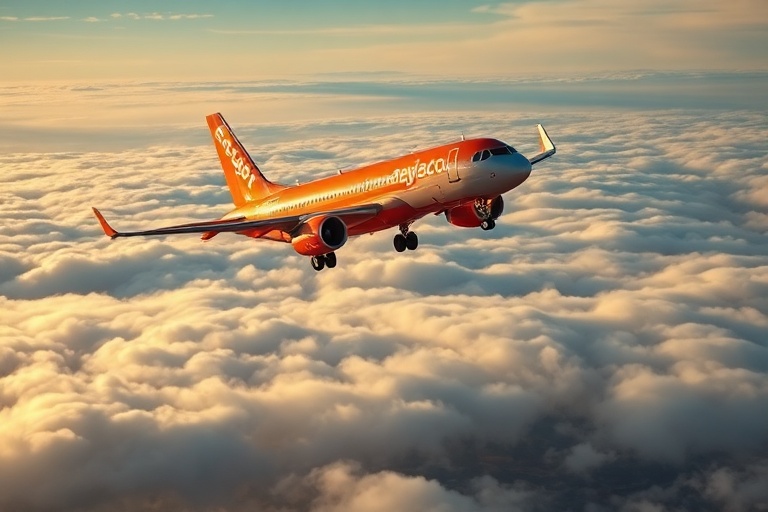
EasyJet Flight Forced to Land in Rome Amid Emergency Protocol
An EasyJet flight from London Gatwick to Naples on Sunday evening was diverted to Rome’s Fiumicino Airport after the crew initiated emergency procedures. The Airbus A320, carrying 164 passengers and six crew members, landed safely just before 8:30 PM local time, according to airport authorities and airline statements.
Initial reports suggest the diversion was triggered by a technical alert, though EasyJet has not yet confirmed the exact nature of the issue. Passengers described a calm but tense atmosphere inside the cabin as the crew followed protocol. One traveler aboard the flight told local media, “The captain announced we were diverting due to a technical concern, but reassured everyone that safety was the priority.”
Global Aviation Trends Behind the Diverted Flight
Flight diversions are not uncommon in commercial aviation, but their frequency and causes vary by region and carrier. According to the European Aviation Safety Agency (EASA), technical issues account for roughly 12% of all diversions in European airspace. While the vast majority are resolved without incident, each event highlights the delicate balance between operational efficiency and passenger safety.
EasyJet, like many budget airlines, operates a high-frequency, point-to-point network designed to maximize aircraft utilization. This model reduces downtime but can increase pressure on maintenance teams to resolve issues quickly. A spokesperson for EASA noted, “Airlines must balance cost efficiency with stringent safety standards. Diversions are sometimes the most prudent choice, even when inconvenient.”
From a global perspective, Asia-Pacific and North American airlines report higher rates of weather-related diversions, while European carriers face more technical and air traffic control-related challenges. The incident in Rome underscores how regional factors—such as aging infrastructure, regulatory oversight, and crew training standards—shape operational realities across the industry.
Passenger Experience and the Human Side of Travel Disruptions
For passengers, a diverted flight can disrupt carefully planned itineraries, leading to missed connections, lost hotel reservations, and added expenses. In this case, most travelers were rebooked on later flights or offered overnight accommodation by EasyJet. The airline’s customer service team worked through the night to coordinate alternative arrangements, a process that reflects broader trends in airline passenger care.
Social media became a real-time forum for reactions, with many passengers expressing frustration over delays but acknowledging the crew’s professionalism. One passenger tweeted, “Grateful we landed safely, but four hours later and still waiting for a new flight. EasyJet, please do better.” Another replied, “At least they didn’t cut corners on safety. That’s what matters.”
Such incidents reveal the emotional and psychological toll travel disruptions can take. Research from the International Air Transport Association (IATA) shows that passengers prioritize safety and communication during emergencies, often overlooking minor inconveniences if they feel informed and cared for. Airlines that invest in transparent communication and flexible rebooking policies tend to recover passenger trust more effectively.
How Airlines Handle Diversions: A Behind-the-Scenes Look
When a flight is diverted, multiple teams spring into action. Air traffic control coordinates landing clearance, ground crews prepare for arrival, and airline operations centers monitor every step. The process is highly regulated but allows for situational judgment. In Europe, EU Regulation 996/2010 mandates immediate reporting of serious incidents, ensuring transparency and accountability.
EasyJet’s handling of this event followed a standard diversion protocol, which includes:
- Assessing the severity of the issue and consulting with maintenance teams
- Coordinating with air traffic control for priority landing
- Notifying passengers with clear, calm communication
- Preparing ground support for arrival and rebooking
- Submitting a formal incident report to aviation authorities
While the system is designed for safety, not all airlines execute it with equal efficiency. Low-cost carriers often face criticism for understaffed customer service teams during disruptions, though EasyJet has invested in digital tools to streamline rebooking and compensation claims.
Broader Implications for Budget Airlines and Air Travel Culture
The rise of budget airlines over the past two decades has transformed air travel into a mass-market service. EasyJet, Ryanair, and their peers have made flying accessible to millions, but their operational models demand constant vigilance. Every diverted flight represents a financial loss—fuel, landing fees, passenger compensation—and a reputational risk.
In Southern Europe, where tourism is a cornerstone of the economy, reliable air connectivity is vital. A single high-profile incident can ripple through local tourism boards and travel agencies, prompting questions about safety standards. The Italian Civil Aviation Authority (ENAC) has pledged to investigate the Rome diversion thoroughly, a move that could influence public perception of both the airline and regional aviation infrastructure.
Culturally, the incident also reflects broader attitudes toward risk in travel. In countries like Germany or Sweden, where air travel is highly regulated and passengers expect near-perfect punctuality, even minor disruptions can spark public debate. Meanwhile, in markets like the UK or Spain, where budget flying is commonplace, travelers may be more forgiving—provided the airline communicates effectively.
What Happens Next: Investigation and Accountability
As of Monday morning, EasyJet confirmed that the aircraft underwent a full technical inspection at Fiumicino. The airline stated that the issue was “non-critical” and that the flight would resume service once cleared. Aviation authorities in Italy and the UK are reviewing the incident, with preliminary findings expected within 72 hours.
For passengers, the experience may end with a compensation claim under EU Regulation 261/2004, which entitles travelers to up to €600 in compensation for long delays caused by airline responsibility. However, if the technical issue is deemed beyond the airline’s control—such as a manufacturer defect—the claim may not apply.
Regardless of the outcome, this incident serves as a reminder of the invisible systems that keep global travel running. Behind every smooth flight lies a network of protocols, professionals, and pressure points. When one link in the chain falters, the ripple effects are felt far beyond the tarmac.
For travelers seeking more insight into airline policies and passenger rights, our travel section offers detailed guides on navigating disruptions, booking strategies, and regulatory protections. Understanding these frameworks can transform a frustrating delay into a manageable experience.
As aviation continues to evolve, balancing cost, convenience, and safety remains an ongoing challenge. Incidents like the EasyJet diversion are not just isolated events—they are windows into the complex world of modern air travel, where every decision carries weight and every minute counts.