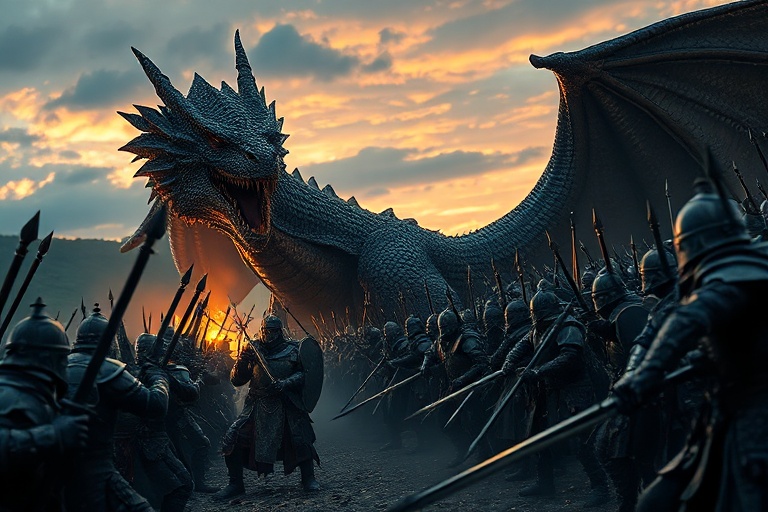
Dragons vs Warriors: Mythic Battle That Shaped Legends
“`html
Dragons vs Warriors: The Age-Old Clash of Myth and Steel
The battle between dragons and warriors is one of humanity’s oldest and most enduring myths. This timeless conflict has shaped countless legends, from Norse sagas to Chinese folklore and modern fantasy epics. But beyond the stories, what makes this rivalry so compelling? Is it the raw power of the dragon, or the unyielding spirit of the warrior that captures our imagination? To understand this dynamic, we must explore the origins, evolution, and cultural significance of these two archetypes.
The Historical Roots of the Dragon Warrior Myth
Dragons appear in the mythologies of nearly every ancient civilization. In Mesopotamia, the dragon Tiamat embodied chaos and was defeated by the god Marduk. Chinese culture revered dragons as symbols of wisdom and imperial power, often associated with water and storms. Meanwhile, European dragons were typically depicted as malevolent creatures hoarding treasure and terrorizing villages—until a brave warrior arrived to slay them.
Warriors, too, have deep historical roots. From the samurai of feudal Japan to the knights of medieval Europe, warriors have been idealized as protectors, disciplined fighters, and embodiments of honor. The dragon-slaying hero often represents the triumph of human ingenuity and courage over raw, unbridled nature. This narrative framework has persisted because it reflects fundamental human struggles: the fight against chaos, the quest for order, and the desire to conquer the unknown.
One of the earliest written accounts comes from the Beowulf epic, where the Geatish hero battles the monstrous Grendel, his mother, and later a dragon. The dragon in this tale is a symbol of destruction and greed, while Beowulf embodies the warrior ethos—loyalty, strength, and self-sacrifice. This story set a template that would repeat across cultures: the hero versus the beast.
The Warrior’s Arsenal: Tools and Tactics Against Dragons
Facing a dragon is no ordinary battle. These creatures are often depicted with thick scales, fiery breath, and supernatural strength. So how have warriors historically defeated them? The answer lies in a combination of preparation, strategy, and sheer willpower.
In many legends, warriors rely on specific weapons and tactics:
- Fire-resistant armor: Dragons breathe fire, so warriors often clad themselves in enchanted or specially forged armor. In Slavic folklore, knights used armor made from dragon scales they had previously slain—a poetic twist of recycling the enemy’s power.
- Poisoned weapons: Some tales suggest that dragon blood is toxic, or that their hides are impervious to normal steel. Warriors would coat their blades in poison or use weapons forged from rare metals like mithril or adamantine.
- Teamwork and strategy: Dragons are often cunning and intelligent. Warriors don’t always face them alone. In the Song of the Nibelungs, Siegfried gains invisibility to stab the dragon Fafnir from below—a tactic that required preparation and insight.
- Sacrifice and cunning: The warrior’s greatest tool may be their mind. In Chinese mythology, the archer Hou Yi shot down nine of the ten suns (sometimes depicted as dragons) using a mix of skill and divine aid.
These strategies highlight a key truth: defeating a dragon is less about brute force and more about intelligence, preparation, and sometimes luck. The warrior’s real battle isn’t just physical—it’s mental and moral.
Modern fantasy literature continues this tradition. In Game of Thrones, characters like Jon Snow and Daenerys Targaryen face dragons not just with steel, but with diplomacy, fire magic, and political maneuvering. The warrior’s role has evolved, but the core conflict remains: human ingenuity versus primal power.
Dragons in Modern Media: From Villains to Allies
The portrayal of dragons has shifted dramatically over time. Once unambiguous symbols of evil, they now occupy a spectrum of roles—from antagonists to companions, from forces of nature to misunderstood beings.
In J.R.R. Tolkien’s The Hobbit, Smaug is a quintessential dragon villain: greedy, arrogant, and destructive. His defeat by Bilbo Baggins, though aided by dwarves and a heroic archer, reinforces the warrior’s role as the harbinger of justice. But Tolkien also introduced dragons like Glaurung, who wielded psychological terror, showing that these creatures could embody more than just physical menace.
Contrast this with modern works like How to Train Your Dragon, where dragons are social, intelligent creatures capable of friendship and loyalty. Toothless, the Night Fury, becomes a companion to the young Viking Hiccup, redefining the dragon-warrior dynamic entirely. Here, the warrior isn’t fighting to kill but to understand and protect.
This evolution reflects changing cultural values. As society moves toward empathy and coexistence with nature, dragons—once symbols of fear—are being reimagined as complex beings worthy of understanding. Even in games like The Elder Scrolls V: Skyrim, dragons are both enemies and divine beings, their destruction tied to prophecy rather than simple villainy.
This shift doesn’t diminish the warrior’s role; it recontextualizes it. The modern warrior isn’t just a slayer but a guardian, a diplomat, and sometimes even a student of the dragon’s ways.
The Symbolism Behind the Conflict
At its core, the dragon vs warrior narrative is a mythic representation of human conflict with the natural world. Dragons often symbolize untamed forces—chaos, greed, destruction—while warriors embody order, discipline, and the human spirit’s capacity to overcome adversity.
In psychological terms, the dragon can represent inner demons: fear, temptation, or unresolved trauma. The warrior, then, is the conscious self striving for mastery. This interpretation appears in stories like The Dragon Reborn from Robert Jordan’s The Wheel of Time, where the protagonist must confront their own darkness.
Culturally, this myth also reflects societal anxieties. During the Black Death in medieval Europe, dragons and monsters were often blamed for plagues—a way to personify the unknowable horrors of disease. In contrast, the warrior became a symbol of resilience, a figure who could restore order in times of chaos.
In contemporary times, dragons can symbolize environmental destruction or climate change—giant, ancient forces that humanity must confront. Warriors, then, become activists, scientists, or leaders working to heal the planet. The myth adapts, but its power endures.
Ultimately, the dragon vs warrior story is a mirror. It reflects our fears, our aspirations, and our belief in the power of human agency. Whether the dragon is slain, befriended, or transcended, the warrior’s journey remains a powerful narrative of growth and transformation.
Conclusion: Why This Myth Still Bites
The rivalry between dragons and warriors is far more than a plot device—it’s a cultural touchstone that has evolved with humanity itself. From ancient myths to blockbuster films, this conflict continues to captivate because it speaks to universal truths: the struggle against fear, the search for meaning, and the enduring hope that courage can triumph over chaos.
As we move into an era where technology and nature increasingly collide, the dragon-warrior dynamic offers a framework for understanding our place in the world. Are we the warriors, armed with knowledge and tools to face the unknown? Or are we the dragons, powerful but misunderstood, needing connection rather than conquest?
Perhaps the greatest lesson lies not in destruction, but in understanding. The warrior who learns from the dragon may not need to slay it at all. Instead, they might ride into the sunset together—a partnership as old as myth itself.
For more on mythic creatures and heroic legends, explore our Mythology and Fantasy collections. Whether you’re drawn to fire-breathing titans or sword-wielding champions, the stories endure because they reflect the battles we all face.