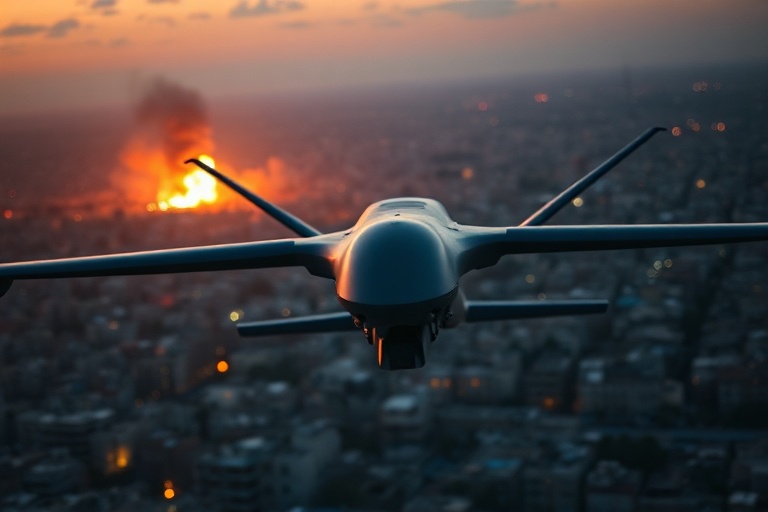
The use of unmanned aerial vehicles (UAVs), commonly known as drones, has transformed military operations over the past two decades. These remotely piloted aircraft have shifted the dynamics of warfare, enabling precision strikes while minimizing direct risk to soldiers. Governments and defense organizations now rely on drones for surveillance, reconnaissance, and targeted strikes, fundamentally altering how conflicts are waged and perceived.
The Evolution of Drone Technology in Warfare
Drones have evolved from simple surveillance tools to highly sophisticated weapons platforms. Early models, such as the MQ-1 Predator, were primarily used for intelligence gathering in the late 1990s. By the early 2000s, they were armed with Hellfire missiles, marking a turning point in their military utility. Today, advancements in artificial intelligence and autonomy have led to the development of systems like the MQ-9 Reaper and the Turkish Bayraktar TB2, which can operate with minimal human oversight.
The integration of drones into modern militaries has been driven by several key factors. First, their ability to loiter over targets for extended periods provides unmatched situational awareness. Second, their operational range and endurance far exceed those of traditional aircraft. Third, they eliminate the risk of losing pilots in hostile environments, a critical consideration in prolonged conflicts.
Key Milestones in Drone Warfare
- 1990s: Initial deployment of surveillance drones like the Predator in Balkan conflicts.
- 2001: Armed drones used for the first time in Afghanistan following the 9/11 attacks.
- 2010s: Expansion into counterterrorism operations, including signature strikes in Pakistan and Yemen.
- 2020s: Use of drones in the Nagorno-Karabakh conflict and the Ukraine war, demonstrating their lethality in conventional warfare.
The Ethical and Legal Debates Surrounding Drone Strikes
The rise of drone warfare has sparked intense ethical and legal discussions. Critics argue that remote strikes often result in civilian casualties, particularly in regions like Pakistan and Somalia where the U.S. has conducted numerous operations. A 2020 report from the News section of Dave’s Locker highlighted concerns about the lack of transparency in targeting decisions. The reliance on intelligence that may be outdated or inaccurate has led to tragic outcomes, including high-profile incidents where weddings and funerals were mistaken for militant gatherings.
Legal scholars have also questioned the legality of drone strikes under international law. The U.N. Charter permits the use of force in self-defense or with Security Council authorization. However, the U.S. has justified many of its strikes as part of the global war on terror, a claim that has been contested by human rights organizations. The Obama administration’s expansion of drone operations, in particular, drew criticism for its lack of oversight and accountability.
The Role of Automation and AI
As drones become more autonomous, concerns about accountability have intensified. The U.S. military’s Technology sector has made significant strides in developing AI-driven systems that can identify and engage targets without direct human input. While proponents argue that this reduces the risk of human error, skeptics warn that it could lead to unintended escalations or violations of the laws of war. The 2023 deployment of the Kargu-2 drone by Turkish forces in Libya, which was reportedly capable of autonomous engagement, underscored these fears.
The debate over autonomous weapons systems has prompted calls for international regulations. The Campaign to Stop Killer Robots, an advocacy group, has urged nations to adopt binding treaties to prohibit fully autonomous weapons. Meanwhile, countries like China and Russia continue to invest heavily in AI-driven military technologies, raising the stakes for global security.
Drone Warfare in Contemporary Conflicts
The Ukraine war has served as a real-world testing ground for drone technology. Both Russian and Ukrainian forces have deployed drones for reconnaissance, artillery spotting, and strike missions. Ukrainian forces, in particular, have leveraged commercially available drones like the DJI Mavic series to conduct precision strikes against Russian positions. This has demonstrated how non-state actors and smaller nations can leverage affordable technology to counter larger, more traditional militaries.
In the Middle East, drones have become a staple of asymmetric warfare. Houthi rebels in Yemen have used Iranian-supplied drones to target Saudi oil facilities and military bases. Similarly, ISIS employed drones to drop grenades and conduct surveillance during its territorial campaigns. These examples illustrate how drones have lowered the barrier to entry for unconventional warfare, enabling smaller groups to project power beyond their immediate capabilities.
The Future of Drone Warfare
The next generation of drones will likely incorporate swarm technology, where multiple drones operate in coordinated groups to overwhelm defenses. The U.S. Defense Advanced Research Projects Agency (DARPA) has already conducted tests involving swarms of small, expendable drones designed to saturate enemy air defenses. Such systems could revolutionize battlefield tactics, making it increasingly difficult for adversaries to counter aerial threats.
Another emerging trend is the integration of drones with other emerging technologies, such as hypersonic missiles and cyber warfare tools. The combination of these capabilities could create a new era of multi-domain warfare, where attacks can be launched from air, land, sea, and cyberspace simultaneously. This integration poses significant challenges for traditional defense strategies, which were designed for a different era of warfare.
As nations continue to invest in drone technology, the risk of proliferation grows. Cheaper, more accessible drones are becoming available on the global market, raising concerns about their use by non-state actors and rogue regimes. The 2019 attack on Saudi Arabia’s Abqaiq oil facility, carried out using drones and cruise missiles, served as a stark reminder of the vulnerabilities created by this trend.
Conclusion: A Double-Edged Sword
Drone warfare represents a paradigm shift in military strategy, offering unparalleled precision and flexibility while introducing complex ethical and legal challenges. Its impact on modern conflict is undeniable, from counterterrorism operations to large-scale conventional wars. However, the long-term consequences of this technology remain uncertain. The potential for civilian harm, the erosion of international norms, and the rise of autonomous weapons systems all demand careful consideration.
As nations grapple with these issues, the international community must establish clear guidelines to govern the use of drones. This includes transparency in targeting decisions, accountability for civilian casualties, and restrictions on autonomous systems. Without such measures, the proliferation of drones could lead to a more unstable and unpredictable global security environment.
The future of warfare is increasingly unmanned, and the choices made today will shape the conflicts of tomorrow. Whether drones will ultimately serve as tools of precision and restraint or as catalysts for escalation and chaos remains an open question—one that will define the next era of warfare.