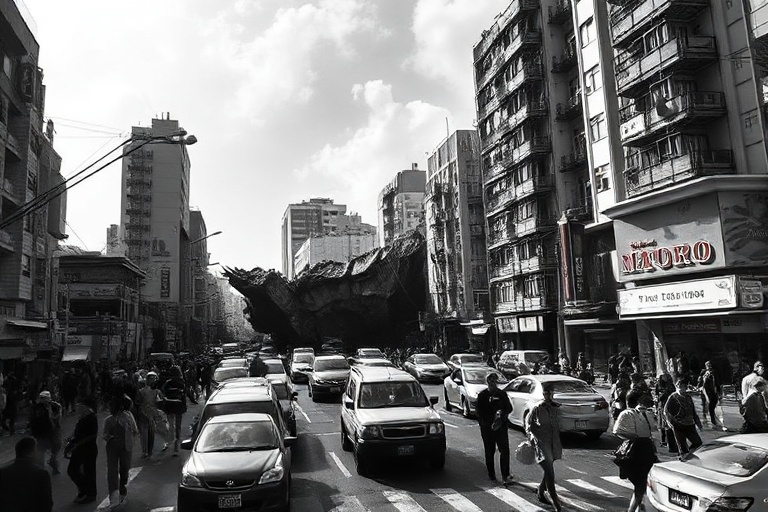
Earthquakes remain one of nature’s most unpredictable and destructive forces. They occur suddenly, often without warning, reshaping landscapes and communities in seconds. While scientists have made progress in understanding seismic activity, predicting earthquakes remains an elusive challenge. This article explores the science behind earthquakes, their global impact, and how communities can better prepare for these sudden geological events.
The Science Behind Earthquakes: How and Why They Happen
The Earth’s crust is divided into tectonic plates that float on the semi-fluid mantle below. Most earthquakes occur along the edges of these plates, where stress builds up as they grind against each other. When this stress exceeds the strength of the rocks, they suddenly break, releasing energy in the form of seismic waves. This sudden release of energy is what we feel as an earthquake.
There are three primary types of faults where earthquakes commonly originate: strike-slip, normal, and reverse faults. Strike-slip faults, like California’s San Andreas Fault, occur when two plates slide horizontally past each other. Normal faults happen in areas where the crust is being pulled apart, such as mid-ocean ridges. Reverse faults, on the other hand, occur in compressional environments where one plate is forced upward over another.
The magnitude of an earthquake is measured using the Richter scale or the moment magnitude scale (MMS), both of which quantify the energy released. For example, the 2011 Tōhoku earthquake in Japan, which triggered a devastating tsunami, registered a magnitude of 9.1. Smaller tremors, often imperceptible to humans, occur daily around the world, but it’s the larger quakes that capture global attention.
While most earthquakes are tectonic in origin, human activities can also induce seismic events. These include reservoir-induced seismicity from large dams, mining operations, and even hydraulic fracturing (fracking). The 2017 Pohang earthquake in South Korea, linked to a nearby geothermal plant, serves as a stark reminder of how human actions can inadvertently trigger geological instability.
The Global Impact: Where Earthquakes Strike and Their Consequences
Earthquakes are not evenly distributed across the globe. They tend to cluster along tectonic plate boundaries, with the Pacific Ring of Fire being the most seismically active region. Countries like Japan, Indonesia, Chile, and the United States (particularly California and Alaska) experience frequent tremors due to their proximity to these boundaries.
Beyond the immediate shaking, earthquakes can trigger secondary disasters such as tsunamis, landslides, and fires. The 2004 Indian Ocean earthquake and tsunami, which claimed over 230,000 lives, demonstrated the devastating domino effect that can follow a major quake. Coastal communities are particularly vulnerable, as underwater earthquakes can displace massive volumes of water, sending deadly waves ashore.
Urban areas are especially at risk due to dense populations and vulnerable infrastructure. The 2010 Haiti earthquake, with a magnitude of 7.0, resulted in catastrophic damage because of poor construction standards and lack of preparedness. In contrast, cities like Tokyo and Los Angeles have invested heavily in earthquake-resistant buildings and early warning systems, reducing the potential for large-scale destruction.
Economic losses from major earthquakes can be staggering. The 2011 Christchurch earthquake in New Zealand caused an estimated $40 billion in damages, while the 1995 Great Hanshin earthquake in Japan resulted in over $100 billion in losses. These figures highlight the long-term financial burden that earthquakes place on affected regions, often disrupting economies for years.
For those interested in the intersection of technology and disaster response, Dave’s Locker Technology section offers insights into how innovations like AI and drones are being used to improve earthquake detection and recovery efforts.
Preparing for the Unpredictable: How Communities Can Stay Safe
While earthquakes cannot be prevented, their risks can be mitigated through preparedness and education. One of the most critical steps is developing early warning systems. Countries like Japan and Mexico have implemented sophisticated networks that detect initial tremors and provide seconds to minutes of warning before the shaking begins. This brief window can save lives by allowing people to take cover and utilities to shut down critical systems.
Building codes play a vital role in earthquake resilience. Structures designed to withstand lateral forces, such as those incorporating base isolators or shear walls, are far less likely to collapse during a quake. In Japan, buildings constructed after the 1981 revision of the Building Standard Law have performed significantly better in recent earthquakes. Retrofitting older buildings is an ongoing challenge but one that pays dividends in disaster resilience.
Community preparedness programs are equally essential. Drills like Japan’s annual Disaster Prevention Day teach citizens how to respond during an earthquake, emphasizing the “Drop, Cover, and Hold On” technique. Schools, hospitals, and workplaces should conduct regular evacuation drills to ensure everyone knows their roles during an emergency. Emergency kits, containing water, food, and medical supplies, should be readily available in homes and public spaces.
Technology also offers new avenues for preparedness. Mobile apps like the U.S. Geological Survey’s (USGS) Earthquake Alerts provide real-time notifications, while social media platforms enable rapid dissemination of critical information during crises. Crowdsourcing platforms allow citizens to report tremors, helping authorities map affected areas more accurately.
For further reading on disaster preparedness and response, explore Dave’s Locker News section, which covers global events and resilience strategies.
The Future of Earthquake Research: Innovations and Challenges
The field of seismology is evolving rapidly, with researchers exploring new ways to predict and understand earthquakes. One promising avenue is the study of foreshocks—small tremors that sometimes precede larger quakes. While not all major earthquakes are preceded by foreshocks, identifying patterns could improve early warning systems. The 2019 Ridgecrest earthquakes in California provided valuable data for scientists studying these precursors.
Another area of research involves the use of machine learning to analyze seismic data. Algorithms can sift through vast amounts of information, identifying patterns that might elude human analysts. Projects like the Global Earthquake Model (GEM) aim to create open-source tools that help governments and insurers assess seismic risks more accurately.
However, significant challenges remain. The unpredictability of earthquakes makes them inherently difficult to study. Unlike weather phenomena, which can be tracked over time, earthquakes offer few reliable precursors. Additionally, the financial and political hurdles of implementing large-scale infrastructure changes often delay progress in seismic retrofitting and early warning systems.
International collaboration is key to advancing earthquake science. Organizations like the Incorporated Research Institutions for Seismology (IRIS) facilitate data sharing and research across borders. By pooling resources and expertise, scientists hope to develop more accurate forecasting models and resilient infrastructure designs.
The study of paleoseismology—examining geological records to identify past earthquakes—also provides critical insights. By understanding historical patterns, scientists can better anticipate future risks. For example, research along the Cascadia Subduction Zone in the Pacific Northwest suggests that mega-earthquakes have occurred there roughly every 300 to 500 years, with the last one happening in 1700.
Conclusion: Living with Earthquakes in a Changing World
Earthquakes are a reminder of the Earth’s dynamic and often volatile nature. While they pose immense challenges, they also drive innovation in science, engineering, and community resilience. By investing in early warning systems, adhering to strict building codes, and fostering public awareness, societies can reduce the toll of these natural disasters.
As climate change and urbanization reshape our world, the risks posed by earthquakes may evolve. Rising sea levels could exacerbate the impact of tsunamis, while expanding cities may face greater vulnerabilities due to aging infrastructure. Addressing these challenges requires a multifaceted approach, combining scientific research, policy reforms, and community engagement.
Ultimately, living with earthquakes means embracing both caution and innovation. The goal is not to eliminate risk entirely but to build resilience in the face of an unpredictable force. Through continued advancements in technology and preparedness, communities can turn the threat of earthquakes into an opportunity for growth and adaptation.