Giro d’Italia: A Century of Cycling Legacy and Modern Grandeur
“`html
Giro d’Italia: A Century of Cycling Legacy and Modern Grandeur
The Giro d’Italia stands as one of professional cycling’s most storied and grueling races, a three-week spectacle that weaves together athletic brilliance, dramatic landscapes, and deep cultural resonance. Since its inception in 1909, the race has evolved from a nationalistic experiment into a global sporting institution, shaping the careers of legends and captivating millions across Italy and beyond.
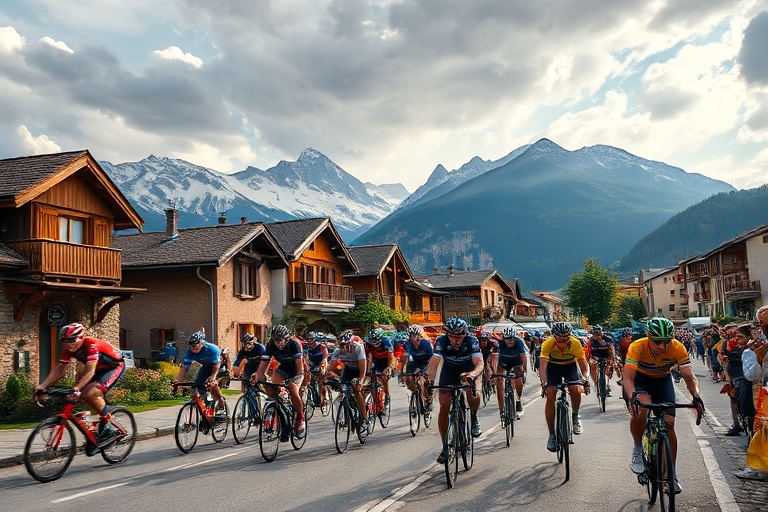
Unlike its more glamorous French counterpart, the Tour de France, the Giro carries a raw, unfiltered intensity—its steep climbs, unpredictable weather, and relentless pace test riders in ways few other races can. More than just a sporting event, the Giro is a living narrative of Italy itself: a story told through the Apennine peaks, the Dolomites’ jagged silhouettes, and the passionate tifosi who line the roads in a sea of pink.
The Origins and Evolution of the Giro d’Italia
Founded by the newspaper La Gazzetta dello Sport as a means to boost circulation, the first Giro in 1909 featured just 8 stages and 127 riders. The winner, Luigi Ganna, earned 5,325 lire—a modest sum by today’s standards, but one that marked the beginning of a tradition. Over the decades, the race matured alongside Italy’s own transformation, surviving two world wars, political upheavals, and the shifting tides of professional cycling.
The post-war era solidified the Giro’s reputation. Fausto Coppi, the “Campionissimo,” dominated in the 1940s and 50s, becoming a national hero whose rivalry with Gino Bartali transcended sport. These riders didn’t just win stages—they forged a cultural identity. Their battles on the Stelvio, the Gavia, and the Tre Cime di Lavaredo became the stuff of legend, embedded in Italy’s collective memory.
By the 1980s and 90s, the Giro expanded beyond Italy’s borders, incorporating stages in neighboring countries and embracing a more international field. Stars like Bernard Hinault, Miguel Indurain, and Marco Pantani rose to prominence on its slopes. Today, the race is a fully globalized event, broadcast to millions worldwide, yet it retains its soul—a celebration of suffering, strategy, and the unbreakable bond between rider and terrain.
What Makes the Giro Unique: A Race Unlike Any Other
The Giro d’Italia is distinguished by several key elements that set it apart from other Grand Tours:
- Pink Dominance: The leader’s jersey, known as the maglia rosa, is instantly recognizable. Its color comes from the pages of La Gazzetta dello Sport, which launched the race. Wearing pink is a badge of honor—and a target on one’s back.
- Mountain Theater: The Giro’s parcours is defined by its relentless climbs. The Cima Coppi, awarded to the highest point of each edition, often becomes the decisive moment of the race. The Mortirolo, the Zoncolan, and the Angliru are not just climbs—they are ordeals.
- Tifosi Passion: No other race matches the Giro’s fan intensity. The tifosi—fans who camp along roads for days—create an electric atmosphere, especially on the climbs. Their chants, flags, and sheer presence elevate the race from sport to spectacle.
- Unpredictable Narrative: While the Tour de France often sees dominant favorites, the Giro thrives on chaos. Rain, crashes, and tactical surprises frequently upend expectations. The 2018 edition saw Chris Froome lose over 3 minutes on stage 19 due to a crash—a moment that reshaped the race overnight.
- Cultural Immersion: The Giro doesn’t just pass through Italy; it immerses itself in its soul. Stages traverse medieval villages, coastal roads, and industrial heartlands, offering a visual and emotional journey through the country’s diverse regions.
Modern Era: The Giro in the 21st Century
The Giro’s modern identity is shaped by the intersection of tradition and innovation. While its core—climbs, suffering, and pink—remains unchanged, the race has adapted to the demands of contemporary cycling. Broadcast technology has transformed it into a global spectacle, with drones capturing the agony and ecstasy of riders on narrow mountain roads. Social media amplifies the drama, allowing fans to follow every watt of effort and every tactical nuance.
Yet, the Giro has not been immune to the challenges facing modern cycling. Doping scandals, commercial pressures, and the rise of superteams have altered the competitive landscape. Riders like Vincenzo Nibali, Nairo Quintana, and Primož Roglič have carried the torch of classic Giro grit into the modern era, but the race now faces the challenge of maintaining its identity amid increasing commercialization.
One of the most significant shifts has been the rise of GC riders who specialize in Grand Tours. Gone are the days when a rider could excel in both one-day classics and three-week races. Today, the Giro is often seen as a proving ground for Tour de France contenders, with riders like Tadej Pogačar using it as a stepping stone to greater glory.
The Giro’s organizers, RCS Sport, have responded by introducing more creative parcours, including gravel sectors and night stages, to keep the race fresh. The 2024 edition, for instance, featured a stage on the island of Sicily, underscoring the race’s commitment to exploring Italy’s geographic diversity.
Why the Giro Matters Beyond the Race
The Giro d’Italia’s influence extends far beyond the world of cycling. It is a powerful economic and cultural engine, driving tourism, media coverage, and national pride. Each year, the race brings hundreds of thousands of visitors to Italy’s most remote regions, injecting millions into local economies. Small towns like Aprica, Sestriere, and Cuneo become temporary capitals of the cycling world, their cafes, hotels, and roads transformed by the Giro’s presence.
Moreover, the Giro serves as a platform for social and environmental messages. Recent editions have highlighted sustainability initiatives, with organizers promoting eco-friendly practices and partnerships with local communities. The race has also become a vehicle for commemorating historical events, such as the centenary of Italy’s unification in 2011, which was marked with a special pink jersey.
For Italian cycling fans, the Giro is more than a race—it is a rite of passage. It is the soundtrack of summer evenings, the backdrop of family road trips, and the subject of endless debates in piazzas across the country. It reflects Italy’s contradictions: its beauty and its harshness, its tradition and its progressiveness.
Internationally, the Giro offers a gateway into Italian culture. Unlike the Tour de France, which often feels quintessentially French, the Giro invites the world into Italy’s heartland. It showcases the country’s culinary traditions—riders fueling up on pasta al pomodoro and espresso in mountain refuges—while also highlighting its social and economic disparities.
In an era where elite sport is increasingly homogenized, the Giro remains a bastion of authenticity. It is a race where talent, tactics, and sheer willpower still matter most. And in a sport often criticized for its commercialism, the Giro’s connection to its roots offers a rare glimpse of what cycling can—and should—be.
A Final Thought
The Giro d’Italia is more than a sporting event. It is a cultural institution, a historical narrative, and a testament to the enduring appeal of human struggle. As it enters its second century, the race faces new challenges, from the pressures of modern broadcasting to the ethical dilemmas of performance and sustainability. Yet, if history is any guide, the Giro will continue to evolve without losing its soul.
For those who have stood by the roadside in the rain, heart pounding as a peloton crests a mountain pass; for those who have watched a lone rider attack on the Stelvio with nothing but courage and a bicycle; for those who understand that victory is not just about speed, but about suffering and redemption—the Giro d’Italia will always be something sacred.
It is not merely a race. It is an odyssey.
Explore More Cycling Content
Dive deeper into the world of professional cycling with these curated articles:
- Cycling Stories – In-depth coverage of races, riders, and trends in professional cycling.
- Tour de France Analysis – Breakdowns of cycling’s most famous Grand Tour and its evolving narratives.