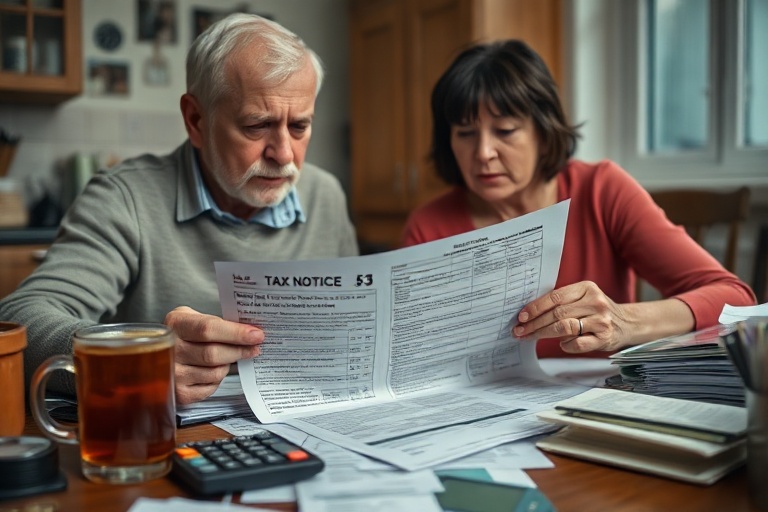
Taxpayers across the UK are facing renewed scrutiny over their savings tax bills as HM Revenue & Customs (HMRC) tightens enforcement on unpaid tax liabilities. With interest rates remaining elevated and savings accounts offering higher returns than in previous years, more individuals are finding themselves unexpectedly liable for tax on interest income. The shift in economic conditions has created a ripple effect, leaving many to question how these changes apply to their personal finances.
HMRC savings tax bills are not new, but the threshold at which savings interest becomes taxable has remained frozen since 2021, while the Personal Savings Allowance (PSA) has not increased in line with rising interest rates. This means that savers who previously benefited from tax-free interest are now crossing into taxable territory without realising it. Understanding how these rules work—and when they apply—is essential for avoiding penalties and managing tax obligations effectively.
How Savings Interest Became Taxable: The Role of the Personal Savings Allowance
Introduced in April 2016, the Personal Savings Allowance allows basic-rate taxpayers to earn up to £1,000 in savings interest tax-free each year. Higher-rate taxpayers receive a reduced allowance of £500, while additional-rate taxpayers receive no allowance at all. The allowance was designed to simplify the tax system for savers, but its fixed thresholds have not kept pace with economic changes.
In recent years, the Bank of England’s base rate has risen sharply, pushing savings rates higher. While this has been beneficial for savers, it has also meant that more people are exceeding the PSA threshold without realising it. For example, if you earn £1,200 in savings interest in a tax year as a basic-rate taxpayer, £200 of that income could be subject to tax. Many may not even receive a tax bill until HMRC identifies discrepancies in their tax records.
HMRC obtains data on savings interest through the Common Reporting Standard (CRS), an international agreement that shares financial information between tax authorities. Banks and building societies report interest payments to HMRC, which then cross-references this data with individuals’ tax records. If discrepancies arise, HMRC may issue a tax bill or a letter requesting clarification.
Key Takeaways About the PSA
- The PSA applies to interest earned from savings accounts, including ISAs, but ISA interest remains tax-free regardless of the amount.
- Interest from current accounts may also count toward the PSA if it exceeds the threshold.
- Taxpayers must report savings interest on their Self Assessment tax return if they are self-employed or earn over £12,570 (the personal allowance) and have savings income above the PSA.
- HMRC may automatically adjust tax codes to collect underpaid tax, leading to unexpected deductions from wages or pensions.
When and How HMRC Issues Savings Tax Bills
HMRC does not issue tax bills automatically for savings interest unless they detect a discrepancy. Instead, they rely on data matching to identify potential liabilities. If you receive a letter or tax bill from HMRC regarding savings interest, it is likely because your reported income does not align with the interest data they have received from financial institutions.
The process typically begins with a nudge letter, which is not a formal tax bill but a request for clarification. These letters often ask taxpayers to confirm whether they have earned savings interest and whether it has been included in their tax return. Ignoring such letters can lead to more serious consequences, including formal tax assessments and penalties for late payment.
If HMRC determines that tax is owed, they will issue a tax bill with a payment deadline, usually within 30 days. Taxpayers can appeal if they believe the assessment is incorrect, but they must provide evidence to support their claim. Common reasons for appeal include errors in HMRC’s calculations or misunderstandings about the PSA thresholds.
Steps to Take If You Receive a Savings Tax Bill
- Review the tax bill carefully: Check whether the interest amounts and tax calculations align with your records.
- Gather supporting documents: Collect bank statements, tax returns, and any correspondence with HMRC to verify your position.
- Contact HMRC if necessary: If you disagree with the bill, contact HMRC’s Savings and Investment Helpline to discuss your options.
- Consider payment options: If you cannot pay the full amount immediately, HMRC may offer a payment plan, but interest will continue to accrue.
- Seek professional advice: For complex cases, consulting a tax advisor or accountant can help navigate disputes with HMRC.
Strategies to Manage Savings Tax Liabilities
For those concerned about unexpected tax bills, there are several strategies to manage savings tax liabilities proactively. One of the most effective methods is to utilise tax-efficient savings accounts, such as ISAs, which allow you to earn interest without paying tax. In the 2024-25 tax year, the ISA allowance remains at £20,000, providing a significant opportunity to shield savings from HMRC.
Another approach is to spread savings across multiple accounts to stay within the PSA thresholds. For example, if you have £50,000 in savings earning 4% interest, you would generate £2,000 in interest annually. As a basic-rate taxpayer, you would owe tax on £1,000 of that interest. By splitting the savings between two accounts, you might reduce the total interest earned in any single account below the PSA threshold.
Taxpayers with higher savings balances may also consider investing in tax-efficient products such as Premium Bonds, which do not pay interest but offer tax-free prizes. Alternatively, investing in stocks and shares ISAs or pensions can provide long-term tax advantages, particularly for higher-rate taxpayers.
It is also worth reviewing your tax code, especially if you receive a pension or have multiple income streams. HMRC may adjust your tax code to account for untaxed savings interest, but errors can occur. Checking your tax code on the HMRC website and reporting discrepancies can prevent overpayment or underpayment of tax.
The Broader Impact on Savers and the Economy
The increase in savings tax bills reflects broader economic shifts, including rising interest rates and inflation. While higher interest rates benefit savers in the short term, they also create unintended tax consequences for those who have not adjusted their financial strategies. For many retirees and low-to-middle-income households, these additional tax liabilities can strain budgets that were already tight.
HMRC’s approach to enforcing savings tax bills also highlights the growing role of data in tax compliance. As financial institutions become more transparent, taxpayers are left with less room for error. This shift underscores the importance of accurate record-keeping and proactive tax planning, particularly for those with diverse income streams.
Looking ahead, there is growing speculation about whether the government will adjust the PSA thresholds to reflect current economic conditions. However, with public finances under pressure, such changes are unlikely in the near term. For now, savers must take responsibility for understanding their tax obligations and planning accordingly.
Final Thoughts
HMRC savings tax bills are a growing concern for many UK taxpayers, particularly as savings rates remain high. Understanding the Personal Savings Allowance and staying within its limits can help avoid unexpected liabilities. For those who receive a tax bill, acting promptly and seeking professional advice can mitigate the impact.
Tax-efficient savings strategies, such as maximising ISA allowances and diversifying investments, are essential tools for managing tax liabilities. By taking a proactive approach, savers can protect their financial well-being and avoid the stress of HMRC interventions.
For more insights on tax planning and financial strategies, explore our Finance and Business sections for in-depth analysis and expert advice.
“The key to managing savings tax bills is awareness. Know your thresholds, keep accurate records, and plan ahead to avoid surprises.”